Al-Shaiji: Gulf narrative becomes an economic stream
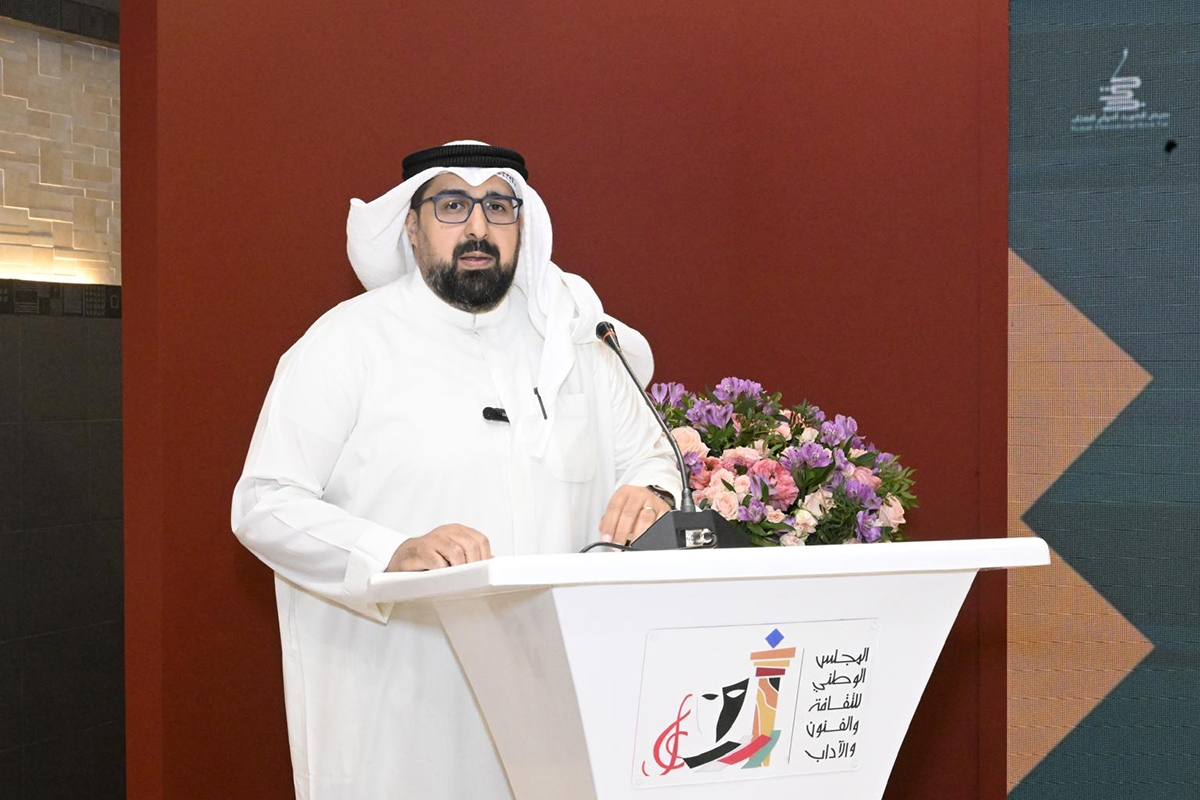
Kuwaiti writer and novelist Hamoud Al-Shaiji delivered a lecture titled 'Nine Stories and a Story about the Gulf Narrative' on the sidelines of the 49th edition of the Kuwait International Book Fair. Al-Shaiji presented his lecture in a narrative style inspired by the spirit of 'Scheherazade,' addressing
Translated by Alqyas from Al-Jarida — Original source
Kuwaiti writer and novelist Hamoud Al-Shayji delivered a lecture titled “Nine Tales and a Tale about the Gulf Novel” on the sidelines of the 49th edition of the Kuwait International Book Fair.
Al-Shayji presented his lecture in a narrative style inspired by the spirit of “Scheherazade,” addressing the key intellectual, artistic, and social transformations that have shaped the contours of contemporary Gulf narrative. He began by highlighting the danger of allowing culture and novelistic writing to fall prey to the obsession with fame and the logic of “trends” and social media, noting that reducing books to mere commodities subject to market laws threatens the essence of creativity.
Discussing the trend among Gulf novelists toward historical writing, Al-Shayji clarified that returning to the pre-oil era is not merely a romantic nostalgia for the past, but a necessity to demonstrate the historical depth of Gulf states, refute the notion of “emerging nations,” and review history with objectivity and transparency, free from embellishment or falsification.
He highlighted the richness of the Gulf literary environment, which has given narrative a notable diversity, citing the five Gulf novels that won the International Prize for Arabic Fiction (the Arabic Booker). These works spanned the closed palace worlds in “Tarmi bi Sharr” by Abdo Khal, the Meccan alleys in “Tawq al-Hamama” by Raja Alem, questions of identity in “Saq al-Bamboo” by Saud Alsanousi, mysticism and wandering in “Mawt Saghir” by Mohammed Hassan Alwan, and village and falaj worlds in “Taghribat al-Qafir” by Zahrani Al-Qasimi.
He also celebrated the global breakthrough achieved by Gulf novelty through the win of Omani Dr. Jawaher Al-Harthi with the International Booker Prize for her novel “The Women of Mars,” and the win of Kuwaiti Buthaina Al-Eisa with the 2026 American Literary Inside Prize for the English translation of her novel “The Guardian of the World’s Roof,” considering this evidence of the Gulf narrative’s ability to resonate with the global human conscience.
He paused at the pivotal milestones in the trajectory of Gulf narrative since its early beginnings in the 1930s, recalling the foundational role of the late novelist Ismail Fahd Ismail, described as a “transgenerational spiritual father” who contributed to liberating youth voices and inspiring Kuwait’s golden generation to establish independent and pioneering cultural projects in the Arab world, while also noting the censorship and social challenges faced by writers—as in the experience of writer Layla Al-Othman—and how Gulf novelists bet on education and culture to drive social transformation.
Al-Shayji concluded his lecture by recalling his diplomatic experience in the Serbian capital (Belgrade), citing how dramatic and historical works succeeded in penetrating the hearts of peoples and transcending historical hostilities, transforming into major economic and investment gateways. He emphasized that investing in the translation of Gulf novels and adapting them into cinematic and dramatic works is the most effective path to enhancing cultural diplomacy and consolidating the presence of Gulf states on the global creative and economic map.
