Scientists Close to Diagnosing Cancer, Parkinson's, and Flu via Body Odor
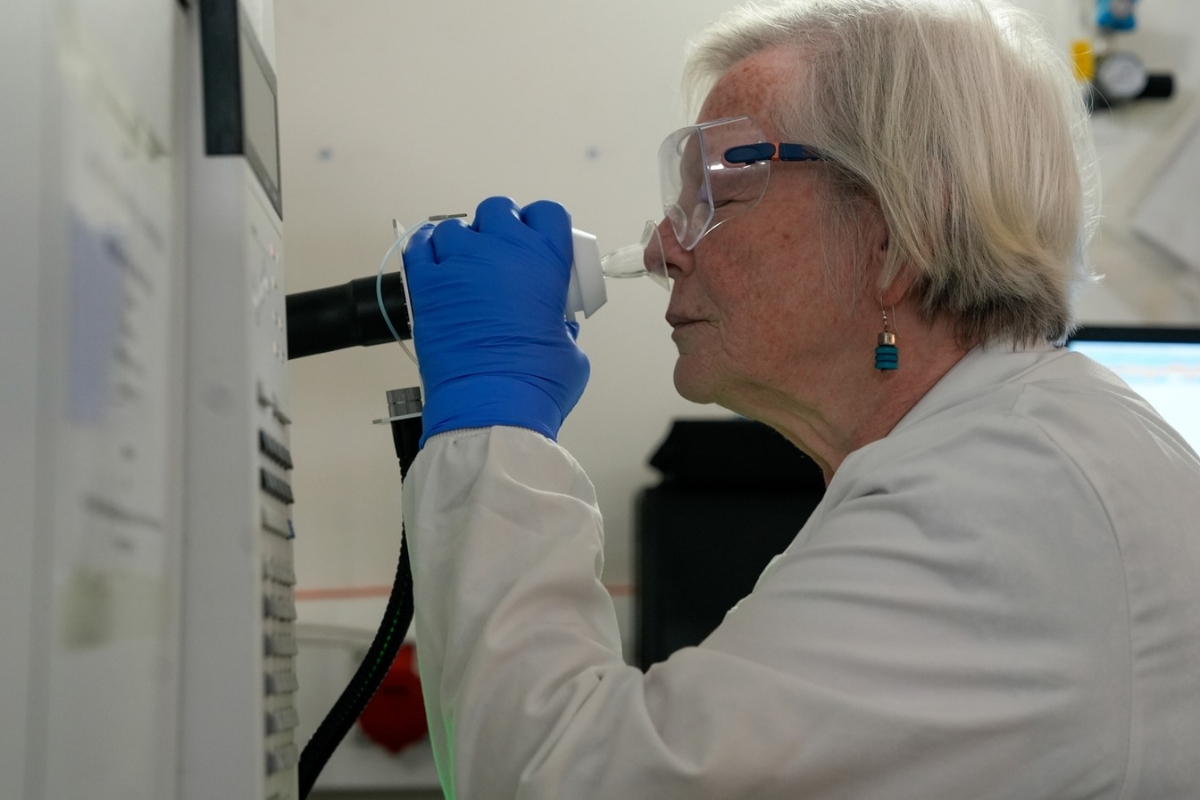
New technologies relying on artificial intelligence and scents to detect cancer, Parkinson's, and flu.
Translated by Alqyas from Al-Jarida — Original source
For a long time, and specifically in the fifth century BC, the Greek physician and philosopher Hippocrates believed that diseases could be identified by body odor. In modern times, scientists have spent years investigating how to harness volatile molecules from our breath or skin to detect a wide range of diseases, including Parkinson’s disease, Alzheimer’s disease, certain types of cancer, and influenza.
Recent advances in molecular detection tools, combined with progress in artificial intelligence technologies, have brought us closer to achieving this goal. It may soon be possible to diagnose a variety of diseases through non-invasive tests using simple, hand-held devices.
In an interview with Knowable Magazine, a scientific research website, Mark Wolman, a researcher in chemical biology at Indiana University in the United States, described this field of study as “really quite exciting.”
Tests that analyze breath to detect certain types of bacteria, a major cause of stomach ulcers, are already in use. These tests rely on detecting volatile organic compounds, which are typically gaseous and can be emitted in exhaled air, sweat, urine, blood, and feces.
Other tests rely on cheaper, more portable electronic sensors known as “electronic noses,” which consist of an array of sensors capable of capturing and distinguishing different molecules.
Chemist Wolfram Miekisch, from the University Medical Center in Rostock, Germany, questions how to manage such variables: “Simply changing from a sitting to a lying position alters the composition of exhaled air, as does holding one’s breath, as does taking certain medications... So how can we deal with all these variables?”
Nevertheless, some researchers have made progress in identifying molecules that may serve as indicators of specific diseases. For example, Wolman notes that as tumors grow, oxidative stress in the body increases, leading to the breakdown of lipid molecules within cells into smaller, volatile compounds.
In one study, researchers analyzed the breath of some patients before and after surgery to remove lung tumors, identifying 16 compounds that could serve as indicators for lung cancer.
In other research, analyses of molecules emitted from skin cancer samples revealed compounds that could potentially serve as disease markers.
Potential cancer indicators are not limited to exhaled air; urine can also carry important clues. Wolman and his colleagues analyzed volatile molecules in the urine of men who had undergone biopsies to detect prostate cancer, finding that monitoring a set of six molecules identified the disease in 75% of cases.
Some cancer tests based on volatile compounds emitted in urine may soon reach the market, including a test developed by a biotechnology company named Toby, after the hunting dog featured in the stories of the famous detective Sherlock Holmes. The test aims to detect bladder cancer and uses artificial intelligence to analyze the full patterns of molecules emitted in urine.
Clues to some diseases may also lie in the oily secretions produced by glands in hair follicles. Researchers are currently studying the relationship between compounds emitted from these secretions and Parkinson’s disease, which is often detected at late stages.
Birutta Baran, a Parkinson’s disease specialist at the University of Manchester in the UK, conducted an experiment demonstrating that it is possible to distinguish between T-shirts worn by Parkinson’s patients and those worn by healthy individuals based on scent alone.
Baran states, “If you take a swab from your back, you will find around 20,000 compounds. If you have Parkinson’s, about 2,000 of these compounds—equivalent to 10%—will differ from those found in healthy, non-diseased individuals.”
The potential applications of these scent-based tests are not limited to cancer and neurological diseases. Researchers are also working to identify chemical signatures of certain respiratory infections. For example, some scientists are exploring the possibility of detecting influenza by analyzing exhaled breath.
In a 2022 study involving 235 patients, researchers found that certain chemical markers in breath could distinguish influenza from other similar infections with 78% accuracy.
Another research team discovered that the concentration of certain compounds, such as dimethyl undecane, correlates with viral levels in the nose and throat.
Other scientists are seeking ways to differentiate between viral and bacterial infections, based on the premise that bacteria produce unique volatile organic compounds that can be detected in exhaled breath.
Despite significant progress in this field, challenges remain that hinder the translation of this research into widely available medical tests. A major obstacle is the lack of standardized protocols, which makes comparing results across different studies difficult.
Nevertheless, many researchers in the field of volatile organic compounds remain optimistic about the future. Wolam says, “Despite the numerous challenges faced by volatile organic compound research, this field continues to make notable progress.”
In the future, patients may not have to hold their breath for long while waiting for these new tests to become available.
