Wajhat Watan: Kuwait University... 'A Hen or a Nanny?'
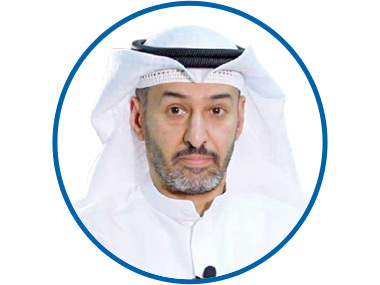
The article criticizes a workshop at Kuwait University on the pronunciation of the words 'hen' and 'nanny', considering it a waste of academic time amid local and regional challenges
Translated by Alqyas from Al-Jarida — Original source
The sorry state to which Kuwait University has reached is evident: instead of holding serious and important seminars, it occupied itself with organizing a workshop at the College of Sciences titled “Between the Jim and the Ya… Chicken or Diya’a?”
Given the multiplicity of local and regional risks and challenges, Kuwait University, as the country’s most important academic institution, was expected to offer an opinion or research, or to initiate a discussion that could, for example, help reduce uncertainty about the future of the Gulf region, enhance understanding of geopolitical risks and how to manage them, provide economic forecasts regarding oil and its impact on public finances, or present ideas capable of undermining the pervasive racist discourse in society. Or, at the very least, if the matter pertained to the College of Sciences, it should have prepared a study on the impact of artificial intelligence on our lives, future, education, and businesses, launched environmental indicators, or created an incubator environment for technological initiatives. The possibilities here are endless, all of which would be far more beneficial and valuable than knowing the difference between “chicken” and “diya’a.”
We will not progress if we occupy ourselves with the debate over which pronunciation is more correct among Bedouins or urbanites, nor if we learn how people from the east pronounce this word and how it differs from those in Jabla. Nor does it matter for Kuwait and its future whether the word’s origin is classical Arabic or a corruption of a foreign term like “rotina.”
Rather, our loss will be profound when the necessary academic voice fades in addressing any issue with security, social, or economic dimensions. There is no harm in differing opinions and even in their contradiction, as long as they remain within the framework of objectivity, scientific rigor, and the pursuit of the public interest.
Personally, I interact with many academics at Kuwait University and at other academic institutions, and I can confidently assert that many of them hold opinions, analyses, and even numerous initiatives that collectively serve the country’s interests, its future, the unity of its society, and the sustainability of its economy. This is what deserves to be heard by the public, rather than being preoccupied with matters that might suit a lighthearted video on social media platforms but are unsuitable for discussion in prestigious academic institutions.
I understand that a debate on dialect—let alone language—can serve as an entry point for scientific research or even a useful discussion to understand the social, economic, and political evolution of society over decades by examining changes in professions, housing, machinery, and other factors, as well as the impact of wealth, particularly oil, or the influx of Arabs and foreigners to the country on dialect, behavior, commerce, and culture, by drawing on the heritage of poetry, documents, literature, and other sources to reach valuable results that explain people’s behavior and the changes that have occurred in their lives. In such cases, the discussion about dialect or heritage in general becomes useful and helps us better understand any future transformations.
However, “searching for the correct word between chicken and diya’a” will not be beneficial, regardless of the time and effort expended, nor the value it detracts from the academic institution, especially since its expected conclusion is “murtaza” served on a plate of “machboos,” at which point any debate, disagreement, or even discussion disappears.
