Washington tightens blockade on Iran and Netanyahu on '7-day strike'
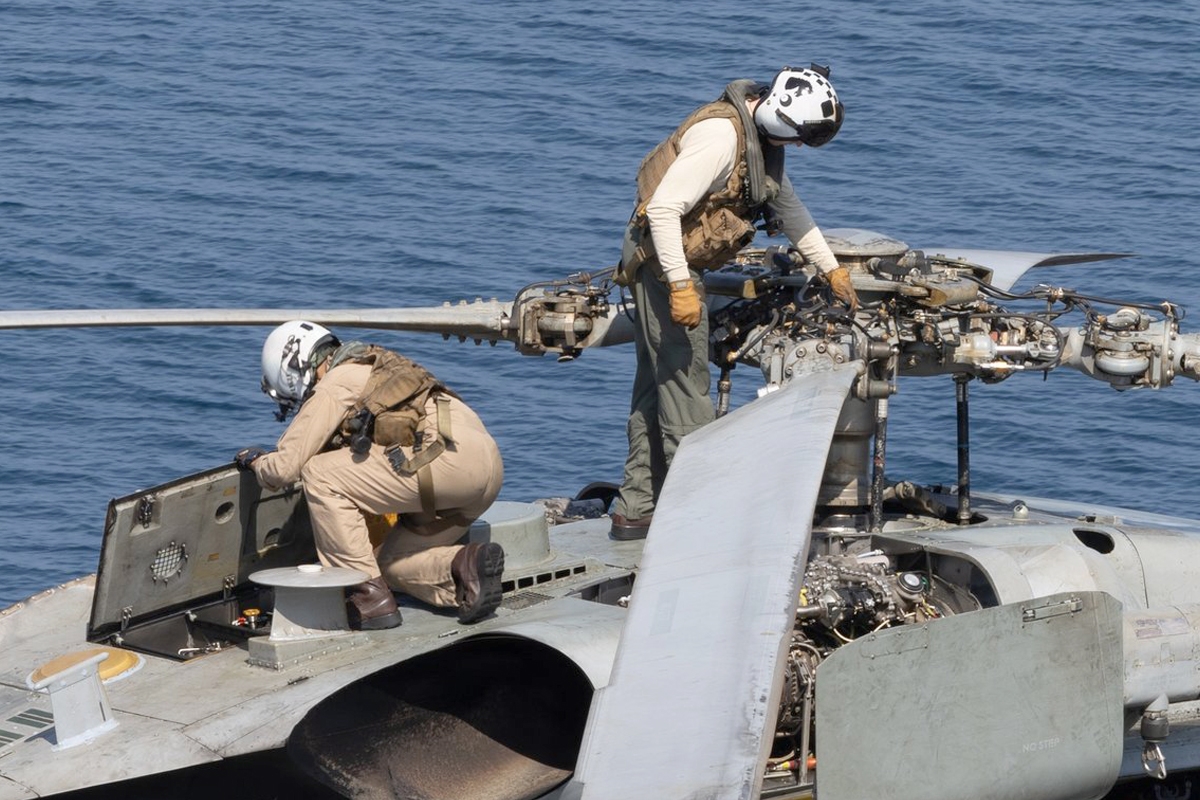
The US military tightens its naval blockade on Iran while Trump considers military strike options with Israel amid divisions in the national security team
Translated by Alqyas from Al-Jarida — Original source
Amid heightened tensions stemming from renewed Iranian aggression against regional states and the continued targeting of commercial vessels in the Strait of Hormuz, the U.S. military tightened its naval blockade against Iran, warning that it would consider ships receiving cargo at sea from other vessels loaded at Iranian ports as an attempt to circumvent sanctions imposed on Tehran. Meanwhile, U.S. and Israeli reports indicated that President Donald Trump is reconsidering the option of launching broad strikes.
U.S. Central Command (CENTCOM) stated in a statement that “any vessel violating those directives may be seized by force, boarded, diverted, or directed toward the Iranian port from which the cargo originated.”
This development came as Axios reported that President Donald Trump is still considering executing a major joint attack with Israel against Iran. The U.S. website cited two sources stating that the White House has asked the Pentagon and intelligence agencies to prepare an assessment of Iran’s response to each of the potential military strike scenarios developed by the U.S. military.
Amid anticipation of Trump’s decision to either maintain the current status quo—which relies on strangling Iran through economic sanctions and blockades—or return to war, sources indicated that any U.S. operation would involve Israel and would include strikes on Iranian nuclear facilities such as Fordow, as well as bridges and power plants, alongside targeting Iranian leaders.
While Trump faces conflicting pressures from various external parties regarding a decision to return to all-out war, the site noted that the Republican president’s National Security team is divided; some members, such as Secretary of Defense Pete Hegseth, advocate for bold military action, whereas the President and senior members of his team, including Vice President J.D. Vance and Secretary of State Marco Rubio, have stated publicly and in private conversations that the United States is heeding advice from regional countries that prefer not to initiate a new broad attack.
This aligns with leaks from Israeli circles indicating that Netanyahu stated during recent security discussions that “there is no alternative but to act against Iran.”
As the White House considers that its current Republican administration has a window of opportunity to carry out a military operation before the Democratic Party assumes control of Congress in January next year, Trump indicated on Wednesday night that launching a strike is not imminent. He told Fox News, “We’ll see; we are approaching a new year, and we will see what happens after January 1. They have been very bad.”
With the mediation path led by Qatar and Pakistan blocked, Trump described Islamabad’s signing of a memorandum of understanding with Tehran as a waste of time. He pointed out that “there are indications that Iran is moving toward gas and biological weapons; we have closed the door to them on the nuclear file, which is a much more complex path, and that is very bad.”
He noted that his country does not need Moscow’s or Beijing’s assistance in ending the war with Iran, emphasizing the need to keep U.S. forces in the region and to end the conflict with Tehran one way or another.
Babaei called for targeting oil pipelines transporting oil out of the Gulf region and ships transferring oil via ship-to-ship operations, adding that Houthi rebels in Yemen would assist his country in doing so. He also threatened regional countries aiding the United States with targeting their energy infrastructure.
Meanwhile, the Iranian military claimed that three oil tankers struck naval mines in the Strait of Hormuz and caught fire while attempting to transit under the protection of the U.S. military, as one of the three U.S. carrier strike groups stationed in the Arabian Sea departed the area.
