Energy Research Conference: Preparing a national strategy to reduce carbon emissions
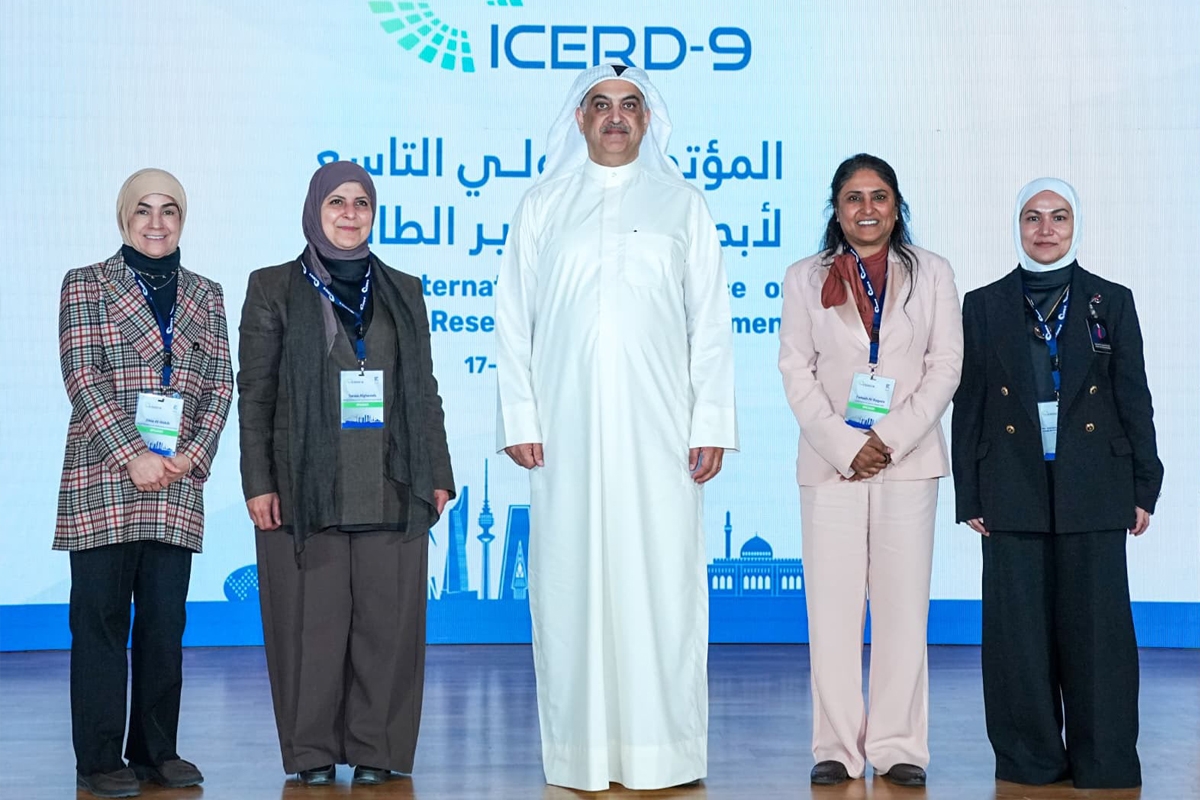
Energy Research Conference discusses emission reduction strategies in the Gulf
Translated by Alqyas from Al-Jarida — Original source
This came during the closing of the University of Kuwait’s proceedings of the “ICERD-9” conference, held today under the patronage of Prime Minister Sheikh Ahmad Abdullah Al-Salim Al-Sabah, and witnessed the participation of researchers, academics, experts, policymakers, and representatives from the industrial sector from several countries.
Participants discussed recent developments in energy research, emission reduction technologies, and pathways toward a low-carbon economy, with a focus on challenges and opportunities in the Gulf Cooperation Council (GCC) countries and hot-climate regions.
In one of the keynote lectures, former Minister of Electricity Dr. Salem Al-Hajraf presented a roadmap for achieving a balanced energy transition in GCC countries, outlining the current status of renewable energy projects and the economic, regulatory, and technical challenges facing the achievement of carbon neutrality goals. Sarah Maston explored ways to improve the efficiency of existing buildings through updating their engineering systems, retrofitting, and enhancing their operation. Meanwhile, Professor Ibrahim Dincer highlighted the role of innovation in developing the hydrogen economy and the requirements for its production, storage, transportation, and utilization.
Dr. Stephen Samut presented the European experience in governing energy technologies and linking scientific research with industrial manufacturing and application. Luke Leung discussed ways to leverage artificial intelligence alongside engineering expertise to analyze energy consumption and improve building performance, and to develop plans for reducing emissions across large building portfolios.
The scientific sessions discussed more than 40 research papers covering renewable energy technologies, hydrogen, thermal energy storage, and phase-change materials. The sessions included improving the efficiency of air conditioning and cooling systems, enhancing indoor air quality, and developing ventilation and passive cooling methods for buildings. The papers also examined desalination technologies, waste heat recovery, Internet of Things (IoT) applications, and smart control systems for energy management. A specialized workshop discussed the future of engineering education in the Gulf countries and ways to develop curricula to keep pace with artificial intelligence, digital transformation, and sustainability requirements.
