Al-Milifi, Al-Rumaidhi, and Al-Shatti reviewed the contributions of voluntary work to leading and developing the Kuwaiti cultural landscape
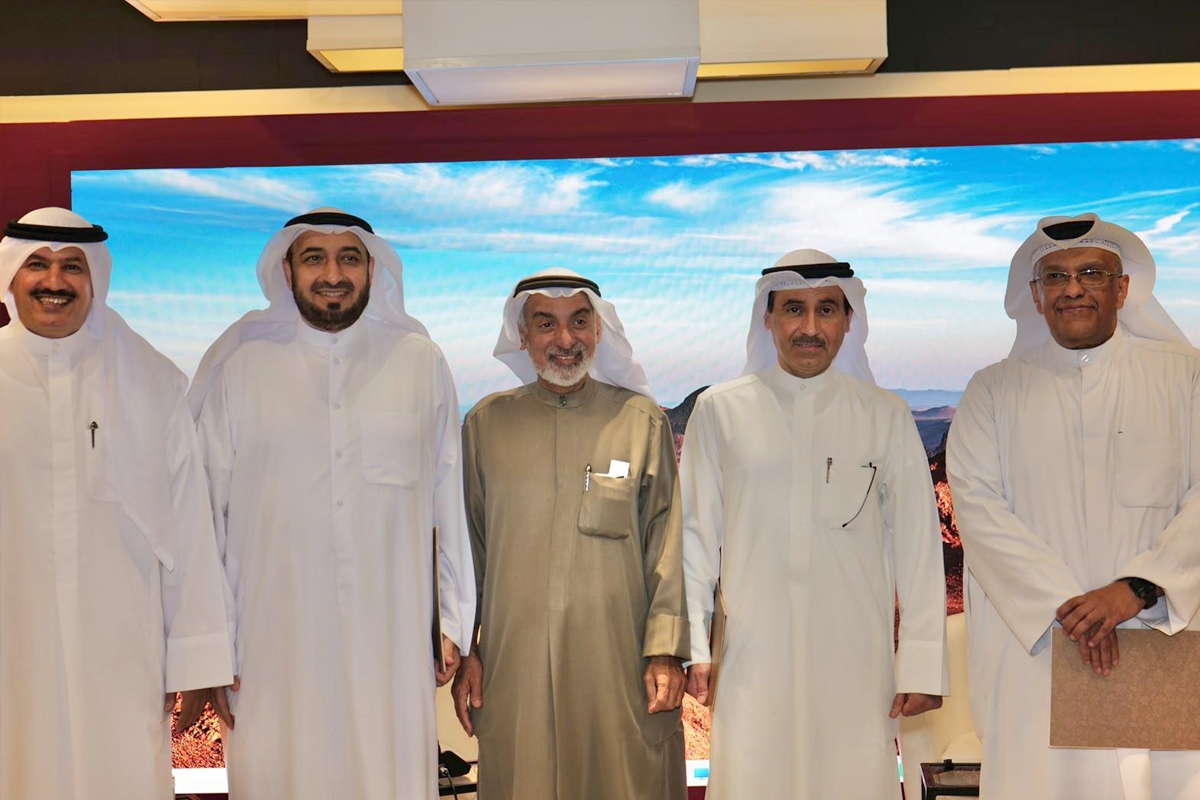
A cultural meeting reviewed the experiences of the Graduates Association and the Writers Association in supporting cultural work
Translated by Alqyas from Al-Jarida — Original source
As part of the cultural events accompanying the 49th edition of the Kuwait International Book Fair, the Thinkers Forum, in its ninth iteration, organized a cultural meeting titled “Renewed Contributions of Volunteering to the Entrepreneurship and Development of Cultural Work.” The event took place at the “VIP Hall, Hall 6” cultural café in the Mishref area. The forum featured three dialogue sessions, with the second session, “Field Insights into Cultural Volunteering,” featuring Dr. Khaled Al-Shatti, writer Ibrahim Al-Mulifi, and writer Talal Al-Rumaidhi, moderated by Dr. Aaid Al-Jarid, head of the administrative board and founder of the Thinkers Voluntary Team.
In the context of reviewing the contributions of civil society institutions to the development of cultural work, writer Ibrahim Al-Mulifi discussed the experience of the Kuwait Alumni Association. He presented a paper detailing the association’s establishment in 1964, noting that it is one of the most prominent public benefit institutions and intellectual platforms in Kuwait. He stated, “The association was created as a natural extension of the Alumni Club, which was active between 1954 and 1959, representing since then a shared intellectual and cultural space that brings together university graduates from various disciplines and intellectual backgrounds.”
Al-Mulifi emphasized in his paper that over the decades, the Kuwait Alumni Association has played a crucial role in shaping collective consciousness, supporting literary movements, and staunchly defending the values of democracy, freedom of opinion, and freedom of expression in Kuwaiti society. It also served as a primary incubator for Kuwait’s intellectual elite and thinkers.
He explained that the association’s cultural contributions manifested through several pathways, most notably providing an independent intellectual platform to organize seminars, literary lectures, and political discussions to address local and Arab issues. It also formed partnerships with official and civil institutions, such as the National Council for Culture, Arts and Letters and public benefit associations, to enliven the cultural landscape and adopt collective stances on pressing issues.
Al-Mulifi also touched upon the Kuwait Alumni Association’s publications, specifically a series of important documentary reports titled “The State of Freedom of Expression in the State of Kuwait.” These reports accurately documented the reality of freedoms and the impact of monitoring tools. He noted that the association launched a cultural initiative in the form of the Summer Book Fair, the first edition of which launched in 2016 at the Martyr Mubarak Falah Al-Nutt Hall.
He mentioned that the fair achieved rapid growth across its successive editions. In its ninth edition, held in August 2026 under the slogan “A Renewed Journey Toward Reading,” the fair witnessed a qualitative leap marked by a record participation of publishing houses, with more than 20 publishers, libraries, private universities, and scientific institutions taking part. For the first time, significant spaces were dedicated to visual arts and workshops for painting and caricature.
Concluding his speech, Al-Mulifi said, “The Kuwait Alumni Association’s journey proves that civil society institutions can make a real difference in cultural movements by balancing their enlightening cultural role with the association’s objectives dedicated to alumni issues and the defense of intellectual freedoms.”
Writer Talal Al-Rumaidhi presented a paper titled “My Voluntary Experience as President of the Kuwait Writers Association,” in which he reviewed his voluntary work within the association’s board of directors over ten years. He highlighted the association’s role as one of the prominent public benefit institutions in enriching cultural and literary movements, not only in Kuwait but also extending to the Gulf, Arab, and Islamic levels.
Al-Rumaidi stated that the Kuwait Writers Association boasts a history rich in cultural contributions and impactful participation, noting that his paper focused on his practical experience in managing volunteer work, including events and initiatives aimed at revitalizing Kuwait’s cultural landscape and strengthening the association’s presence in society.
He explained that the philosophy of volunteerism in the literary and cultural fields rests on several key pillars. The foremost is the religious impulse, which encourages writers and intellectuals to embody religious values in their work, events, and statements. This is complemented by a national dimension centered on serving the country and enhancing its reputation by addressing its issues and concerns through culture and literature.
He added that this philosophy is also grounded in an ethical pillar that emphasizes avoiding sectarian and tribal interests, and committing to integrity in discourse and dissemination. Furthermore, it includes a cultural pillar aimed at supporting and enriching literary activities, and reinforcing the role of intellectuals in society.
He stressed that cultural volunteerism extends beyond organizing events and activities; it entails intellectual, ethical, and national responsibilities that make writers active partners in societal development, addressing societal issues, and consolidating cultural identity.
For his part, Dr. Al-Shatti noted that Kuwait has been known throughout its history for its generosity, a tradition sustained over four centuries through the voluntary efforts of its citizens to serve society in various fields. This legacy has established Kuwait as “the country of Arabs,” “Kuwait is by your side,” and a “global center for humanitarian work,” affirming that the nation’s history testifies to its pioneering role in volunteerism.
He clarified that Kuwaitis’ contributions, particularly in the cultural sector, were evident early on through their engagement with books—copying, authoring, printing, collecting, distributing, and endowing them—as well as participating in editing magazines since the early 20th century. Kuwaitis voluntarily established numerous newspapers and magazines, many of which are documented in the book “Press Encyclopedia” by Fahd Al-Abd al-Jaleel, Saleh Al-Musbah, and Nada Al-Rifai. Additionally, he highlighted civil initiatives to establish libraries, such as the Kuwait Charity Society Library and university libraries.
He pointed to prominent examples of individual generosity, including the Al-Babtain Poetry Library, emphasizing the importance of the private sector’s role in supporting culture through corporate social responsibility, alongside government institutions’ efforts to support cultural activities and establish universities and schools both within Kuwait and abroad. He concluded that the Kuwaiti experience is replete with volunteer models supporting culture at both local and international levels.
