Research center: Islam to become the world's largest religion by 2035
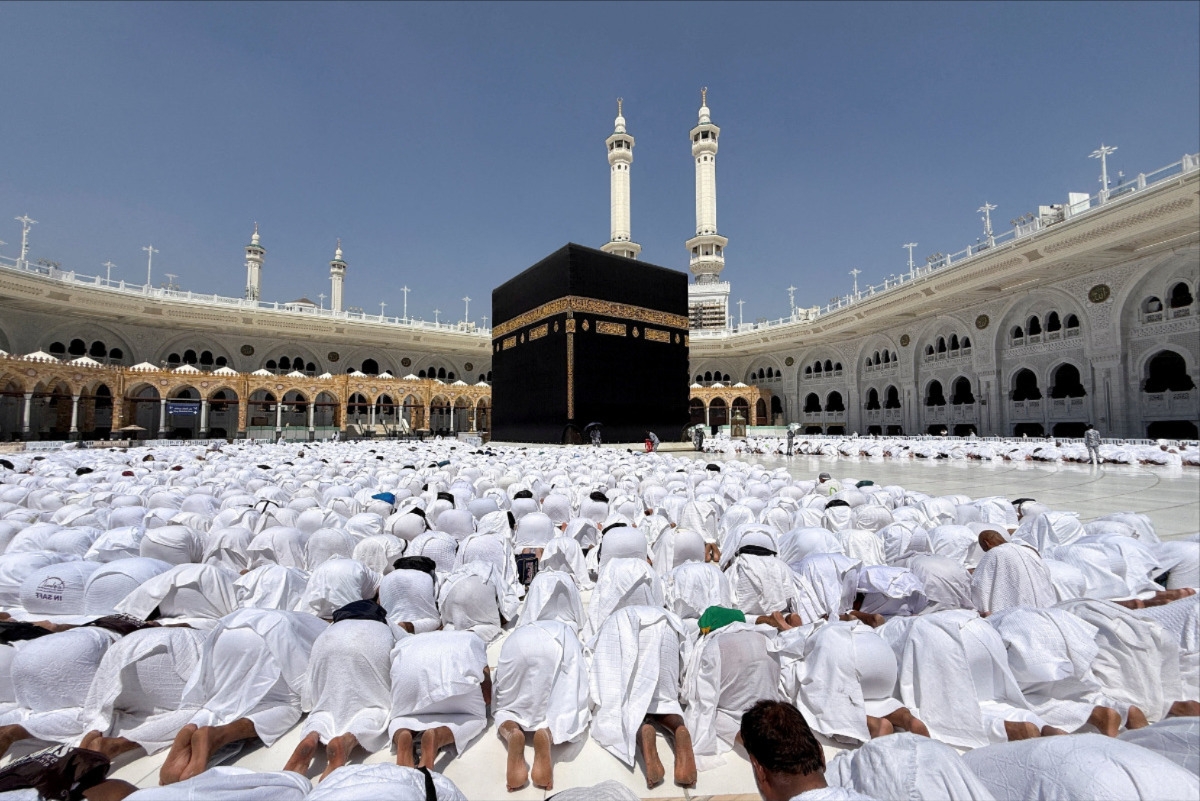
A Pew Research Center report predicts Muslim population growth will outpace that of Christians
Translated by Alqyas from Al-Jarida — Original source
A study by the Pew Research Center noted that although Christianity has remained the world’s largest religion for centuries, the Muslim population is growing much faster, with projections indicating it will reach 2.57 billion by 2035, compared to 2.52 billion Christians in the same year.
The center stated that if current trends continue, the number of Muslims will reach approximately 3.6 billion by 2070, surpassing the Christian population, which is projected to reach 3 billion. Consequently, Muslims will constitute the largest share of the global population, rising to 37% from 26% in 2020. In contrast, the proportion of Christians is expected to remain stable at around 29%, keeping Christianity in second place globally in terms of adherents.
The study attributed this shift largely to higher fertility rates in the Islamic world, with an average of 3.1 children per Muslim woman, compared to 2.5 children per Christian woman between 2020 and 2025.
For all other religious groups combined, the average birth rate during that period was 1.6 children per woman, a rate below the minimum of 2.1 children per woman required for generational replacement.
The Pew Research Center, an independent research organization based in Washington, noted that while natural population growth—defined as the excess of births over deaths—remains the primary driver of demographic changes among Muslims and Christians, religious switching will also play a role in this transformation.
Based on past trends, Pew indicated that both Islam and Christianity will lose more adherents due to religious switching than they will gain, but Muslims are expected to experience a much smaller net loss of 8 million between 2020 and 2070, compared to a loss of 105 million for Christians.
The global population is projected to increase by 29% between 2020 and 2070. Islam and Christianity are expected to be the only religious groups whose growth rates match or exceed this global average, with increases of 80% and 30%, respectively.
While the absolute number of Hindus will increase, their share of the global population is expected to decline slightly to 13.6% in 2070. Jews are expected to follow a similar pattern, with their share reaching 0.17% in 2070. Buddhists, however, are projected to see both their absolute numbers and their share of the global population decline, reaching 2.5% in 2070.
According to Pew, other religions combined—including Bahá’ís, Druze, Jains, Sikhs, and followers of various local religions—are expected to see a slight increase in the number of adherents, although their combined share of the global population will fall to less than 2% by 2070.
Furthermore, the study predicted that the proportion of people unaffiliated with any religion—a category that includes atheists and agnostics—will decline sharply from 24% of the global population in 2020 to 17% in 2070.
For example, by 2070, Christianity will be the largest religion in the United States, but it will no longer be the faith of the majority. The Democratic Republic of the Congo will surpass the United States as the country with the largest Christian population.
