Iran expands its treacherous aggression on the Gulf and warns Washington of resuming war
In a blow to efforts to revive the diplomatic track aimed at finding a peaceful solution to the crisis that has entered its ninth month, Iran expanded its heinous attacks, which began last Friday on Gulf countries from Bahrain, to include Kuwait and an Emirati ship today. And
Translated by Alqyas from Al-Jarida — Original source
In a blow to efforts to revive the diplomatic track aimed at finding a peaceful resolution to the crisis, which has now entered its ninth month, Iran expanded its malicious attacks, which began last Friday against Gulf states including Bahrain, to include Kuwait and an Emirati vessel today.
While the Kuwaiti military successfully repelled hostile drone attacks—the first of their kind since early September—the General Command of Bahrain Defense Force reported that its air defenses thwarted a fourth treacherous Iranian attack since last Friday.
In the UAE, Abu Dhabi National Oil Company (ADNOC) confirmed that one of its vessels was attacked while transiting the Strait of Hormuz on the night of Tuesday-Wednesday, resulting in the injury of 11 people. The company stated that the remaining crew members of the targeted vessel were evacuated, except for one crew member who remains missing following the strike on the strategic waterway.
Meanwhile, GCC Secretary-General Jassem Al-Bedaiwi condemned the Iranian Ministry of Foreign Affairs’ statement regarding the rulings issued by the Bahraini judiciary, rejecting its allegations and denouncing its insults against the Kingdom or its institutions. He emphasized that the statement constitutes a blatant interference in Bahrain’s internal affairs and an unacceptable violation of its sovereignty and the independence of its judicial authority.
Al-Bedaiwi expressed the GCC states’ full confidence in the integrity and independence of the Bahraini judiciary, and in the legal guarantees it provides to litigants. He noted that Tehran’s rush to defend convicts in a case involving espionage for Iran’s benefit and ties to its Revolutionary Guard reveals the nature of these connections and reflects its continued policy of interfering in the affairs of GCC member states and attempting to incite sectarian tensions, which the GCC states firmly reject.
Al-Bedaiwi called on Iran to cease interfering in Bahrain’s internal affairs and to stop its continuous attacks on its territory, which constitute a blatant violation of UN Security Council Resolution 2817 (2026). He also condemned practices that threaten regional security, urging Iran to respect the sovereignty of states and to comply with the UN Charter, international law, and the principles of good neighborliness.
The Iranian attacks came hours after US strikes targeted a missile launch site on the strategically important Iranian island of Qeshm in the Strait of Hormuz.
A US military official stated that US fighter jets carried out a precision-guided munitions strike on the night of Tuesday against a Revolutionary Guard missile launch site in Qeshm. The Axios website quoted the official as saying the strike was conducted in self-defense in response to an “Iranian Revolutionary Guard attack that targeted US personnel and equipment.” He added that US Central Command (CENTCOM) continues to monitor the situation with extreme vigilance and that its forces are on full alert to protect Americans throughout the region.
Meanwhile, NBC News reported that a US official stated Washington and Tehran have been exchanging attacks quietly, particularly over the past two months, as the Pentagon has not publicly confirmed most of the strikes Iran has suffered.
These developments come as US President Donald Trump considers resuming large-scale military operations against Iran, which insists on “seven conditions” to end the war amid disagreements between Tehran and Washington over the scheduling of steps to implement any agreement reached, and Tehran’s refusal to grant nuclear concessions before its demands are met.
CENTCOM Commander Brad Cooper held a meeting with Israeli Chief of Staff Eyal Zamir and several senior staff officers at the Israeli Defense Ministry headquarters, known as “HaKirya,” in Tel Aviv. The discussion focused on the latest security developments and the readiness of the Israeli and U.S. militaries to resume combat against Iran if necessary.
In a related development, The Washington Post reported that outgoing Prime Minister Benjamin Netanyahu tasked Mossad with preparing a covert operation inside Iran, without the knowledge of the military and government leadership, despite military reservations and concerns about sparking a new war that could draw in the Trump administration.
While White House officials estimate that the Republican administration prefers maintaining the naval blockade and economic strangulation of Iran over resuming war, U.S. President Donald Trump stated during a meeting with his Philippine counterpart, Ferdinand Marcos Jr., that the United States is achieving very good results regarding Iran. Meanwhile, U.S. Secretary of State Marco Rubio said that Tehran does not pose an “imminent threat” to U.S. territory, denying any direct and immediate danger from Iran following reports suggesting its readiness to carry out a dirty bomb attack on the United States.
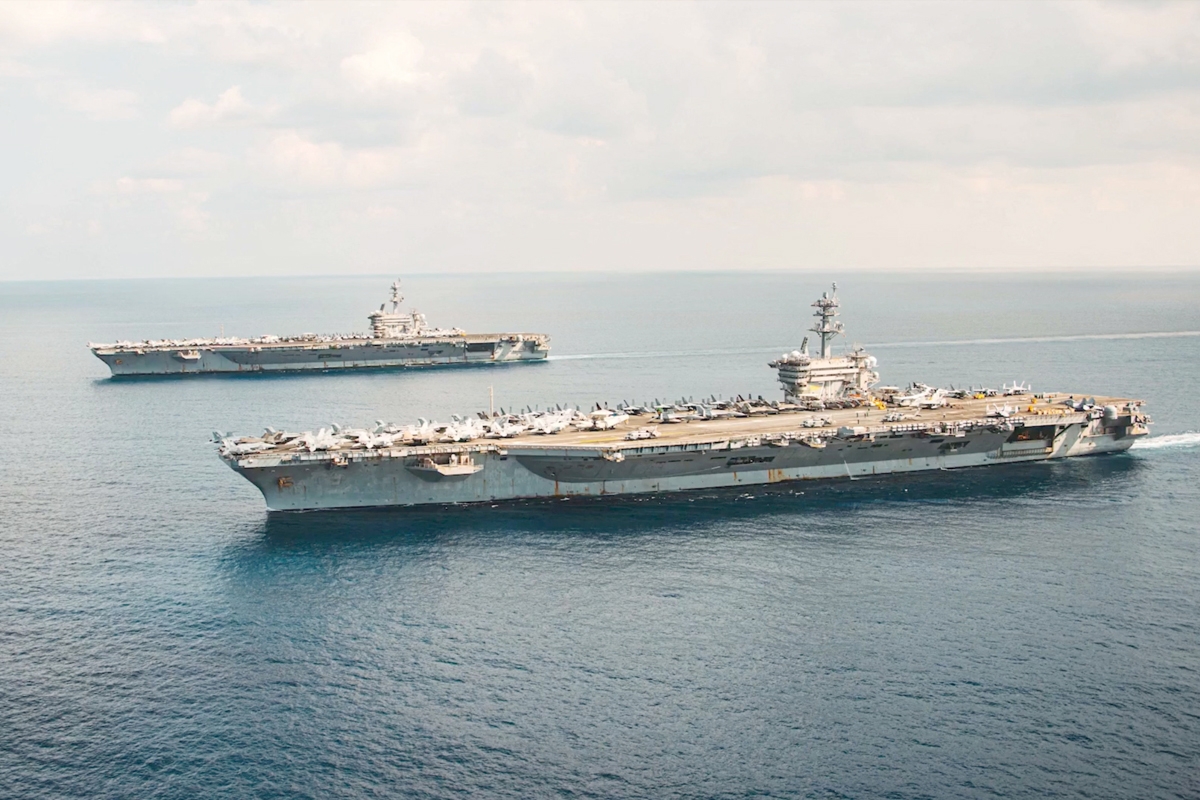
On the other side, the Iranian military endorsed the malicious attacks targeting Kuwait and Bahrain, claiming in a statement that fighter jets and attack drones struck U.S. military facilities. Iranian Army Commander Amir Hatami threatened that his country is prepared to respond in a “more destructive” manner and will not be bound by geographical borders if Washington and its allies launch new attacks on its territory. He noted that Tehran is monitoring U.S. movements to deploy additional forces after the arrival of a third aircraft carrier in the region.
Iran’s Head of the Judiciary, Gholam-Hossein Mohseni Ejei, warned that Trump intends to launch a new attack on his country. Ejei stated, “We are more prepared today to face the enemy, and our armed forces have not retreated before the enemy and will not retreat.”
Meanwhile, International Atomic Energy Agency (IAEA) Director General Rafael Grossi announced that the agency cannot confirm that Iran’s nuclear activities are not diverted from peaceful uses unless Tehran provides information on the status of its declared nuclear materials and facilities and allows for on-site verification.
