Has the United States approached Day Zero?
Successive outages in US digital infrastructure affecting economy and transport
Translated by Alqyas from Al-Jarida — Original source
Writer Anna Sandler leaves the home of former U.S. President George Mullane after a meeting about his memoirs, calling her office from the car on the way back; but suddenly... the traffic light goes out, the connection is lost, everything digital goes dark, and a message appears on her phone: “This will happen again.”
Before she can process it, a train strikes the car. Across the country, one minute of system failure turns into a disaster that kills more than 3,000 people, as paralysis spreads to transportation and communications systems.
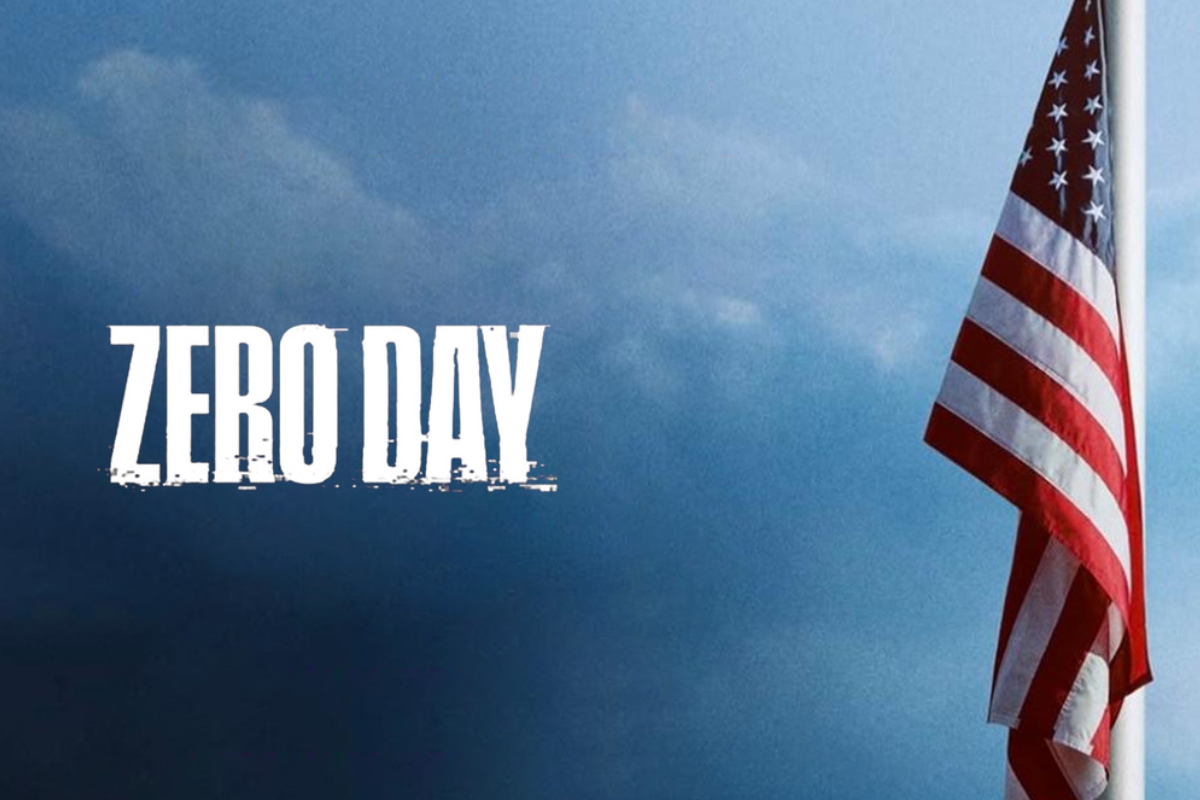
This was a scene from the short series “Zero Day,” starring Robert De Niro, released in 2025.
Off-screen, a series of outages between November 12 and 17 have brought the question back to the United States: What does it take for the digital economy to stumble? And what is required to protect it?
- According to the company’s initial report, a latent software bug present since July coincided with increased load and the simultaneous removal of about 14% of network gateway server capacity from service for a separate reason.
- When some servers failed, the system rerouted their requests to others that were still operational, increasing the pressure on them until they too went down. Thus, a protection mechanism contributed to spreading the crisis, and the main outage lasted approximately 24 hours.
- On Friday, the picture shifted to airports, where the Federal Aviation Administration linked the disruption of its systems to a data surge that overwhelmed legacy equipment, following upgrades that included installing a new router (a device that determines data paths within the network).
- Instability affected 17 of 22 air traffic control centers, leading to precautionary halts in takeoffs for about five hours, while some communications and radars remained operational. The agency confirmed that all aircraft landed safely.
- Economically, the delays extend to aircraft and crews that fail to reach their next flight locations. Therefore, the technical problem may end before the loss of time and sales does; the revenue from canceled flights does not compensate for the return of the system.
- On Monday, transactions at JPMorgan were delayed due to an internal software glitch. The bank clarified that the impact could extend to other banks when it is a party to transactions with them.
- A delayed transfer between two banks does not mean both systems are down. Zelle stated that its network is operational, and U.S. Bank confirmed that its systems were not directly affected, although payments for their customers may be delayed.
- On the same day, United Airlines applications experienced outages that included the provision of final aircraft weight data, according to a pilot memo reviewed by Reuters. Since this information is necessary for flight preparation, takeoffs were delayed.
- On Tuesday, a disruption appeared in NSANet, the classified information exchange network within the National Security Agency, where the flow of information among employees was hindered.
- Official statements so far rule out a “conspiracy” and mostly point to independent “technical glitches” in each case.
Here, the “Zero Day” scene returns: what is cut off on screen extends its impact to life outside it. The plane, the room, and the balance may remain, but the ability to use them at the required moment is disabled.
Not every minute of downtime carries the same cost. A delayed message can be sent later, but a missed hotel booking may go to a competitor. Some losses are wasted time, others are lost revenue or additional expenses to restore operations.
Stephen McQuiston, a researcher at the University of St Andrews, explains that institutions choose a limited number of cloud service providers because they are less costly and more convenient, but this concentrates risk and allows outages to spread.
This is an economic paradox: consolidating services saves money and simplifies operations, but it may cause a single vendor’s error to disrupt many institutions simultaneously. A backup loses its value if it relies on the same infrastructure that has failed.
- As of Tuesday evening, no evidence had been released linking the incidents to a coordinated attack, and Microsoft, JPMorgan, and Apple denied that they had suffered a cyberattack; temporal proximity alone is insufficient to establish a common cause.
- The possibility that artificial intelligence has gone out of control is also not supported by the published evidence. Microsoft denied that its outage was related to AI or its agents, and the automatic redistribution of requests does not imply a rebellion by a smart system.
- These are risks worth testing, especially since evidence has shown that some systems have acted independently and rebelliously, causing breaches of private and government sites worldwide. However, this is not considered a substantiated explanation for the recent incidents in the United States.
- Several other paradoxical facts converge: the glitches occurred during updates or maintenance, i.e., when attempts were made to improve the systems. Therefore, update budgets must include testing of changes and isolating their impact, as well as allocating resources for a safe rollback if failures occur.
- Questions also arise, such as “How can an economy that leads technological development fail so dramatically in the face of isolated glitches?” “What would the situation look like in the event of a deliberate attack?” and “Will the current chaos stop at this point?”
- Anna’s text message, which says “This will happen again,” remains a logical warning of what is to come. However, the answer to one question remains absent: how will Washington respond to future failures of comprehensive systems?
