London School of Economics and Kuwait
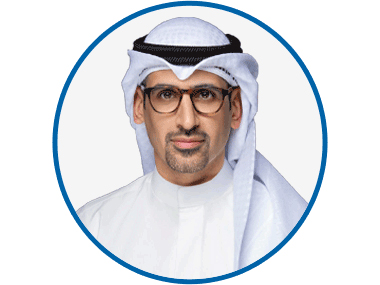
Kuwaiti researcher's experience in a workshop on health policies with the London School of Economics
Translated by Alqyas from Al-Jarida — Original source
About two years ago, I attended a health policy workshop organized by the Kuwait Foundation for the Advancement of Sciences in collaboration with the London School of Economics. The workshop featured economists and specialists who view health through lenses different from those of us, researchers in genetics and medical sciences.
We are preoccupied with patients, their diagnoses, and their treatments, but we rarely ask: How do our research findings translate into services that reach them? Scientific discoveries remain confined to academic journals unless they find their way into health policy. This is where economics comes in: cost analysis, priority setting, trade-offs among options within limited resources, and the development of actionable steps. This is why the discussions resonated with me, despite the differences in our fields.
The workshop was part of the “Kuwait Program” at the Middle East Centre of the School, funded by the Foundation. The program brings together researchers from Kuwait and the School into joint teams to study issues directly affecting the country: healthcare, water and food security, energy and economic diversification, digital transformation, public sector reform, and educational and environmental policies. It also offers research fellowships in London, publishes peer-reviewed papers and policy briefs, and has, since 2017, hosted a network of Kuwaiti researchers who have collaborated with it.
What distinguishes this model is that its projects are long-term, aiming to build local research capacity rather than producing a single study and then moving on. Broad headlines are translated into specific questions, questions into data, and data into recommendations that address policymakers. These are questions we face daily in our food, air, water, and services, but they require systematic study and measurement tools. The program has previously organized research seminars in London and Kuwait, bringing academics and practitioners together around a single table and fostering discussions that are rarely possible within the confines of a single discipline.
International cooperation becomes more relevant to our needs when it starts with questions specific to Kuwait, and when our researchers participate in shaping those questions, not just in executing them, benefiting from the expertise of their colleagues while contributing their knowledge of society and its conditions. In this way, we build knowledge from our own data rather than importing results from other contexts, develop national capacities, and bridge the gap between research and policy. For me, the workshop was an opportunity to broaden my thinking as a researcher and to see beyond the walls of the laboratory.
The program’s strength lies in its “word and deed” approach: workshops followed by joint research projects, knowledge exchange, and sustained scientific relationships. I would like to thank Dr. Amna Al-Farhan, Sheikh Jaber Al-Mashal Al-Sabah and his team in the relevant administration, and all those involved in these exceptional initiatives. Nations are not elevated by the knowledge they import, but by what their own people create.
