The Chamber Organizes a Workshop for Government Leaders on AI Utilization and Governance
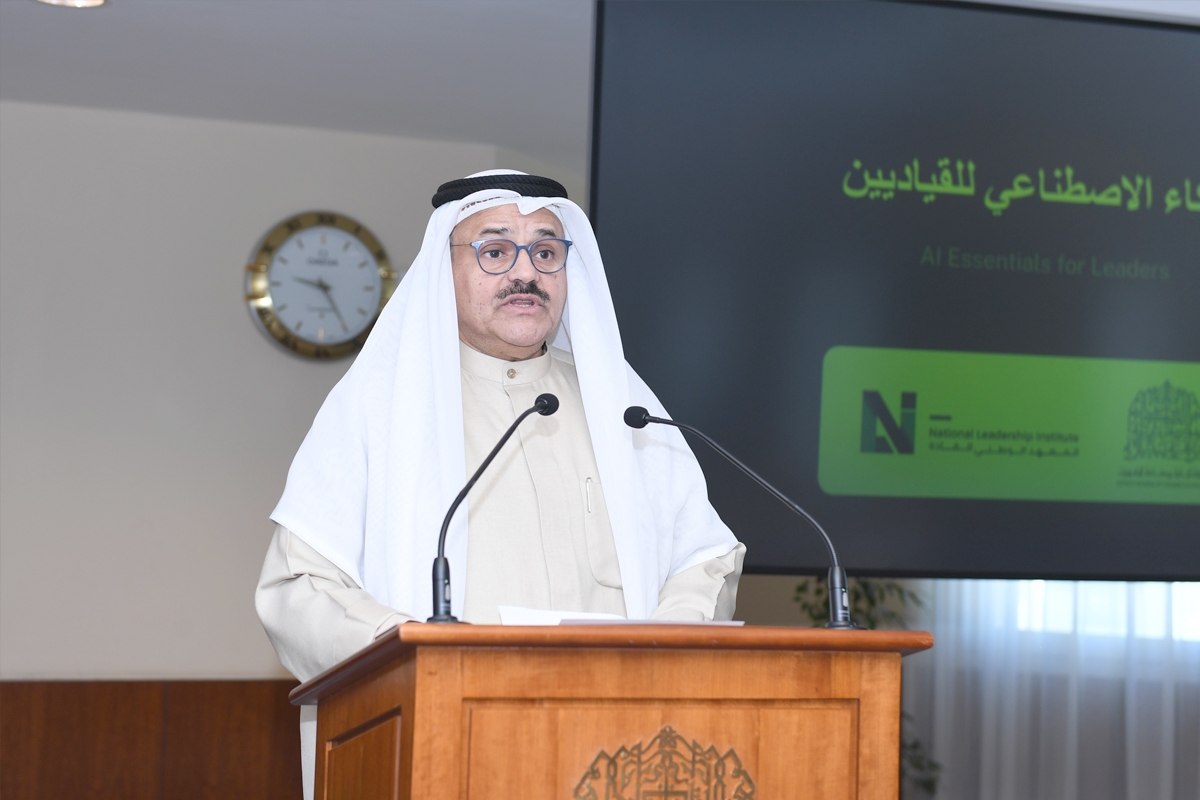
The Kuwait Chamber of Commerce and Industry, in collaboration with the National Institute for Leaders, organized a workshop for government leaders on AI utilization and governance
Translated by Alqyas from Al-Jarida — Original source
The Kuwait Chamber of Commerce and Industry, in collaboration with the National Leadership Institute (NLI), organized the “AI Fundamentals for Leaders” workshop today at the Chamber’s headquarters, with participation from officials and leaders representing more than 20 government entities.
Speaking at the opening ceremony, Chamber Managing Director Rabah Al-Rabah said, “Our research and consultations with companies have shown that leveraging artificial intelligence depends on leaders’ understanding of its capabilities, limitations, and risks. This is why the Chamber is focused on raising awareness and building leadership capacity.”
This understanding is particularly crucial for government leaders, as private sector executives begin experimenting with AI applications in their operations. Government and regulatory bodies play a pivotal role in creating an environment that enables companies to develop and expand these initiatives, through clear frameworks that support innovation, regulate and protect data usage, and define responsibilities associated with technology adoption.
The workshop was conducted over two sessions. The first session focused on prioritizing the development of government services in light of beneficiaries’ needs, and on the responsibility of government entities for decisions affecting individuals’ rights and entitlements.
The second session addressed the considerations government entities should take into account before adopting new initiatives, including the expected benefits for beneficiaries and the entity’s capacity for implementation and sustainability. Participants also discussed ways to protect data and measure service improvements before scaling up applications.
Commenting on the workshop’s impact on the work of participating entities, one participant said, “The workshop helped us understand what we need to pay attention to before using these technologies, particularly regarding data protection and information verification. We now have a clearer vision of the areas where we can achieve the greatest benefit for our entity and its service beneficiaries.”
Regarding the role of such training, another participant said, “Kuwait is taking important steps to develop digital services and prepare government personnel. Workshops like this play a vital role in translating this readiness into service improvements, as they enable leaders to discuss what is suitable for implementation in their entities and what is needed to ensure success.”
The Chamber looks forward to gradually expanding these efforts to address more challenges facing AI adoption in Kuwait, through training and awareness initiatives. It places special emphasis on enhancing dialogue among government entities, the private sector, and experts regarding applications that suit Kuwait’s needs and the requirements for their deployment to benefit the economy and society.
