Lebanese Relief Over US Envoy's Agenda
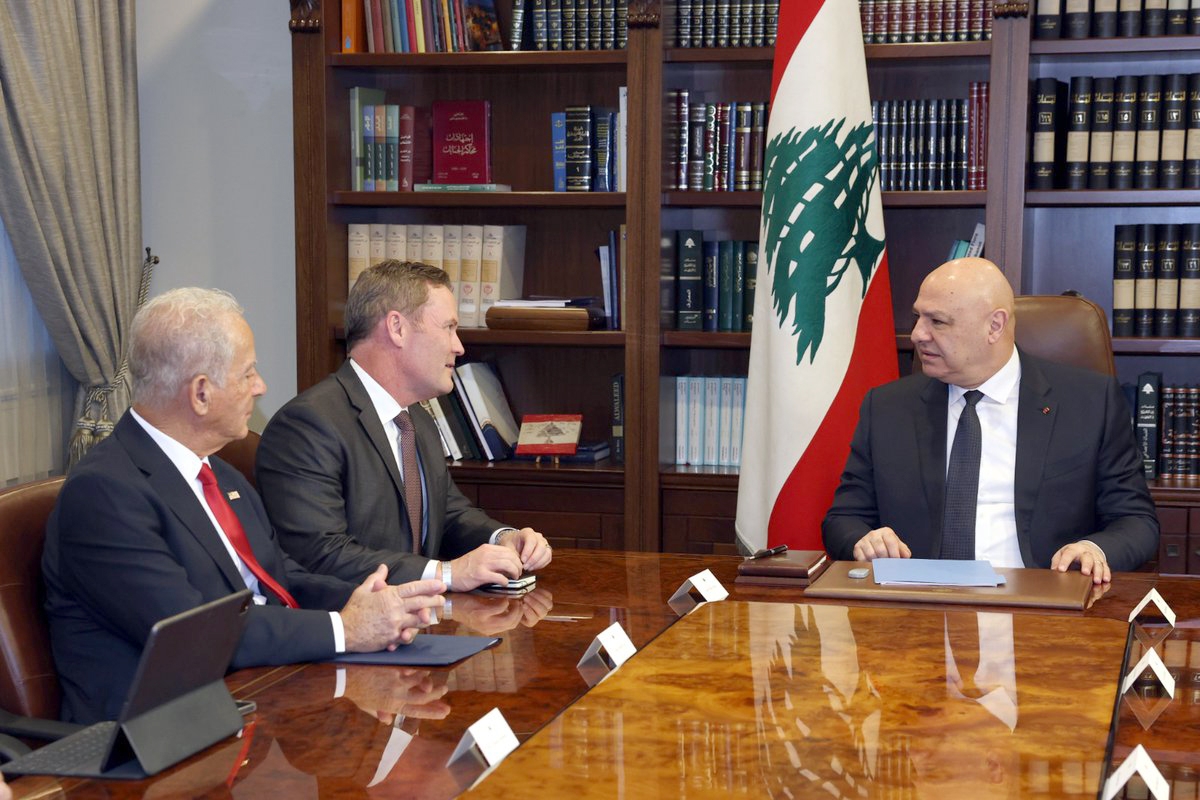
US Ambassador Mike Waltz's visit to Beirut to discuss the post-UNIFIL phase and coordinate positions with France
Translated by Alqyas from Al-Jarida — Original source
Lebanese officials welcomed the visit of U.S. Ambassador to the United Nations Mike Waltz to Beirut to discuss the post-UNIFIL phase.
“UNIFIL is a thing of the past, and there is a new phase that must be entered. This new phase concerns the South, Lebanon as a whole, and the region at large.”
This statement encapsulated the U.S. envoy’s visit, independent of the details of the discussions. Whether the decisions issued or taken later will be linked to Resolution 1701, Resolution 1559, the Framework Agreement, or the Armistice Agreement, the core concern for Washington is convincing Lebanese stakeholders to enter this new phase and implement its requirements: extending state authority over the entire territory, disarming and monopolizing weapons within state hands, and keeping pace with regional transformations to achieve a final and sustainable resolution of the conflict with Israel.
Under this heading, Ambassador Waltz expressed understanding of all the concerns raised by Lebanese officials and spoke with them clearly: “If you are comfortable with France and its proposals, there is no problem with that. We are consulting with the French and coordinating with them. Today I met with the French Ambassador to Lebanon, Patrick Dorell, and in the coming days I will meet with the French Ambassador to the United Nations, Jérôme Bonaventure, to coordinate on any decision that may be issued. And if you are comfortable with Resolution 1701, there is no problem with that either. We can keep it in place and introduce some amendments to it. The same applies to the Armistice Agreement, if you wish to mention it in any international decision.”
Coinciding with his visit, Lebanon received information from the United States regarding Hezbollah’s efforts to bolster its military capabilities and continue arms smuggling operations from Syria, as well as its attempts to expand its political influence and regain its ability to affect decisions of the Lebanese state, halt the process of restricting weapons, or obstruct investigations into the transfer of explosives. Lebanon was also briefed on clear U.S. positions emphasizing the necessity of completing measures to prevent Hezbollah from regaining its influence, with a U.S. focus on the need to secure the border with Syria. This signals that any international decision related to disarming and placing weapons under state control should not be limited to the South, but must cover all Lebanese territories, including the Bekaa Valley, as well as the mandate of the international force that will oversee the restriction of weapons.
The most important message Lebanon is receiving from the Americans and other international powers is that any international force formed as a successor to UNIFIL will not perform the mission on behalf of the Lebanese state. Rather, the Lebanese state must take decisive action, make its decisions, and implement them. The role of the international force is to support the Lebanese state and the Lebanese Army, providing assistance, accompaniment, oversight, and verification. Among the messages Lebanon is receiving is that if Beirut and Hezbollah do not respond to this path, it means the status quo in the South will remain unchanged, and Lebanon will lose out.
