Ahmed Tibi elected Deputy Speaker of the Israeli Knesset
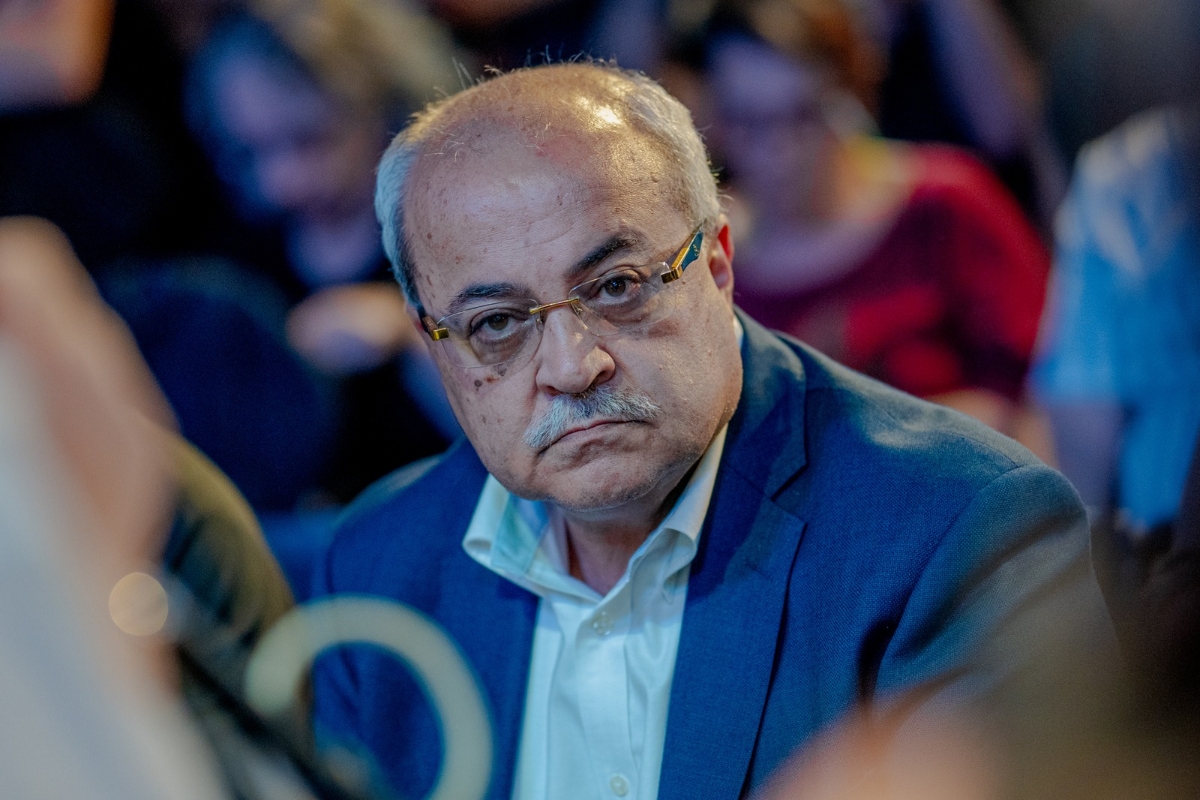
Election of Ahmed Tibi as Deputy Speaker of the Knesset, and intensive discussions to form the government regarding the Haredi conscription law and political pressures between the Netanyahu and Eizenkot blocs.
Translated by Alqyas from Al-Jarida — Original source
Al Jazeera’s correspondent reported on Monday that Ahmed Tibi, head of the Joint List, was elected Deputy Speaker of the Knesset. Additionally, the Knesset’s Foreign Affairs and Security Committee elected the leader of the right-wing opposition party Yisrael Beiteinu, Avigdor Lieberman, as its chairman.
Israeli media quoted Lieberman, immediately after his appointment as chairman of the Foreign Affairs and Security Committee, as calling for a meeting with all heads of the security establishment within the committee. He stated that there was illegal interference by Prime Minister Benjamin Netanyahu’s office in the elections, asserting that they would uncover it.
In his first reaction, Israeli Defense Minister Yisrael Katz said he would not allow Lieberman to turn the Foreign Affairs and Security Committee into a political arena and a tool for attacking the military and the government. Katz added that he would approve the summoning of security officials to the committee only on professional and legal grounds, following prior clarification and coordination. He noted that summoning security officials is intended to provide briefings to competent bodies and to enable parliamentary oversight of the military and government activities.
On the other hand, Lieberman said in media interviews that he would begin discussing a draft law on conscription that afternoon. He added that drafting the law requires it to pass through three key stages to ensure its acceptance and implementation. He explained that these stages are obtaining the approval of the Chief of Staff, passing the judicial review test in the Supreme Court of Justice, and securing the approval of the Haredi religious authority, Rabbi Dov Landau. He continued that the anticipated formulation would not be a “conscription for all” law, referring to a “balanced compromise.”
These parties are pushing for the enactment of a law that grants exemptions from military service to Haredim (Jews who are religiously strict), specifically yeshiva students, a move rejected by certain political parties and public sectors in Israel.
The issue of Haredi conscription remains one of the major obstacles to reaching an agreement to form the Israeli government by Yesh Atid leader Gadi Eisenkot, who has been tasked with forming the government. This is amid the insistence of their parties on military exemptions and the demands of the Change camp parties to expand the scope of service.
Haaretz newspaper revealed sources from the United Torah Judaism (UTJ) party in Israel about talks between the party and representatives of Eisenkot’s bloc, noting that they are proceeding at a rapid pace. The newspaper indicated that these talks are being held in complete secrecy. However, UTJ party leader Yaakov Asher announced on Sunday evening that “reports speaking of significant progress in communications and the exchange of drafts” with the party have no basis in fact.
Despite the denial, the newspaper, citing sources, said that intensive talks have been underway between the parties for more than two weeks, pointing out that the UTJ party faces a historic opportunity that is difficult to repeat: definitively resolving the issue of mandatory conscription for Haredim this time through a comprehensive agreement in the Knesset.
Haredi parties have placed the legal regulation of yeshiva students at the forefront of their demands. Haaretz explained that the talks are being held secretly to alleviate the intense pressure exerted by Benjamin Netanyahu’s bloc on the UTJ party, and to allow room for retreat in case no agreement is reached.
Describing the situation, a source told the newspaper, “The pressure Netanyahu is exerting is insane. His team is in contact with anyone who knows someone capable of doing something—through relatives, rabbis, and acquaintances—and all staff in the Prime Minister’s office are mobilized for this purpose.”
Both sides recognize that mandatory conscription law cannot be enacted before the government is formed. Therefore, Haredi parties will have to take a calculated risk and grant Eisenkot’s bloc confidence, with the understanding that agreements will indeed be implemented, the newspaper added.
The newspaper believes that Eisenkot is determined to form a government at any cost and will not hand over power to Netanyahu. However, if talks fail and a government is not formed, his bloc will form a one-day government with the support of Arab parties and contest the elections under Eisenkot’s leadership.
On Sunday, Eisenkot stated that his rival, Benjamin Netanyahu, the head of the caretaker government, “cannot remain at the helm of the government for even one additional minute.”
Eisenkot’s stance came in response to an investigation broadcast by Israeli Channel 12, which revealed suspicions that associates of Netanyahu orchestrated the arrest of activists from the United Arab List on election day for the Knesset on October 27, by providing the police with misleading intelligence.
In a post on the American platform X, Eisenkot said that Netanyahu’s behavior and that of his associates constitutes a “direct threat to democracy,” accusing them of subordinating state institutions to the prime minister’s political and personal interests.
He added, “There is no longer any space in Israel that has not been corrupted, distorted, and subordinated for the sake of Netanyahu’s political survival,” noting that “there is no longer any deterrent he has not overcome or any boundary he has not crossed.”
Eisenkot stressed that Netanyahu must not be allowed to continue holding onto power “for even one additional minute,” warning against holding a new round of elections with him as prime minister. He said, “As long as he is in office, there will be no fair and sound elections in Israel.”
Political negotiations to form the new Israeli government continue amid disagreements over the future of the prime ministership and suspicions regarding the role of security agencies in dealing with Arab parties and activists during the elections.
On November 8, Israeli President Isaac Herzog tasked Eisenkot with forming the new government, after receiving recommendations from 67 Knesset members, compared to 46 for Netanyahu, while 7 members abstained from recommending any candidate.
The legislative elections held on October 27 resulted in Netanyahu’s camp securing 53 seats, Eisenkot’s camp 48 seats, and Arab parties 19 seats.
Under Israeli law, Eisenkot has a 28-day deadline to form the government, which expires on December 6 next year. The president can extend this period by an additional 14 days. He needs to secure the confidence of at least 61 out of 120 members of the Knesset.
