Gold Slips on Dollar Strength and Bond Yields Rise
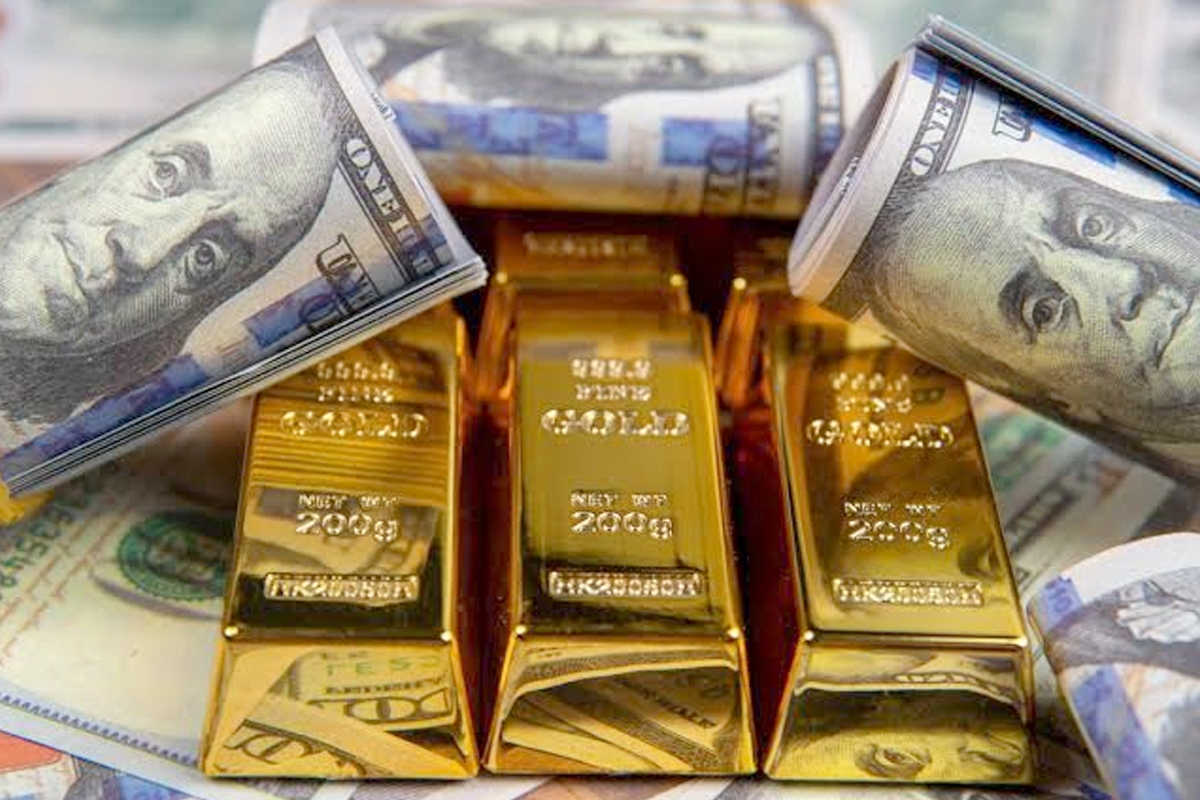
Gold prices record sharp losses due to tightening US monetary policy
Translated by Alqyas from Al-Jarida — Original source
Gold prices ended last week’s trading with sharp losses of around 4.5 percent, closing at $3,883 per ounce, under pressure from a rising US dollar, Treasury yields, and expectations that US monetary policy would remain tight.
A report issued today by Dar Al Sana’ek (Kuwait Bullion Company) stated that a strong wave of selling pushed the yellow metal to shed the $4,000-per-ounce level and retreat to levels near $3,853, reflecting the extent of the pressures gold faced during the week despite limited recovery attempts at the close of trading.
The report clarified that markets witnessed a noticeable shift in expectations regarding US monetary policy last week, as inflation data and comments from several Federal Reserve officials reinforced the likelihood of further interest rate hikes at the upcoming December meeting. This development negatively impacted gold’s appeal as a non-yielding asset.
It added that US producer price data for October came in below market expectations but were insufficient to alleviate concerns about persistent inflation, particularly following the release of consumer price data, which showed an increase in price pressures.
The report noted that market expectations for a 25-basis-point US interest rate hike in December rose to around 90 percent, while the probability of a 50-basis-point increase reached approximately 10 percent, according to market estimates cited in last week’s report.
It highlighted that these developments reflect a continued shift toward more hawkish expectations for US monetary policy, which could limit gold’s recovery prospects in the coming period, especially if the dollar and bond yields remain at elevated levels.
It pointed out that markets are entering a new week with anticipation for several key economic indicators, foremost among them the minutes of the US Federal Open Market Committee meeting, scheduled for release on November 18. These minutes will attract widespread attention in search of additional signals regarding monetary policy direction and the likelihood of an interest rate hike in December.
It stated that if economic data come in stronger than expected, pressure on gold could intensify due to increased bets on continued tight monetary policy. Conversely, signs of slowing economic activity could lead to lower yields and a weaker dollar, giving the yellow metal a chance to recover some of its losses.
The Dar Al Sana’ek report noted that the US dollar index regained the 103-point level and approached its highest point in 19 months, coinciding with a rise in the yield on 10-year US Treasury bonds to around 5.15 percent, which added further pressure on gold prices during last week’s trading.
It explained that the relationship between the dollar and bond yields will remain among the most significant factors influencing the movement of the precious metal. Continued rises in both could limit upside opportunities, while a decline in either could stimulate investment demand for gold and silver.
The report indicated that any signs of a slowdown in the US economy or a reduction in inflationary pressures could alter investors’ expectations regarding the interest rate trajectory, potentially having a positive impact on the performance of precious metals.
