Lebanon: Arab and regional momentum to prevent Israeli dominance and ease US pressure
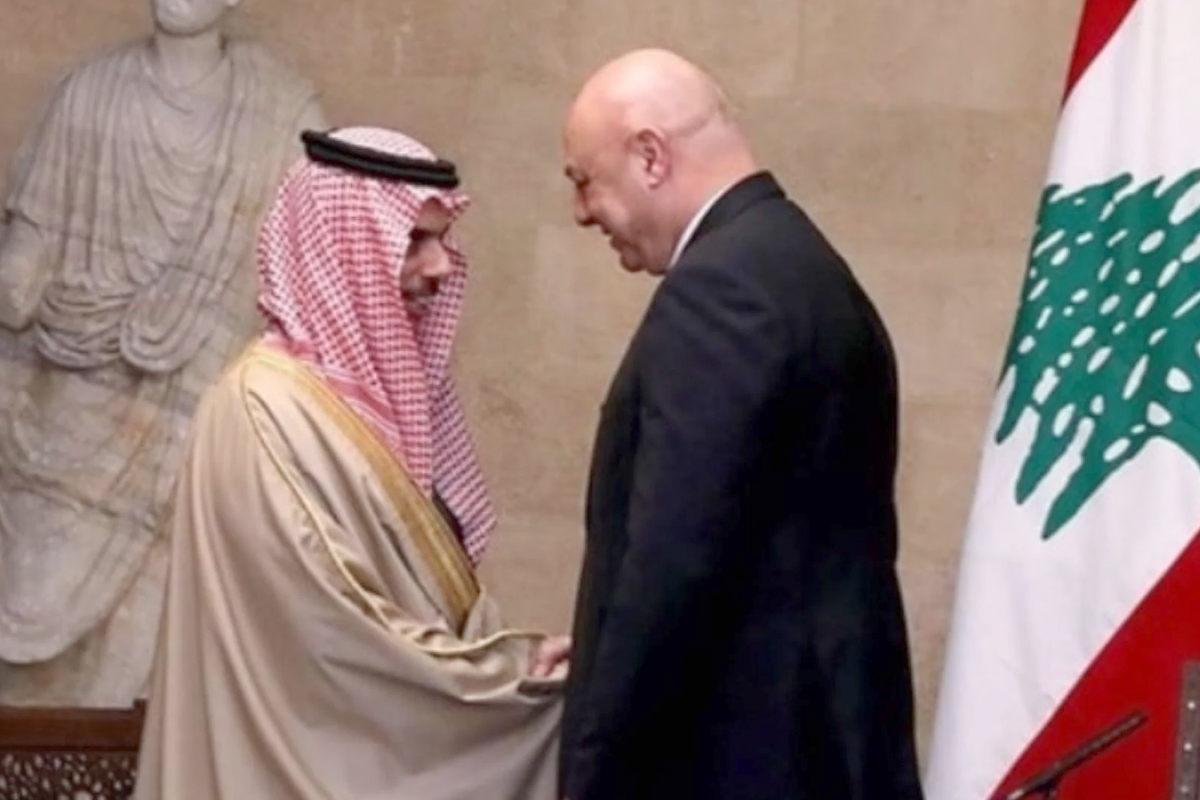
Visits by Erdogan and Bin Farhan to enhance regional coordination
Translated by Alqyas from Al-Jarida — Original source
Regional and international presence continues to converge in Lebanon; as soon as Turkish President Recep Tayyip Erdoğan’s son, Bilal Erdoğan, departed Beirut, Saudi envoy Prince Faisal bin Farhan arrived to meet with officials. Meanwhile, Prime Minister Nawaf Salam traveled to Doha to finalize an agreement on electricity, particularly since Qatar is prepared to enter an electricity production project by supplying Lebanon with gas via Syria, investing in solar energy, and building gas-fired power plants within three years.
Concurrently, Lebanese Interior Minister Ahmad al-Hajar conducted a visit to Damascus to meet his Syrian counterpart Anas al-Khattab, discussing the enhancement of bilateral relations, security coordination, border control, and the prevention of smuggling.
Over three days, Bilal Erdoğan toured Lebanon, recalling his father’s 2010 visit, which carried many symbolic and significant implications. Most importantly, the visit placed Lebanon at the center of regional tensions. The younger Erdoğan highlighted several key points, stating that his visit to Lebanon had received his father’s approval. Although close advisors had recommended postponing it due to security conditions, he insisted on proceeding. He believed that the changes witnessed in Syria would have a positive impact on the situation there, as well as in Turkey and Lebanon, and on relations between these countries and their peoples. He noted that movement and visits among the peoples of the three countries would become possible by land, either by car or through a railway project, in addition to cultural ties between Istanbul and Tripoli and attention to its port.
In his meetings and dialogues, he stated, “We will not accept Lebanon under Israeli dominance,” echoing his father’s assertion that Turkey’s security begins in Aleppo, Damascus, and Beirut. This clearly indicates that the Israeli-Turkish rivalry in the Arab Mashriq region has reached its peak. He called on Lebanese to engage in internal dialogue and expressed Turkey’s readiness to assist them in various fields and files, including dialogue with Iran regarding all disputes and outstanding issues.
Prince Faisal bin Farhan’s visit, meanwhile, serves several objectives: first, to dispel all rumors about Lebanon being removed from his portfolio; second, to reaffirm Saudi interest in the Lebanese file; third, to organize relations among officials; and fourth, to signal the necessity of increased coordination among the presidency and various institutions in light of Lebanon’s upcoming challenges, particularly regarding the post-UNIFIL phase and the formation of an international force to be deployed in the south. This comes as the Security Council prepares to convene a session to adopt the necessary resolution, amid reports of US efforts to issue a framework agreement as a Security Council resolution, while France seeks to integrate it into Resolution 1701. What Lebanon needs in this regard is a unified stance coordinated with Arab and international powers, amid intensifying US pressure on the Lebanese Army to embark on a path to implement the plan for monopolizing weapons within the state.
In this context, diplomatic sources continue to indicate that the US remains committed to the tripartite framework, viewing it as a clear path to ensure Israel’s withdrawal from southern Lebanon and to establish peaceful neighborly relations between the two countries. Both sides have committed to these two objectives. We still anticipate that the Lebanese Army will proceed with verification procedures to disarm Hezbollah and dismantle its infrastructure, starting with experimental areas and extending to all parts of the country, and that the Israeli Army will respond with similar steps.
