GCC demands compensation from Iran, while Trump links strikes to its provocations
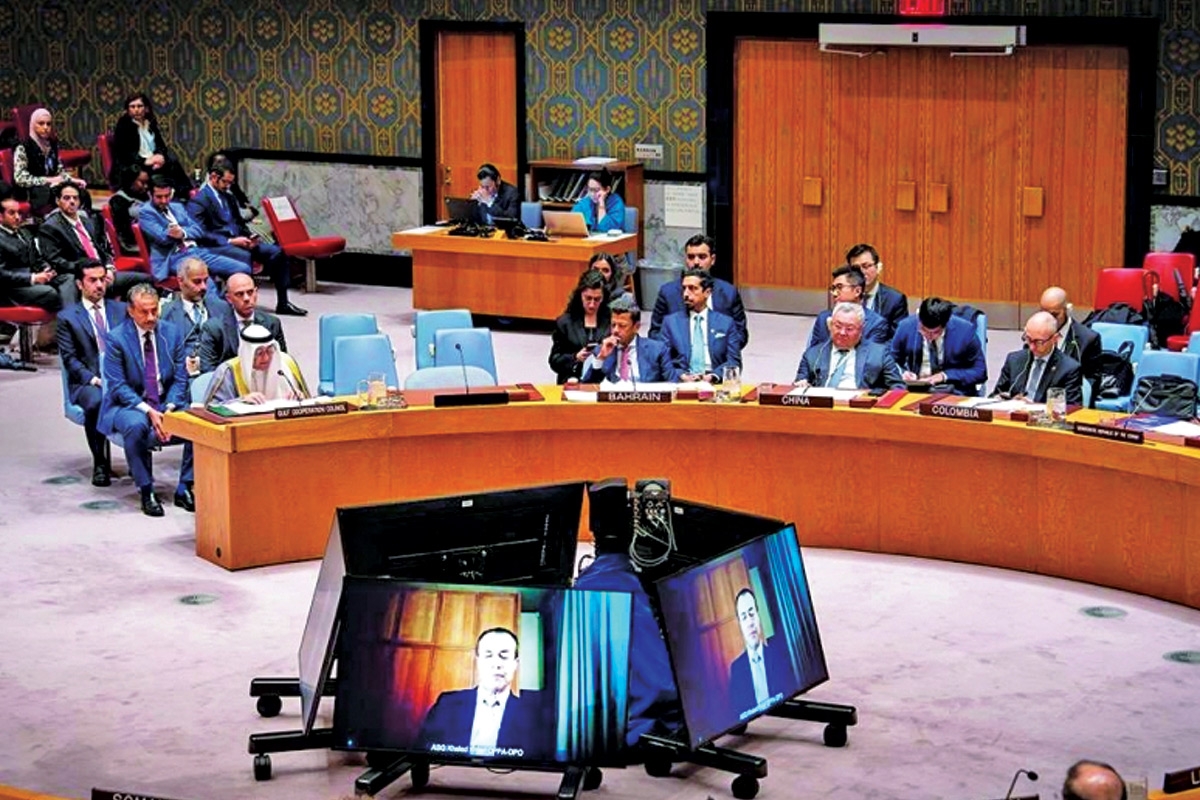
Gulf Cooperation Council demands the UN Security Council compel Iran to pay compensation, while Trump links strikes against it to new provocations.
Translated by Qiyas from الجريدة — Original source
As Iran’s war enters a prolonged phase of ambiguity and energy and infrastructure facilities continue to come under attack, with commercial vessels targeted while navigating the Strait of Hormuz, the Gulf Cooperation Council (GCC) has called on the international community to take action ensuring an end to Iran’s reprehensible attacks and compelling it to pay compensation.
GCC Secretary-General Jassem Al-Bedaiwi, during a briefing before the UN Security Council on Friday night at the United Nations headquarters in New York, revealed that Gulf states have been subjected to attacks since February 28 involving more than 7,000 missiles and drones targeting airports, ports, critical facilities, and residential areas, resulting in casualties, injuries, and severe damage to infrastructure.
While reiterating his condemnation of the attacks and placing full responsibility on Iran and its repercussions, Al-Bedaiwi praised the adoption of Security Council Resolution 2817 of 2026, which condemned the attacks and demanded their immediate cessation, as well as Human Rights Council Resolution 61/1 of 2026, which called for holding Tehran accountable and providing reparations for damages and losses caused by its attacks.
He stressed that any regional or international understanding with Iran must address all security concerns of Gulf states, including its nuclear program, ballistic missiles, drones, and support for proxy militias.
He emphasized the need for an immediate and unconditional halt to Iranian attacks on GCC states and Jordan, whether directly or through its proxies, and called for stopping Houthi attacks on Saudi Arabia and commercial vessels, as well as enforcing the arms embargo on the Yemeni rebel group.
He affirmed that Gulf states are keen to resolve crises through dialogue and diplomacy and to build relations with Iran based on respect for sovereignty, good neighborliness, and non-interference in internal affairs, stressing that GCC states will continue to support mediation and peace efforts, and that Gulf security is an integral part of international security.
Meanwhile, Reuters reported that US President Donald Trump informed his senior advisors in recent days that he may refrain from attacking Iran again if Tehran or the Houthis do not carry out new provocations against the US.
Amid fluctuating signals between threats of escalating the war with new strikes and de-escalating combat operations, current and former officials said the Republican president has not yet made up his mind on how to end the unpopular war, which he launched in February alongside Israel.
Reuters reported that Trump sought the opinions of Saudi Crown Prince Mohammed bin Salman and Turkish President Recep Tayyip Erdoğan during phone calls over the past two weeks, both of whom urged him not to resume the war.
While Trump showed understanding of his allies’ positions in the region and did not commit to any specific course, two US officials clarified that intelligence assessments concluded that the Iranian economy has been harmed by the US naval blockade and economic sanctions campaign, and that these measures will continue to pressure Tehran.
Sources noted that US planning involves maintaining military buildup to keep options open for escalation if necessary, with a third aircraft carrier approaching the Arabian Sea, while a source familiar with Trump’s talks with regional leaders indicated he might choose to bomb Iranian nuclear facilities such as the Fordow facility.
While Trump stated that his administration does not need to reach an agreement with Tehran, a source familiar with the talks told The Washington Post that mediation efforts by Qatar between Iran and the US have made gradual progress in recent weeks, with the Iranian side agreeing to discuss the nuclear file partially alongside US openness to offering Tehran economic incentives.
This comes as the Times of Israel reported that negotiators from Washington, Tehran, and Doha fear that Israeli Prime Minister Benjamin Netanyahu, whose government is serving in a caretaker capacity, may issue an order to launch a new attack on Tehran. Meanwhile, Axios reported that Netanyahu is pressuring Trump to resume airstrikes.
In response, Tasnim News Agency, affiliated with the Islamic Revolutionary Guard Corps, claimed that Iran possesses the technical capability to extend the range of its missiles, enabling it to target U.S. bases in parts of Europe and the United States.
On the ground, Tehran announced that explosions and fires broke out on three oil tankers after they struck mines east of the Strait of Hormuz, and stated that it had shot down a U.S. drone over the strait. This comes a day after U.S. Central Command (CENTCOM) denied that the Islamic Revolutionary Guard Corps had targeted an early-warning radar in Bahrain.
