"Yalta 2" Tests the Global Order and Redefines Balances and Influence
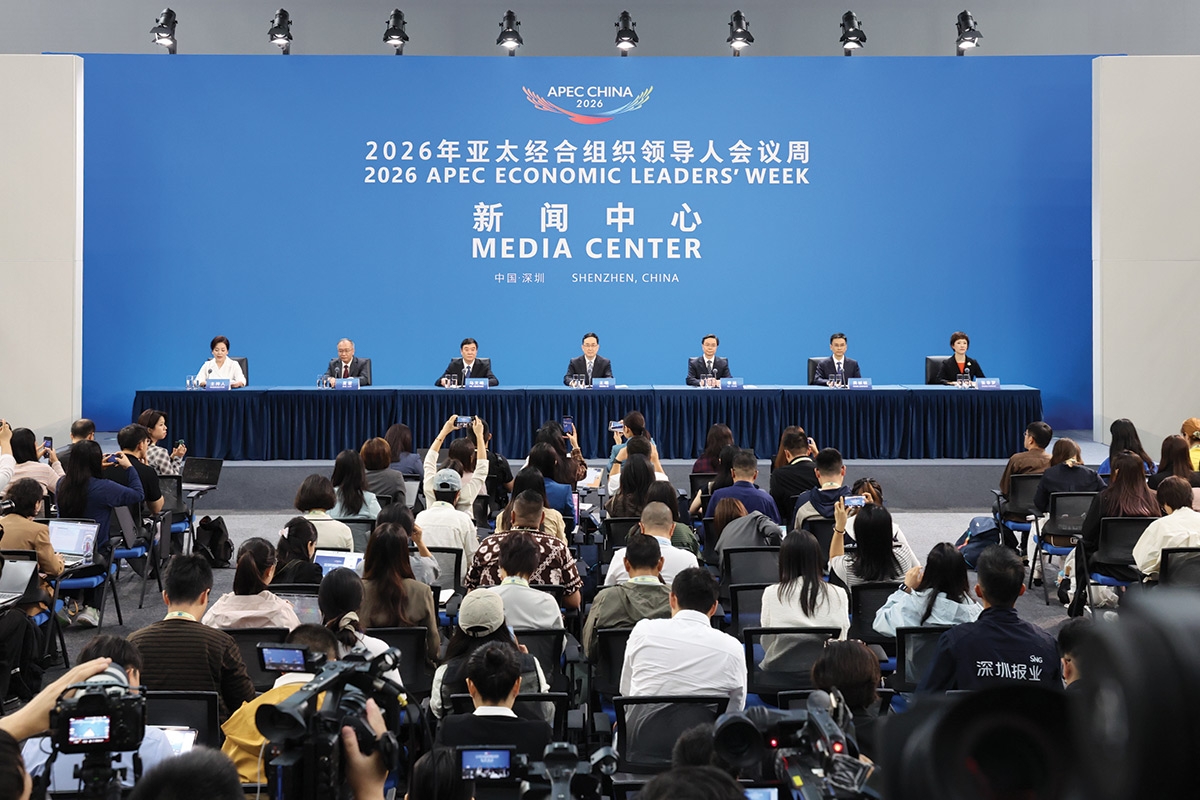
An unprecedented summit brings together leaders of the US, Russia, and China to discuss nuclear balances and technology
Translated by Qiyas from الجريدة — Original source
In an unprecedented summit evoking the 1945 Yalta Conference and raising questions about the potential redrawing of spheres of influence and the contours of a new international order led by understandings among the world’s nuclear and economic powers, global attention is focused on Chinese President Xi Jinping’s meeting with his American counterpart, Donald Trump, and Russian counterpart, Vladimir Putin, on Thursday in Shenzhen. This comes amid multiple flashpoints of tension, escalating wars, heightened geopolitical frictions, and competition over technology, energy, and trade.
The anticipated summit takes place on the sidelines of the Asia-Pacific Economic Cooperation (APEC) forum. The White House has confirmed that Trump will hold talks with Xi and Putin covering the Iran war and nuclear arms reduction. Meanwhile, Beijing and Moscow have not issued a joint confirmation of the meeting, despite ongoing communications regarding its arrangements and agenda.
The summit’s significance stems from the nature of its participants and its timing, bringing together the three most influential states in global nuclear and economic power equations. Their strategic interests intersect and clash across issues ranging from the Middle East and Eastern Europe to the Indian and Pacific Oceans, as well as international trade, semiconductors, artificial intelligence, energy security, and supply chains. Observers view the event as a pivotal diplomatic milestone, although expectations for concrete breakthroughs remain limited.
Comparisons with Yalta have revived concerns that great-power understandings may override the interests of smaller states, similar to the February 1945 conference that brought together U.S. President Franklin D. Roosevelt, British Prime Minister Winston Churchill, and Soviet leader Joseph Stalin to discuss post-World War II Europe arrangements, thereby establishing spheres of influence that characterized the international system during the Cold War.
Despite fundamental differences between the historical contexts, the meeting of Washington, Beijing, and Moscow raises fears that decisions on security, sovereignty, and the future of conflicts could be made without the participation of directly affected parties, particularly Ukraine and European nations.
Ukrainian President Volodymyr Zelenskyy has warned against the meeting becoming a “new Yalta” that redistributes spheres of influence. Meanwhile, Russian circles view the mere meeting of Putin with Trump and Xi as an acknowledgment of Moscow’s status as a major pole in the international system, reinforcing its narrative regarding the transition to a multipolar world.
Putin sees the meeting as an opportunity to strengthen Russia’s international standing, improve its negotiating position, and keep its strategic interests at the forefront of great-power calculations. Xi, meanwhile, faces the challenge of managing a summit with divergent agendas without allowing nuclear or political commitments to be imposed on China that do not align with its status and interests.
In the Middle East, military escalation with Iran tops the security files expected to be raised by Trump, who seeks to discuss the repercussions of the war with Moscow and Beijing, given their strategic relationships and interests with Tehran. The positions of Moscow and Beijing are particularly significant amid growing military, intelligence, and diplomatic cooperation between Russia and Iran, as well as China’s economic interests tied to regional stability, ensuring the flow of energy supplies, and trade.
The Iran war serves as a test of the three powers’ ability to contain regional crises, especially as its repercussions extend to energy markets, trade routes, and security balances. However, differing calculations and interests may make reaching a comprehensive understanding difficult. Discussions are likely to focus on managing escalation and identifying areas for potential cooperation, rather than formulating a comprehensive settlement.
Nuclear arms reduction tops Trump’s stated priorities. White House spokesperson Olivia Wells confirmed that the U.S. president will discuss with Xi Jinping and Vladimir Putin the reduction of global nuclear arsenals, whose proliferation is considered extremely dangerous. The issue has gained exceptional importance following the expiration of the New START treaty between the United States and Russia in February 2026, which for the first time in more than half a century removes constraints on the world’s two largest nuclear arsenals.
Trump seeks a new, updated agreement that includes China, after rejecting a Russian proposal to extend the previous treaty by an additional year. However, Beijing has so far refused to engage in tripartite arms control negotiations, arguing that the significant disparity between its nuclear arsenal and those of the United States and Russia makes subjecting it to similar constraints unequal.
U.S. Department of Defense estimates indicate that China possesses more than 600 nuclear warheads, compared to more than 5,000 each held by Washington and Moscow, making the prospects for an immediate agreement slim. A U.S. official stated that the administration does not expect a deal to be concluded during the summit, but views the meeting as the beginning of a dialogue in which China should play a larger role, especially given the continued expansion of its nuclear capabilities.
Technology issues are no less important than military matters, as artificial intelligence, semiconductors, and advanced chips have become key determinants of economic and military power and strategic competition between the United States and China. Artificial intelligence is expected to dominate the bilateral meeting between Trump and Xi, scheduled for a luncheon, marking their fourth encounter since the U.S. president returned to the White House in January 2025.
Controls on the export of advanced chips stand out as one of the most sensitive points of disagreement, with Washington seeking to protect its technological superiority and limit China’s access to technologies with military and strategic applications, while Beijing aims to reduce its dependence on foreign technology and strengthen its domestic industrial capabilities. This competition places the future of semiconductor production and supply chains at the heart of the struggle for leadership in the global digital economy.
Meanwhile, Moscow is seeking to enhance its presence in the digital economy and artificial intelligence, promote its domestic products, and call for the establishment of international rules to regulate modern technologies, emphasizing the pivotal role of the United Nations in shaping the frameworks governing them.
The summit agenda is expanding to include commercial and economic interests, as well as the stability, continuity, and openness of supply chains, amid rising trade restrictions, sanctions, and unilateral economic measures. Russia is pushing to reject what it describes as illegal restrictions and to ensure free access to markets and technologies, while China seeks to protect the flow of its international trade and investments, and the United States balances protecting its strategic industries with maintaining its economic and commercial influence.
Dmitry Bereznevsky, director of the Economic Cooperation Department at the Russian Foreign Ministry, revealed that three documents are being prepared for the APEC meeting in Shenzhen, including a Leaders’ Declaration and two separate documents on economic interdependence, the digital economy, and artificial intelligence. He clarified that Moscow is focusing on enhancing its commercial interests in the Asia-Pacific region, ensuring the stability and openness of supply chains, and rejecting unilateral economic restrictions.
Energy security is highlighted as a key pillar linked to these interests, particularly given the impact of conflicts, sanctions, and geopolitical tensions on markets and supplies. Moscow demands equal treatment for all energy sources, including natural gas, nuclear energy, and renewables, and calls for free access to technologies and markets, while respecting the sovereign right of states to determine their own energy mixes and transition pathways. This vision aligns with China’s interests as a major industrial power reliant on supply stability, and with U.S. calculations concerning market and energy security.
Russia is also seeking to have its hosting of the APEC forum in 2035 included in the Shenzhen Declaration, after submitting a request for this purpose. Chinese and Vietnamese support for the proposal was announced by the Russian official.
Conversely, the war in Ukraine does not appear to be formally on the agenda of the talks, despite representing one of the most serious issues in international security. U.S. officials stated that Washington is pursuing a separate negotiating track with Moscow and Kyiv, following talks conducted by U.S. envoys Steve Witkoff and Jared Kushner with Putin and Zelenskyy, alongside the Abu Dhabi negotiations.
Washington noted Moscow’s agreement to allow European participation in the next round, after the European Union agreed to be represented by five countries, in addition to the European Commission and the European Council. German Chancellor Friedrich Merz welcomed the inclusion of Europeans in peace negotiations, urging the United States to avoid any surprises regarding the future of the conflict.
The exclusion of Ukraine from any potential trilateral understanding has raised concerns in Kyiv that the summit could become a platform for determining the future of the war without its participation, especially since Putin had proposed a meeting of the three leaders to discuss a settlement. Beijing, meanwhile, appears keen to avoid turning its hosting into a negotiating platform for a war in which it does not wish to be a direct party to the resolution.
Despite the breadth of issues on the table and the weight of the participating leaders, the prospects for achieving major breakthroughs appear limited amid deep divergences. Consequently, the summit’s outcomes may not extend beyond launching a political dialogue and exchanging positions, but their significance transcends any potential agreement, as the meeting of the three leaders at a moment of global turbulence reflects a shift in the nature of global crisis management.
