Foreign Ministers of Kuwait and Arab and Islamic Countries Condemn Israeli Raid on Nasser Complex in Gaza
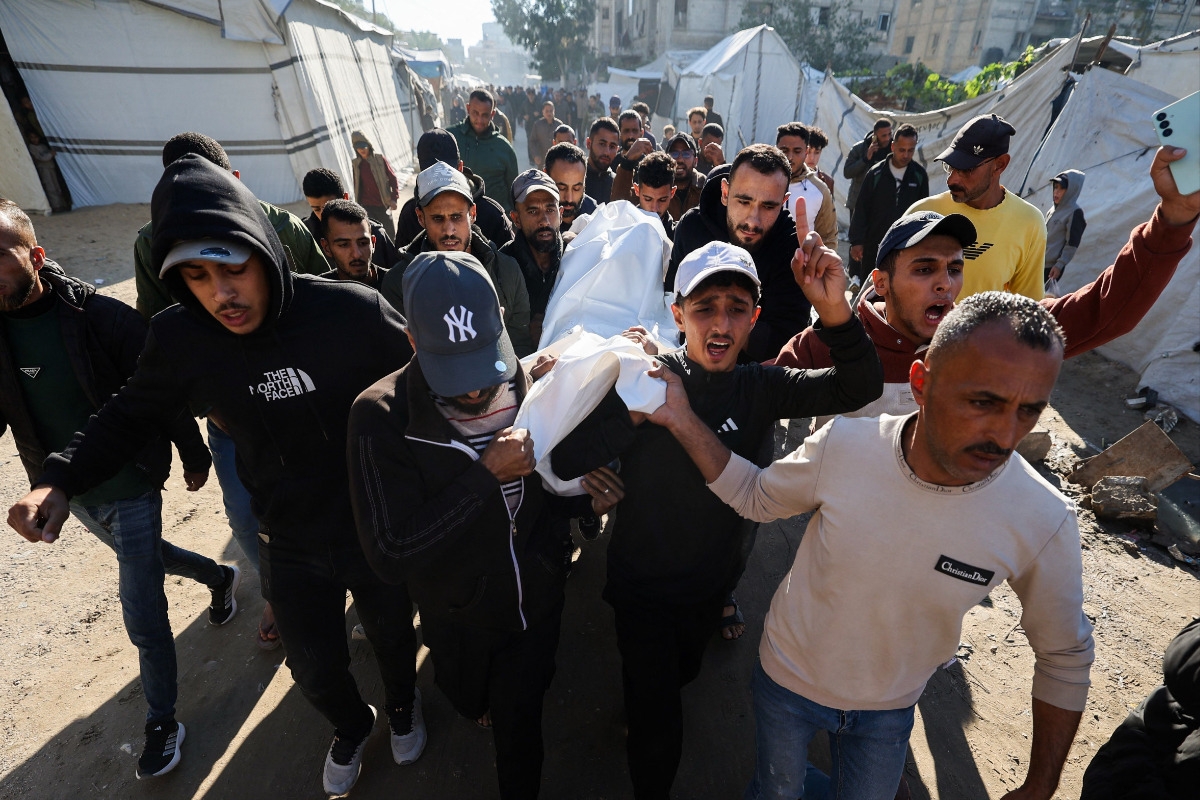
Foreign ministers of Arab and Islamic countries condemn the Israeli raid on the Nasser Medical Complex in Gaza.
Translated by Qiyas from الجريدة — Original source
The foreign ministers of the State of Kuwait, the Hashemite Kingdom of Jordan, the United Arab Emirates, the Republic of Indonesia, the Islamic Republic of Pakistan, the Turkish Republic, the People’s Democratic Republic of Algeria, the Republic of Djibouti, the Kingdom of Saudi Arabia, the Republic of Sudan, the Federal Republic of Somalia, the Sultanate of Oman, the State of Palestine, the State of Qatar, the Lebanese Republic, the State of Libya, the Arab Republic of Egypt, and the Islamic Republic of Mauritania, strongly condemned the Israeli air strike that targeted the Nasser Medical Complex in Khan Younis, which resulted in casualties among patients and medical staff, in violation of international humanitarian law that provides special protection for medical facilities and health workers.
The ministers also condemned the continued Israeli attacks on Palestinian civilians, including the targeting of tents and other sites housing displaced persons. These attacks undermine the ceasefire agreement and efforts to restore security and stability in the Gaza Strip, and they contradict the comprehensive plan put forward by U.S. President Donald Trump.
The ministers expressed deep concern over the continued Israeli restrictions on the entry of humanitarian aid and shelter materials, including tents, caravans, and mobile homes, as well as medical supplies. These restrictions are exacerbating the humanitarian catastrophe in the Gaza Strip as winter approaches. The lack of adequate shelter and the deterioration of water, sanitation, and healthcare services pose a serious threat to the lives of civilians, particularly children and infants, who may once again face the risk of death from exposure to extreme cold.
Israel must commit to a ceasefire, protect civilians and medical facilities, and ensure the delivery of sufficient humanitarian aid in a safe, sustainable, and unimpeded manner, including shelter and early recovery supplies necessary to rehabilitate basic infrastructure. It must also allow United Nations agencies and humanitarian organizations to carry out their mandates without obstruction.
Given that the commitments for the first phase were scheduled to take effect immediately upon signing the agreement, Israel must implement them without any further delay or imposition of additional conditions, including political and security conditions that hinder the delivery of humanitarian aid. Moreover, urgent humanitarian needs must be addressed independently of progress in subsequent phases.
The ministers called on the United States and the Peace Council, each within its respective role, to intensify their efforts to ensure Israel’s full implementation of these commitments and the removal of all restrictions on the entry of humanitarian aid, thereby preserving the credibility of the understandings and strengthening the ceasefire.
The ministers reaffirmed their determination to continue working with regional and international partners to consolidate the ceasefire, implement all phases of the plan, and increase humanitarian aid to alleviate the suffering of the fraternal Palestinian people.
