Al-Harbi to Al-Jarida: 8 Robotic Laparoscopic Hernia Surgeries at Farwaniya Hospital
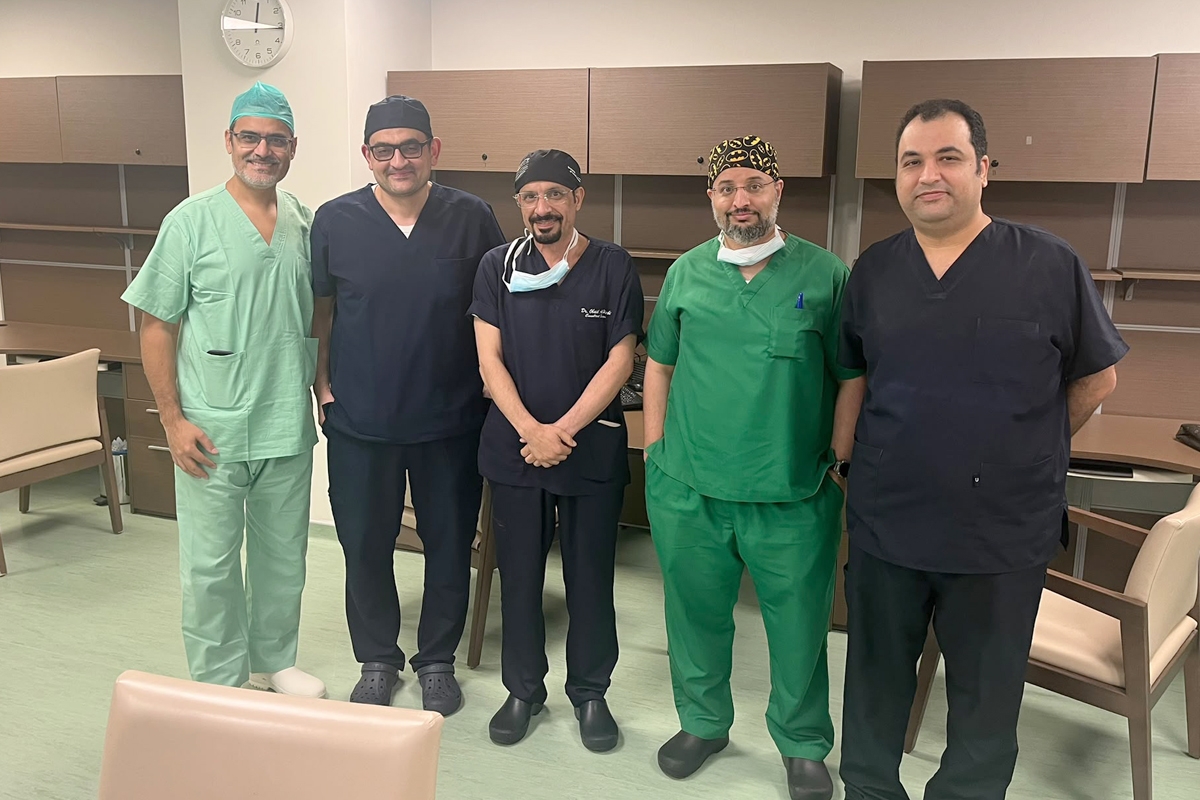
Farwaniya Hospital organized a workshop to perform 8 complex hernia surgeries using robotic laparoscopy, with the participation of General Surgery Consultant Dr. Obaid Al-Harbi, as part of the Ministry of Health's efforts to develop surgical services.
Translated by Alqyas from Al-Jarida — Original source
Al-Farwaniya Hospital organized a specialized workshop on complex hernia surgery and abdominal wall reconstruction, which included eight successful robotic laparoscopic procedures. Patients were discharged the day after surgery once their conditions stabilized.
Dr. Obaid Al-Harbi, a general surgery consultant at the hospital, told Al-Jarida that the workshop focused on the use of robotic technologies to treat complex cases that sometimes require large surgical incisions. He noted that the procedures involved hernia repair and abdominal wall reconstruction, following a surgical plan tailored to the nature and complexity of each case.
Al-Harbi explained that robotic surgery provides surgeons with a magnified three-dimensional view and articulated instruments that allow for greater flexibility and precision in movement. This facilitates the management of adhesions between the intestines and the abdominal wall, identification of nerves and blood vessels, approximation of muscles, closure of the hernia, and proper placement of the surgical mesh in its anatomical position.
He pointed out that this technique is used in various cases, including large hernias, recurrent hernias after previous surgeries, and cases accompanied by adhesions or weakness of the abdominal wall. He clarified that treating such cases requires precise evaluation, preoperative planning, surgical expertise, and collaboration among the medical team.
He added that the workshop’s objectives include reducing the size of surgical incisions, which may help alleviate postoperative pain, accelerate mobility and recovery, and shorten hospital stays. He noted that patients leaving the hospital the day after surgery is a positive indicator in these cases, although outcomes vary depending on each patient’s condition.
Al-Harbi emphasized that the robot does not replace the surgeon but serves as a tool to assist in executing surgical steps. Decisions regarding patient selection, imaging assessment, and determination of the surgical approach remain the responsibility of the treating team. He noted that the workshop reviewed preoperative cases, discussed surgical plans, and exchanged experiences and results, with participation from surgeons, residents, medical staff, and the operating room team, aiming to share expertise and develop the skills of national teams in this field.
He affirmed that holding such workshops supports the development of robotic surgeries in government hospitals, enhances the capacity to treat complex cases locally, and contributes to training medical personnel and developing specialized services. He noted that the workshop is part of the Ministry of Health’s efforts to develop surgical services, expand the use of minimally invasive surgical techniques, and strengthen the ability of government hospitals to perform precise and complex procedures through specialized medical teams.
