Conversations on Color, Light, and Shadow: A Book Brings Together 80 Visual Artists in a Space of Dialogue
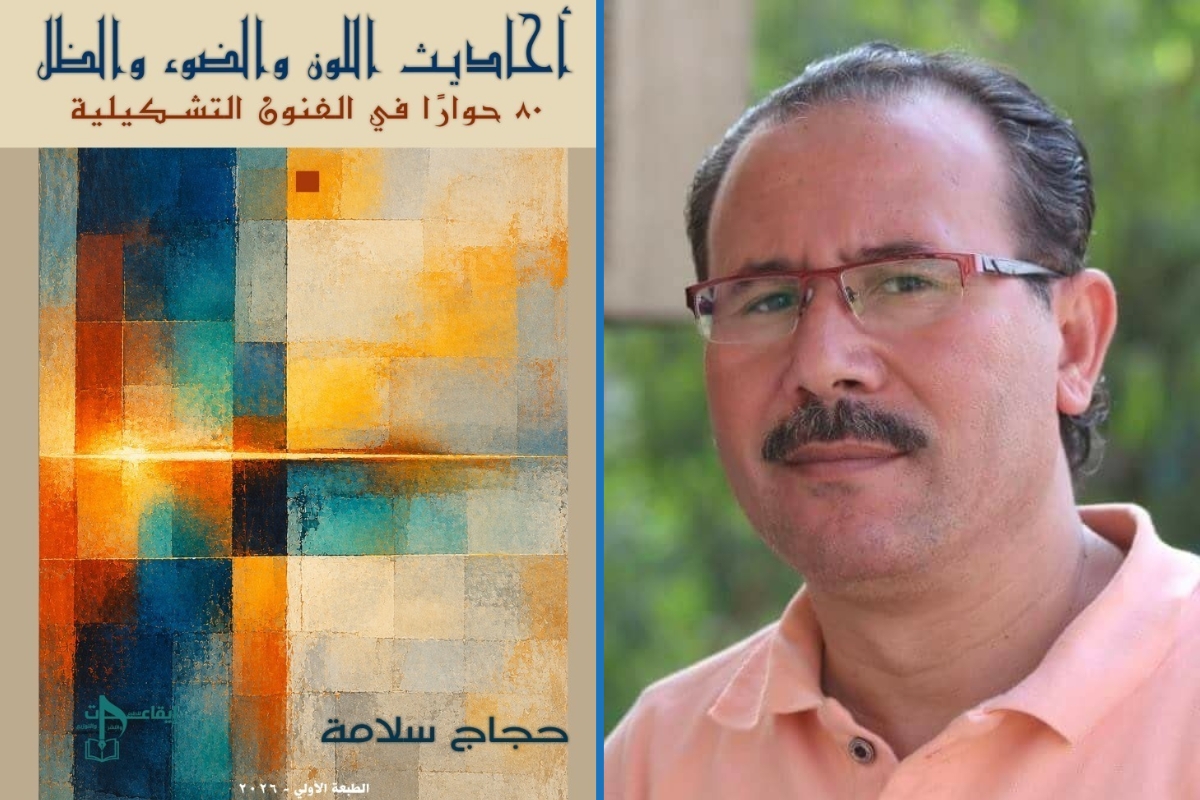
The book 'Conversations on Color, Light, and Shadow' offers a comprehensive view of Arab visual art through dialogues with 80 artists
Translated by Qiyas from الجريدة — Original source
The aesthetic and creative issues of plastic arts constitute an important space in the landscape of contemporary Arab culture. These issues pertain to artistic schools and trends, ranging from the classical naturalist school to realism, surrealism, abstraction, and other directions that have gained intensity alongside two artistic currents: drawing inspiration from Arab artistic heritage, and leveraging digital art, which leverages media to merge color with machines, and the brush with computer memory and its programs. Additionally, these issues involve the influence and mutual influence of global Western artistic schools.
In his new book, *Conversations on Color, Light, and Shadow*, writer and media personality Hajjaj Salama presents a comprehensive perspective on the issues of contemporary Arab plastic arts. The Arab plastic arts scene is experiencing a state of dynamism and constant movement, with art exhibitions spreading across cities and even extending to villages, some of which have become gathering centers for artists from within and outside the Arab world. In the book’s introduction, the author highlights Arab artists’ preoccupation with heritage, which has become a primary source of inspiration for most artists. Many believe that the Arab world, and the East in general, has always been and will remain rich in its artistic vocabulary, attracting artists from around the world throughout history.
The book, published by Iqa’at Publishing, Printing, and Distribution House in Cairo in its first edition in 2026, includes revealing dialogues that delve into various questions touching upon Arab and global plastic arts issues across different artistic orientations. The author conducted these interviews with 80 male and female plastic artists from various parts of the Arab world, documenting them and highlighting their diverse artistic concerns. As the author states in his introduction, Arab artists’ opinions differ regarding their vision of the present and future of the Arab plastic arts scene and the criteria for achieving global recognition. However, the majority agree that Arab plastic arts are currently vibrant and anticipate a prosperous future, provided that adequate resources are available and relevant institutions in Arab countries support the arts.
While the conversations of Arab artists about the present and future of their artistic landscape are largely optimistic, as the author notes, they also address the challenges faced by Arab plastic artists. These challenges are primarily material, relating to the need for greater care and support, as well as the formulation of ambitious plans to advance Arab artists and the field of Arab plastic arts.
The dialogues are distributed as follows: Saudi Arabia (21 artists), Egypt (18 artists), Iraq (12), the United Arab Emirates (5), Oman (4), Bahrain (3), Tunisia (3), Sudan (3), Kuwait (3), Palestine (2), Yemen (2), and one artist each from Algeria, Morocco, Jordan, and Lebanon. This conversational framework forms a miniature encyclopedia of plastic arts, addressing various issues. Artists highlighted numerous concerns and expressed diverse views on topics such as the impact of Western artistic experiences on Arab plastic arts, with some arguing that Arab plastic arts are aesthetically richer than Western art. In Egypt, the author interviewed several plastic artists, including Ahmed Al-Shafie, Ahmed Alame, Asmaa El-Dessouki, Asmaa El-Nawawy, Amgad Abdel Salam Eid, Amir Wahib, Evelyn Ashm Allah, Hosny Abu Bakr, Dina Reihan, Salah Shaaban, and others.
From Saudi Arabia: Ahal Al-Mashahdi, Ahmed Al-Mughouth, Amal Al-Qahtani, Amal Falmban, Khadija Tawfiq Muqaddam, Suad Asiri, Saeed Mohammed Al-Alawi, Sakina Al-Sharif, Salonas Othman Daghestani, Samir Al-Daham, Abdullah Shaher, Fahd bin Nasser Al-Rabiq, and others. From Kuwait: Absam Al-Asfour, Thuraya Al-Baqsumi, Mona Al-Gharabli. From Iraq: Bathina Abdulrahim, Raja Ghali, Shukri Hamed Al-Shaib, Abeer Al-Eidani, Mohammed Al-Kanani, and others. From Bahrain: Ibrahim Al-Ghanim, Adel Al-Dhauadi, Mustafa Al-Halwaji. From the UAE: Amal Lotah, Khaloud Al-Jabri, Maira Al-Qasim, Najah Maki, and Wadha Al-Gharibi. From Palestine: Amani Falah, Fatima Sulaiman Afonso. From Oman: Harith Al-Naabi, Saeed Al-Alawi, Salman Al-Hajri, Fakhraya Al-Yahyaei. From Tunisia: Absam Ben Al-Kilani, Sanaa Hishri, Laila Al-Rakbani. And other visual artists across the Arab world who expressed their views on various visual art issues.
The author documented his interviews and dialogues with 80 Arab visual artists, which were published in Arab newspapers and websites in Egypt, Gulf countries, and the wider Arab world, with most conducted over the past five years. Regarding these interviews, the author states: “I saw value in compiling them into a book, given the importance of the conversations and insights they contain, which chart a path toward further advancement of the Arab visual arts scene. They shed light on the reality of the visual arts movement within the countries of our Arab homeland, from the ocean to the gulf, while highlighting many Arab visual artists from both the pioneering generation and the youth. The book offers a reading of their ideas and takes us on a tour through their artistic worlds and visual vocabularies, among other topics related to the present and future of Arab visual arts.”
