Bangladesh: Former Prime Minister Sheikh Hasina Faces Death Penalty
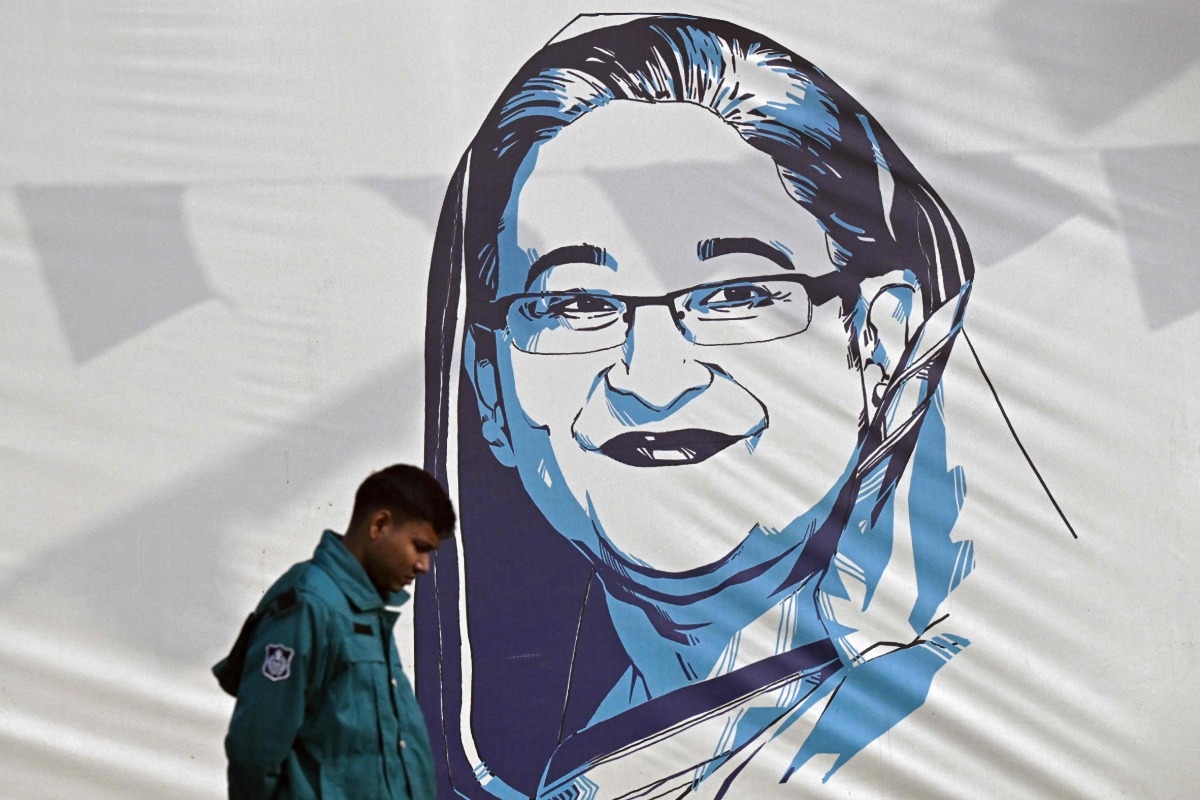
The chief prosecutor confirmed that Sheikh Hasina has exhausted legal options to appeal the death sentence handed down against her for war crimes, exposing her to actual execution.
Translated by Qiyas from الجريدة — Original source
Amin Islam, the chief prosecutor for war crimes in Bangladesh, said that former Prime Minister Sheikh Hasina has exhausted all legal options available to appeal the death sentence issued against her and is now facing the prospect of execution, Bloomberg reported on Wednesday.
The International Crimes Tribunal in Bangladesh had issued a death sentence in absentia against Hasina in November 2025, in connection with a crackdown targeting the student uprising that erupted in 2024, which the United Nations estimates resulted in the deaths of up to 1,400 people.
Hasina, who fled to India after the uprising ousted her from power, denies committing any wrongdoing, while Bangladesh has been seeking her extradition from India.
Islam told journalists in Dhaka that Hasina had a 30-day deadline to appeal the sentence but did not file any appeals while she was abroad, adding that she has now lost her right to appeal. There was no response to messages sent to the Indian Ministry of Foreign Affairs, nor to the email address used to contact Hasina.
Sheikh Hasina Wajed resigned and fled the country to India by helicopter in August 2024, following weeks of bloody protests across Bangladesh led by students, according to the BBC.
Thousands of protesters stormed her official residence in the capital, Dhaka, bringing an unexpected end to the rule of Bangladesh’s longest-serving prime minister. Hasina rose to power in 2009, governing the country for more than 20 years.
Born in 1947 into a Muslim family in East Bengal, politics ran in her veins. Her father was the national leader Sheikh Mujibur Rahman, the “Father of the Nation” of Bangladesh, who led the country to independence from Pakistan in 1971, becoming its first president.
At that time, Hasina had already gained prominence as a student leader at Dhaka University.
In 1975, Mujibur Rahman and most of his family were assassinated in a military coup. Only Hasina and her younger sister survived, subsequently fleeing the country.
In India, Hasina spent a few years before returning to Bangladesh in 1981 to lead the Awami League, the political party to which her late father had belonged.
With popular support, Hasina quickly became a national icon. She was first elected to power in 1996, credited with signing a water-sharing agreement with India and a peace deal with tribal insurgents in the southeast of the country.
However, at the same time, Hasina’s government faced criticism over allegations of numerous corruption cases and suspicious deals, as well as accusations of subservience to India.
In 2001, Hasina lost her position as prime minister to her rival, Khaleda Zia of the Bangladesh Nationalist Party, who had previously been an ally.
Both women come from political families and have dominated Bangladeshi politics for more than three decades.
Observers note that the bitter rivalry between Hasina and Zia saw bus bombings, enforced disappearances, and extrajudicial killings become commonplace in Bangladesh.
Finally, Hasina returned to power in 2009 through an election overseen by a caretaker government.
While in opposition, Hasina endured numerous arrests and survived several assassination attempts, including one in 2004 that left her partially deaf.
Hasina resisted efforts to force her into exile, and she evaded numerous trials on corruption charges.
