Constitutional Review or Democratic Practice?
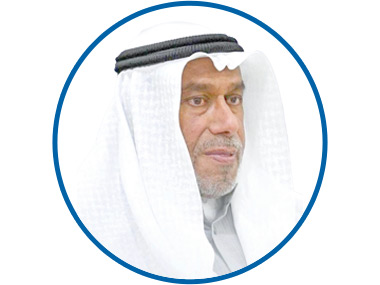
The head of the Constituent Council warns against the deviation of democratic practice.
Translated by Qiyas from الجريدة — Original source
Mr. Abdul Latif Al-Thaniyan Al-Ghanim, who served as the head of the Constituent Council and the Constitution Committee that drafted the Constitution, warned in an article published on January 5, 1985, that: “Our democracy has been emptied of its substance, as democratic practice has declined and deviated from the Constitution.”
His warning served as an early alert regarding the consequences of such deviation in democratic practice. Examples of these negative outcomes and constitutional violations are numerous, including:
1. Sectarian polarization that has fragmented society, entrenched unfamiliar sectarian fanaticism and hysteria within Kuwaiti society, and led to the selection of residential areas on sectarian grounds, thereby threatening social cohesion.
3. Aggression, personal insults, and revenge through the distorted use of political oversight tools. The forms of aggression and insults, along with their offensive language, have exceeded the bounds of respect and constructive dialogue, falling into the categories of defamation, libel, or unsubstantiated accusations. This includes veiled attacks on political leaders, which is constitutionally prohibited.
4. Financial waste and nepotism at the expense of public funds and government facilities. This includes financial grants proposed by the National Assembly, which, according to Articles 20 and 140 of the Constitution, should exclusively be initiated by the Government. It also involves granting benefits to undeserving groups, and making appointments that fail to meet the required conditions through political blackmail of ministers or government officials. Furthermore, it includes the establishment of redundant institutions, such as the Financial Supervisors Agency, created to benefit specific individuals by appointing leaders from their families or social circles, contrary to the Constitution. Similar practices occur in the appointment of leaders from among relatives, friends, and voters.
5. Parliamentary practice has witnessed unprecedented arrogance and overreach, incompatible with the concept of democracy based on dialogue, persuasion, and reasoned argument. Political threats have become entrenched logic; ministers are threatened with interpellation before taking their oath or within days of doing so. Interpellations are increasingly issued preemptively, a practice unheard of in democratic systems. This extends even to the Prime Minister. Moreover, a significant number of members consider their membership a privilege and a heavy stick with which to intimidate, frequently entering ministries, facilities, and institutions in a manner that blatantly violates the Constitution and its provisions on conflict of interest. This pattern has recurred in public life, alongside the misuse of parliamentary immunity and even self-legislation by a large number of members.
Indeed, governments over the years have been part of these deviant parliamentary practices.
These deviant and constitutionally violating parliamentary practices necessitate a required pause and review. No constitutional experience in the world has escaped revision, correction, amendment, and development. For instance, France abandoned its parliamentary system under the 1946 Constitution and adopted a new constitution in 1958, introducing a presidential system slightly augmented with features of a parliamentary system.
Kuwait should undergo an evaluation and review process to correct the course of democracy, particularly after opening files related to citizenship forgery and reckless naturalization that harms the country. Some argue that amending certain constitutional articles is necessary to eliminate deviant, poor, or socially incompatible parliamentary practices. Others suggest adopting broader aspects of a presidential system and its powers for the Head of State, or possibly increasing the number of appointed members, whether ministers or non-ministers, to create a balance that prevents arrogance, overreach, and deviation.
There are those who, and I am among them, believe that democratic practice can be corrected and regulated by amending five or six laws: the Council’s Internal Regulations, the Nationality Law, the Electoral Law, the Constitutional Court Law, the Budget Law, and the issuance of a stringent law to regulate parliamentary conduct, which would be severe and deterrent against deviation, self-enrichment, or conflicts of interest.
