Lebanon Under Pressure as UNIFIL Mandate Nears End
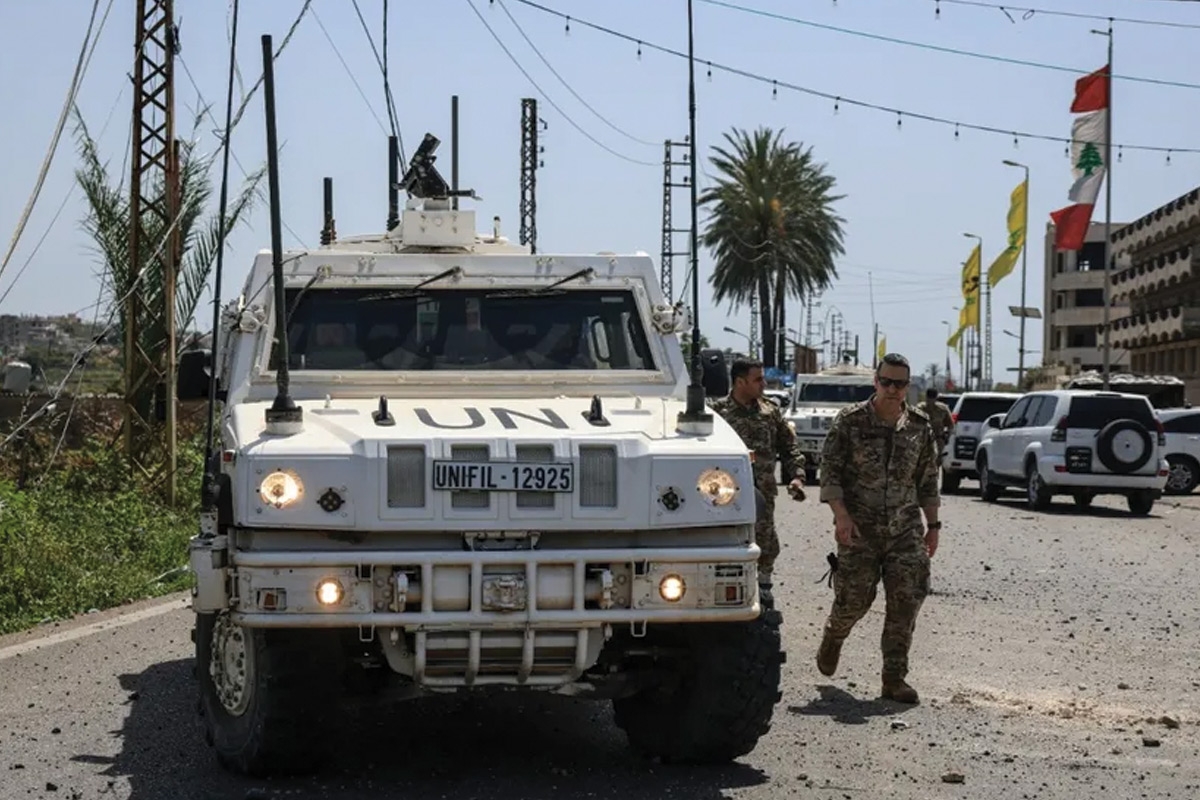
Beirut receives Western signals urging continuation of conditions, while Paris and Washington seek an alternative force to UNIFIL.
Translated by Qiyas from الجريدة — Original source
The diplomatic signals Beirut is receiving, particularly from the United States, indicate the necessity of not betting on a change in the course dictated by Washington in light of the midterm election results. Consequently, advice directed at Lebanese officials continues to emphasize the need to fulfill the conditions imposed on them regarding the issue of weapons, the explosives dossier and its judicial follow-up, and the formation of an international force to monitor the situation in the south after the mandate of the United Nations Interim Force in Lebanon (UNIFIL) ends on the 19th. The UN Security Council is holding a closed session to discuss the international resolution that is expected to be issued for the post-UNIFIL phase. According to diplomatic sources, there is intense American pressure to have the “Framework Agreement” approved by the Security Council.
In this context, U.S. Secretary of State Marco Rubio stated that he discussed the situation in Beirut and the imminent end of UNIFIL’s mandate in southern Lebanon with French President Emmanuel Macron, noting that Israel continues to occupy large areas, as well as discussing the option for the next UN Secretary-General.
Rubio said in remarks following his meeting with Macron on the sidelines of the Group of Seven foreign ministers’ meeting in Paris that “the goal is to have a reliable entity on the ground capable of verifying the parties’ compliance with the Framework Agreement’s provisions in experimental areas. This does not necessarily require a military mission like the one carried out by UNIFIL, but could be civilian.” Paris is seeking to establish a mechanism that ensures an international presence after the expiration of the UN force’s mandate within the timeframe set by the UN Security Council under American pressure. Paris, in cooperation with Rome, aims to form a multinational force to succeed UNIFIL.
According to information, U.S.-French coordination continues to reach a consensus on the resolution’s wording. While Washington insists on the approval of the Framework Agreement and the formation of an international force as outlined therein, it is coordinating with Paris on its preparation. Meanwhile, France is seeking a formula that is suitable, reactivates its role in the Lebanese arena, and allows it to deploy French troops in the south as part of the international force being formed. Paris is betting on the completion of the government formation by the designated Israeli Prime Minister, Gadi Eisenkot, and the ousting of his predecessor, Benjamin Netanyahu, to renew French-Israeli coordination on the Lebanese file as well.
Not far from this is the visit of the U.S. UN Representative, Mike Waltz, to Lebanon next week. This will be the first visit by a U.S. figure of this stature, during which he will meet with the presidents in Beirut, the Minister of Defense, and the Army Commander to discuss arrangements for the post-UNIFIL phase. Among the ideas proposed by the Americans regarding the international force is reliance on private security companies, which would sign contracts with groups from various countries to deploy in southern Lebanon. This would mean that this international force would not be subordinate to official militaries, but might include fighters or retired soldiers of different nationalities. Their tasks, operational mechanisms, and authorities have not yet been determined. Lebanon has so far rejected any proposal concerning private companies and insists on forming an official international force composed of several European countries.
