Dasman... Twenty Years on the Frontline
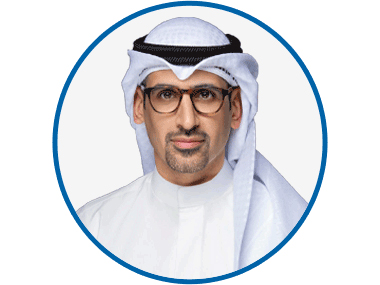
The Dasman Diabetes Institute celebrates its 20th anniversary, highlighting its role in combining medical care and scientific research to combat the spread of diabetes in Kuwait.
Translated by Alqyas from Al-Jarida — Original source
According to the International Diabetes Federation’s 2024 estimates, approximately 909,000 adults in Kuwait are living with diabetes, representing about one in five adults. When adjusting for age differences, Kuwait ranks third globally in the prevalence of diabetes among adults—a distinction we would prefer not to hold. Diagnosed cases represent only the tip of the iceberg, as roughly 339,000 people are unaware they have the disease, while approximately 640,000 adults suffer from impaired glucose tolerance, a form of prediabetes.
Twenty years ago, Kuwait took an early step to address this challenge by establishing the Dasman Diabetes Institute under the Kuwait Foundation for the Advancement of Sciences, initiated by the late, mercifully forgiven Sheikh Jaber Al-Ahmad Al-Sabah. The institute was inaugurated by the late, mercifully forgiven Sheikh Sabah Al-Ahmad Al-Sabah on June 6, 2006, based on the concept of integrating medical and research sectors within an institution specialized in diabetes and its complications.
In 2025, the institute’s clinics received more than 4,500 patients and recorded over 50,000 appointments. In the same year, its researchers published more than 90 peer-reviewed articles. The institute’s work encompasses studies on genetics, immunology, metabolism, and population health, alongside clinical trials. The International Diabetes Federation lists the Dasman Diabetes Institute among centers of excellence in diabetes care.
Patients visit Dasman to receive care and, with their consent, can participate in research by donating samples and allowing the use of their clinical data, while ensuring their privacy. This highlights the value of integration between the medical and research sectors: physicians observe variations in disease progression among patients, while researchers can study these differences by linking sample analysis results with medical history and treatment responses.
Medical teams can test promising findings in the clinic and evaluate their benefits. The Ministry of Health plays a pivotal role in supporting this model, which is built on partnership and complementarity. The ministry supports the institute with medical staff, medications, and supplies, while the institute contributes to training primary care teams in preventing, detecting early, and clinically managing diabetes complications. Consequently, the institute’s expertise extends to the ministry’s centers, benefiting patients who receive their care there.
After twenty years, the Dasman Diabetes Institute has become a leading model in Kuwait and the region for integrating specialized care with scientific research. In my view, the time has come to expand this experience by establishing similar centers focused on cancer, kidney diseases, and other chronic conditions, building on the expertise of existing centers. I hope that the questions raised by patients and doctors at these centers will serve as the starting point for research conducted in Kuwait, with results returning to our clinics and patients.