National security case shakes Nvidia's throne
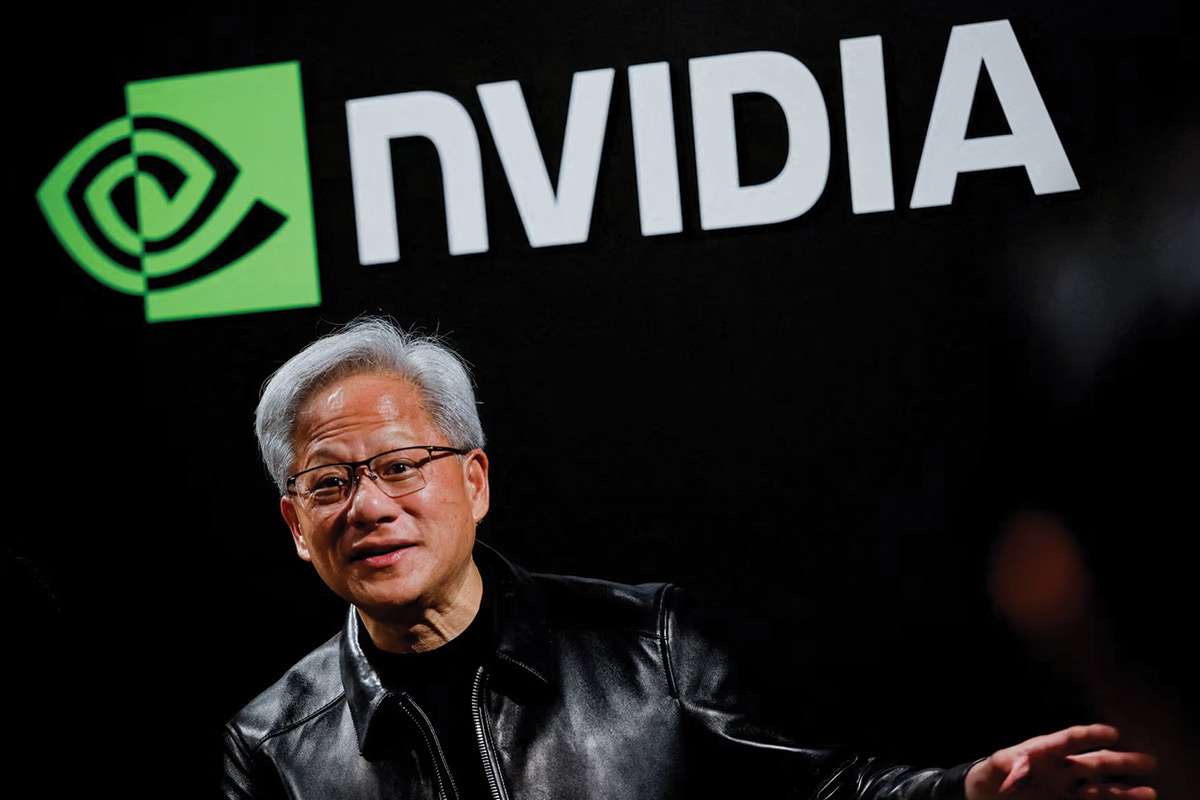
Nvidia investigates Huang amid espionage allegations involving China.
Translated by Qiyas from الجريدة — Original source
Shares of Nvidia fell after the company’s board launched an investigation into CEO Jensen Huang, following his admission of having an affair with a woman named in media reports as a suspect in espionage activities on behalf of China.
This development threatens to exert further pressure on the shares of the leading artificial intelligence chipmaker, which have already experienced a sharp sell-off since last month due to concerns over the massive spending by major technology companies and the fallout from the US midterm elections.
Nvidia’s board stated it “has no reason to believe” that US national security or company secrets had been compromised, but the opening of an internal probe cast rare shadows of uncertainty over the company’s leadership.
The stock dropped about 6 percent on the Tradegate platform, compared to Friday’s close in the United States. Nvidia shares also fell around 7 percent on the Frankfurt Stock Exchange. Meanwhile, Nvidia’s suppliers in Asia largely ignored the news, tracking the recovery wave that US tech stocks experienced at the end of last week.
The new crisis began over the weekend after Huang admitted in an internal memo to employees that he had cheated on his wife, offering an apology to staff, which prompted the board to act.
This followed reports that Nvidia’s chief executive had been targeted by Alice Huang, a former official at Megaspeed International, whom US intelligence agencies suspect of being linked to espionage activities for Beijing.
US President Donald Trump described Huang as a “distinguished individual,” expressing support for his continued leadership of the company. The Nvidia board also emphasized that there were currently no indications that national security or sensitive company data were at risk.
Nvidia shares have fallen about 22 percent since their October peak, as the company prepares to announce third-quarter results on November 17. Analysts believe the company’s fundamentals remain strong, but any distraction to executive leadership could impose additional pressure on the stock, which represents one of investors’ key bets on the global AI boom.
Josh Gilbert, a market analyst at eToro, said, “Any ambiguity surrounding Huang is directly reflected in the stock,” noting that investors are already questioning AI company valuations and current spending levels in the sector, according to a Bloomberg report reviewed by Al Arabiya Business.
Tim Waterer of KCM Trade viewed the investigation as creating short-term uncertainty for markets, but added that Trump’s public support for Huang and the continued strength of demand for AI technologies help mitigate the negative impact of the news.
Conversely, Anna Wu of Floodlines Research considered the issue a “headline risk” rather than a fundamental driver of the stock, pointing out that the company’s upcoming results and the state of the chip sector after the US elections remain the most important factors for investors.
Adam Chrisafoli of Vital Knowledge warned that the greatest risk may not be related to Huang’s future within the company, but rather to the possibility of the US government tightening restrictions on exporting Nvidia chips to overseas markets, particularly China.
For his part, Mike O’Rourke of Jonestrading said the issue could become more complex if it is established that Megaspeed or officials associated with it received preferential treatment from Nvidia, adding that the company’s record in complying with export restrictions on graphics processors to China “is increasingly looking weak.”
The company has launched an internal investigation into the relationship. According to reports published by The New York Times and the Financial Times, U.S. intelligence agencies have expressed concerns that Alice Huang, who is linked to a cloud computing company and one of Nvidia’s clients named Megaspeed, was transmitting information to Beijing, according to a report published by CNBC and reviewed by Al Arabiya Business.
For his part, Nvidia’s board of directors clarified in a statement that it would investigate allegations that Huang may have been the target of foreign espionage, emphasizing that “there is currently no reason to believe that national security or Nvidia’s secrets have been compromised,” although the investigation will include a review of all available information.
These allegations come as Nvidia has become a central focus in the trade and technology dispute between the United States and China, with artificial intelligence technologies increasingly viewed as critical to national security.
The United States imposes export restrictions on Nvidia’s most advanced AI chips to China, while allowing the export of some older and less capable models.
Megaspeed, which is linked to Alice Huang, faces accusations of helping restricted Chinese companies obtain Nvidia’s AI chips. Company representatives had previously stated that Megaspeed has already undergone investigations regarding circumvention of U.S. export controls.
In response, Jensen Huang has repeatedly defended expanding AI chip exports to China, arguing that it is in the United States’ interest for the world to rely on and build upon American technology. He also expressed alignment with U.S. President Donald Trump on matters related to AI policies and associated infrastructure.
In a related development, the chairs of three Republican committees in the U.S. House of Representatives sent a letter to Huang on Wednesday, requesting his participation in a closed-door briefing with lawmakers on November 18.
