France and Britain begin training 'Coalition for Ukraine' force in Poland
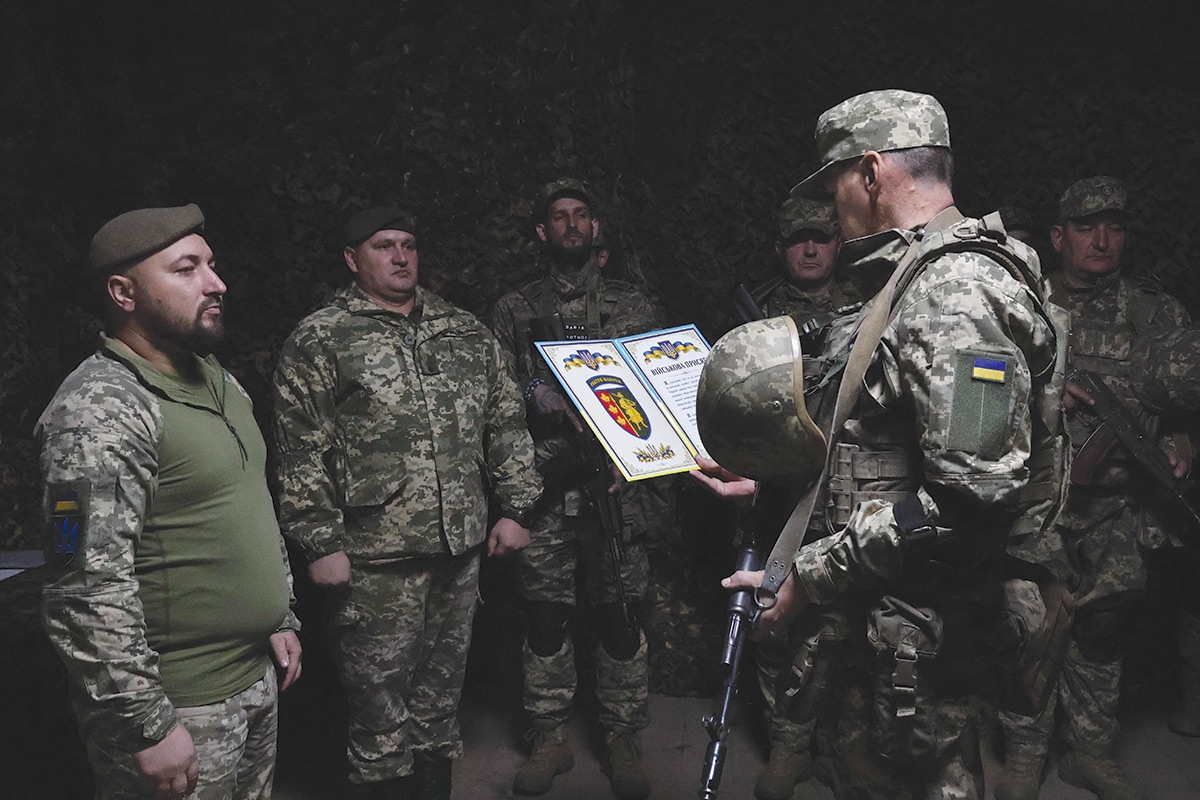
Military drills begin in Poland with 2,800 soldiers to test readiness for Ukraine, alongside intensive diplomatic moves toward a settlement in Abu Dhabi and exchanges of attacks between Russia and Ukraine
Translated by Qiyas from الجريدة — Original source
Despite US President Donald Trump’s assertion that the Russia-Ukraine war will end soon, the “Coalition of the Willing” began its first military exercises in Poland today, involving approximately 2,800 troops from 11 countries. The move aims to test readiness and capabilities necessary to ensure lasting peace in Ukraine after the conflict ends, coinciding with accelerated diplomatic efforts to push for a political settlement and anticipation of a diplomatic breakthrough in the Abu Dhabi talks today and tomorrow.
The French and British defense ministries announced that “Questor 2026,” hosted by Poland and led by France and Britain, will continue until the 22nd of the month. The exercises aim to simulate the deployment of forces and the transfer of supplies, including food and fuel, following a ceasefire agreement and the end of the war through negotiations.
Germany is participating with approximately 10 staff officers, a refueling aircraft, and logistical support, while Britain plans to deploy around 300 soldiers and several fighter jets. France is contributing approximately 1,000 troops, anti-drone systems, and short-range reconnaissance drones. The participating countries also include Belgium, Estonia, Lithuania, the Netherlands, Spain, and Sweden, within a broader coalition of about 35 nations formed in early 2025 to support Ukraine, prior to the decision to establish a multinational force in December of that year during the Berlin summit.
In response, Russian Foreign Ministry spokesperson Maria Zakharova warned that deploying any forces to Ukraine would constitute a “de facto military intervention” and a deliberate act to create additional threats to Russia’s security.
On the political track, US Secretary of State Marco Rubio announced progress regarding the security architecture for Ukraine and Europe post-war, emphasizing that security guarantees remain a recurring demand in negotiations aimed at ending the conflict. Discussions are focusing on the nature of security arrangements that would ensure the safety of Kyiv and the European continent in the post-war phase.
Rubio, ahead of a meeting of the Group of Seven foreign ministers, stated that no final formula has been reached yet, but he anticipated further progress during the Abu Dhabi talks, where the US side is represented by President Trump’s envoys Steve Witkoff and Jared Kushner.
In an interview with CBS, Trump expressed his belief that the war will end soon, suggesting that Ukraine might emerge from the settlement with slightly different geographical borders. He attributed the main obstacle to peace to the “intense hatred” between Russian President Vladimir Putin and Ukrainian President Volodymyr Zelenskyy, noting that he has good relations with both. He added that the war will not end without his efforts.
While the Russian ministry announced it had intercepted and destroyed 430 Ukrainian drones, the Ukrainian Air Force claimed to have shot down 271 Russian drones out of 317 used in a night attack, confirming the participation of air defense units, electronic warfare assets, aircraft, and mobile fire teams in repelling the assault.
The exchange of attacks extended to Russian energy facilities. Leningrad region governor Alexander Drozdenko announced that the Kinev refinery in Kirishi was targeted by a drone, causing a fire that was brought under control, while air defenses shot down 113 drones in the region.
The refinery is one of Russia’s largest oil processing facilities, with an annual capacity exceeding 20 million tons, representing about 6.4 percent of Russia’s total refining capacity. It has been subject to repeated attacks since Ukraine resumed targeting Russian oil refineries on October 15.
Attention is focused on the Abu Dhabi talks, amid divergent views on European participation. The Kremlin announced that the meeting would be limited to delegations from Russia, Ukraine, and the United States, denying the involvement of European officials—a stance that contradicts French Foreign Minister Jean-Noël Barrot’s declaration that Europeans would be well represented and that France would take part in the discussions.
In this context, President Volodymyr Zelenskyy announced that he had coordinated positions with European Commission President Ursula von der Leyen ahead of the meeting, emphasizing efforts to ensure that the trilateral talks yield results, while reaffirming Kyiv’s commitment to aligning its stance with its European partners and not excluding them from the upcoming settlement arrangements.
