Eisenkot's chance to oust Netanyahu collides with Arabs and Haredim
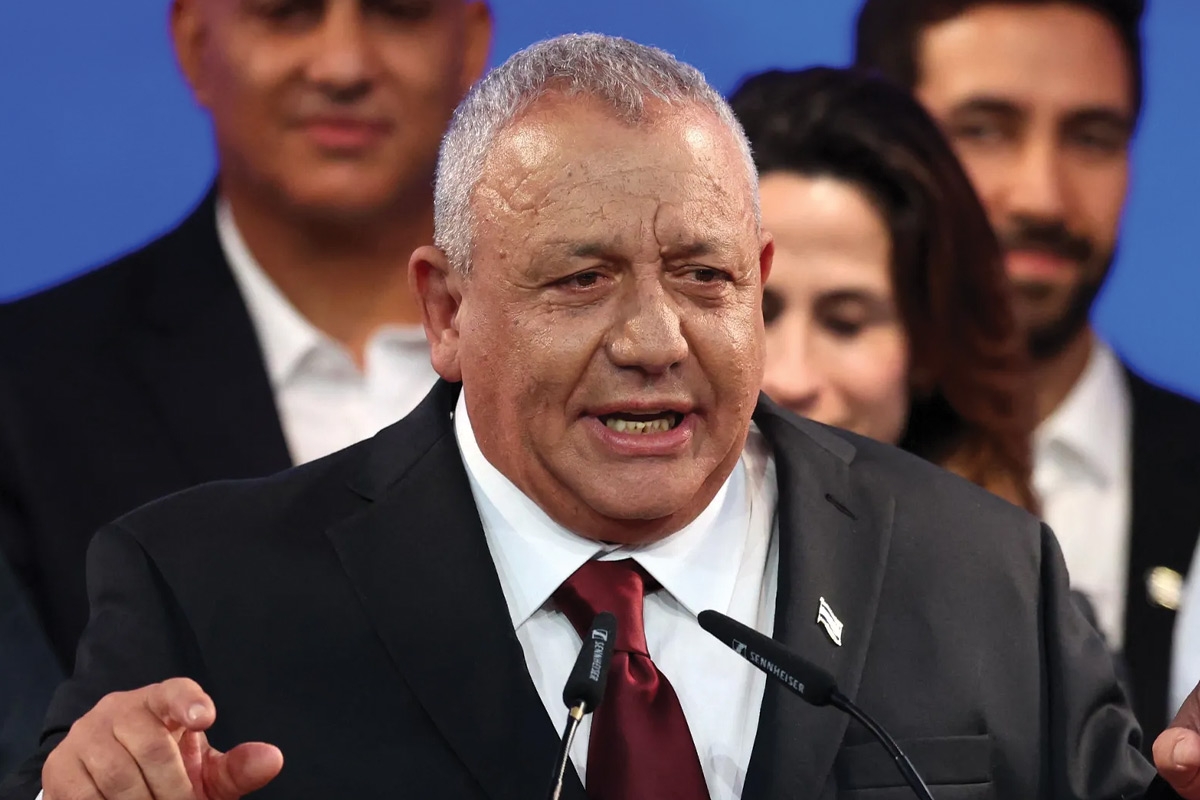
Herzog tasks Eisenkot with forming the government amid challenges with Arabs and Haredim.
Translated by Qiyas from الجريدة — Original source
Israel has entered a new phase of political confrontation after President Isaac Herzog tasked Yesh Atid leader and former Chief of Staff Gadi Eisenkot with forming the next government, dealing another blow to outgoing Prime Minister Benjamin Netanyahu, whose coalition lost its parliamentary majority in the October 27 elections but who still holds political cards that could obstruct the transfer of power.
The mandate places Israel in complex negotiations that go beyond merely forming a coalition, opening a battle over Netanyahu’s future, the role of Arab parties, the stance of Zionist parties toward cooperating with them, as well as the chronic dilemma regarding the exemption of Haredi Jews from military service.
Herzog’s decision came after Eisenkot received endorsements from blocs representing 67 members of the Knesset, compared to 46 members who endorsed Netanyahu, while the Yehudut HaTorah bloc, which holds seven seats, abstained from backing any candidate.
However, this advantage does not guarantee Eisenkot a secure majority to grant his government confidence. His electoral camp secured only 48 seats, compared to 53 for Netanyahu’s camp, while the two Arab lists, Joint List and United Arab List, achieved a notable result by winning 19 seats, making them a decisive factor in the government formation equation.
Eisenkot, 66, faces an initial deadline of 28 days to form a government, which can be extended by 14 days by presidential decision. His options center on three main paths: forming a minority government based on support from Arab parties outside the coalition, reaching understandings with Haredi Jewish parties, or forming a national unity government that includes Likud and factions from the competing camps.
The minority government option appears to be the most politically sensitive. Arab parties endorsed Eisenkot’s mandate and expressed willingness to cooperate with his camp to prevent Netanyahu’s return. Their 19 seats could provide parliamentary support, raising the total of forces backing him to 67. However, this path faces rejection from the Israel Beiteinu party, led by Avigdor Lieberman, who announced his opposition to forming a government reliant on Arab votes, despite joining Eisenkot’s camp. Additionally, Yesh Atid requires any party wishing to join the government to adopt its principles, foremost among them designating Hamas as a terrorist organization and working to eliminate it.
The two Arab lists are attempting to leverage their weight to drive a political shift, having won 19 seats amid growing anger among segments of the Arab population toward Netanyahu’s policies and those of his extremist allies. However, their participation in supporting the government places Eisenkot under a difficult test, particularly since Netanyahu made rejecting reliance on Arab parties a central theme of his rhetoric, accusing them of supporting terrorism and warning that a government based on them would dismantle Israel from within.
Conversely, the alliance with the Haredim emerges as a path more amenable to numerical negotiation. The two religiously hardline parties, Shas and Yehudut HaTorah, hold 13 seats, which could raise Eisenkot’s camp’s total to 61. However, this alliance is hindered by deep disagreements over military service.
Eisenkot proposes a compromise based on comprehensive national service, allowing for civil service alongside military service, thereby enabling the integration of Haredim. However, he insists on the principle of not exempting any group, placing Lieberman and his partners before a test of their previous positions rejecting exemptions and the requirements for forming a sustainable coalition.
As for Netanyahu, who has called for a national unity government comprising Zionist parties and the nationalist camp, he is seeking to prevent the opposition from forming a government with Arab support, possibly undermining its cohesion and attracting some of its members. However, his proposal encountered a direct rebuff from the Yesh Atid party, which demanded that he abandon his alliance with extremist parties and accept Eizenkot’s four principles before joining a government under his leadership. Moreover, forming a unity government with Likud would force the opposition to abandon its pledge to remove Netanyahu, while Netanyahu himself would have to abandon his traditional allies from the far-right and the Haredi community.
