Six Months Before Summer... Where is the Third Line for Al-Abdali Farms?
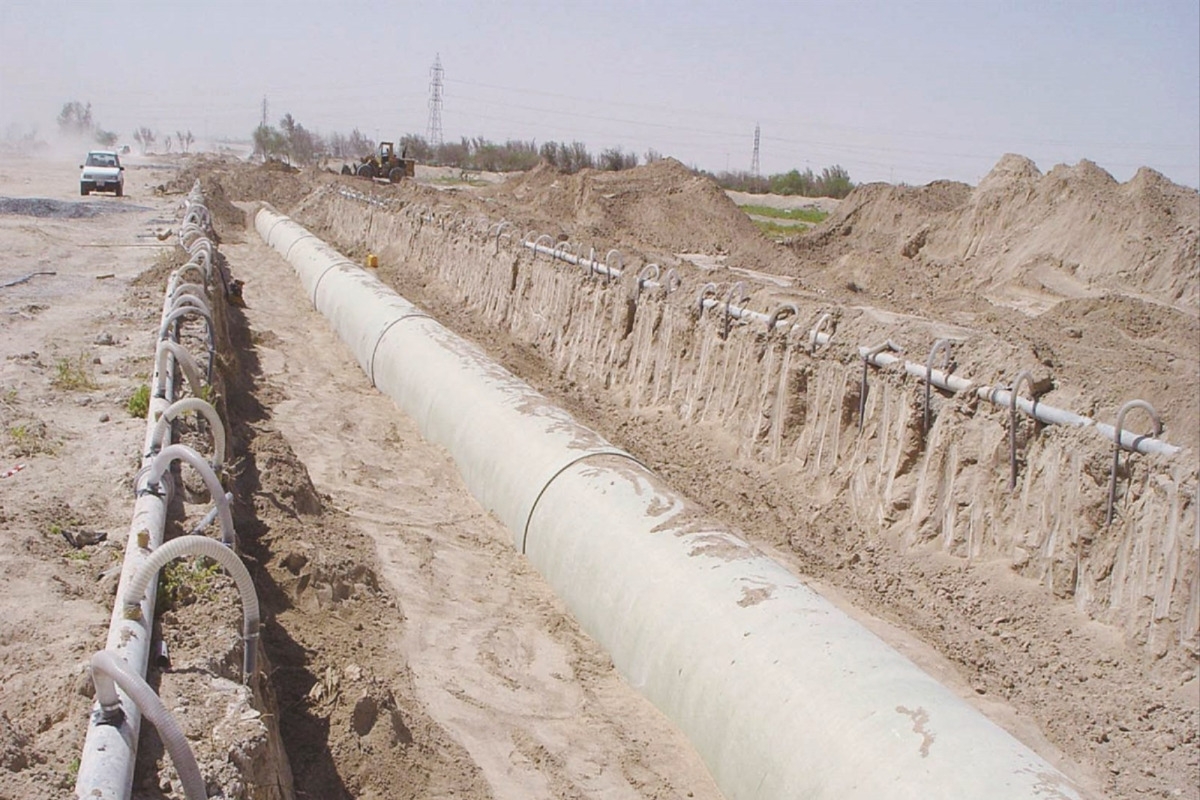
Al-Abdali farmers are suffering from a shortage of treated water during the summer, which raises costs and disrupts production, while the Ministry of Public Works awaits the implementation of the third water line.
Translated by Qiyas from الجريدة — Original source
Heat intensifies during the summer, reaching 50 degrees Celsius. Kuwaiti farmers make special preparations for the season, but the scarcity of water reaching farms, particularly in Al-Abdali during the summer, has become a major concern for many farm owners, prompting some to halt cultivation during the summer months.
Kuwaiti farms produce thousands of tons of vegetables and fruits, including tomatoes, carrots, eggplants, leafy greens, and various types of fruit each season, utilizing the latest agricultural technologies to ensure food security. The issue of water scarcity in summer is an obstacle that the Ministry of Public Works is seeking to address through various projects aimed at providing tertiary-treated water.
Al-Jarida spoke with several Kuwaiti farmers who appreciated the state’s efforts to support agricultural production, emphasizing that Kuwaiti agriculture is the primary safeguard for ensuring food security in the country, especially in light of global price hikes and increased transportation costs due to geopolitical tensions in the region.
Hamad Al-Murtaja, a farmer, initially confirmed that he completely stops farming during the summer due to the shortage of treated water, resulting in zero production for that season.
Al-Murtaja noted that some crops rely on greenhouses that require special cooling during the summer, which is very costly given the water scarcity and rising prices if farmers resort to purchasing fresh water transported to the farm via water tankers from the Ministry of Electricity and Water.
He stated, “At the farm, we rely on fresh water tankers. I submitted my documents to the Ministry of Public Works to connect a treated water line to the farm, and I have been waiting for over a year. If the line is connected, it will increase the capacity of our greenhouses and cultivation.” He added that he imports certain varieties not available locally, including resistant seeds and seedlings.
Hamad Al-Murtaja clarified that the cost of using fresh water tankers for farming ranges between 300 and 600 Kuwaiti dinars per month, which is a high expense for farmers.
He said, “We start planting in late August. At the beginning of the planting season, the monthly water cost reaches 600 dinars, then decreases from November to April, when the cost of fresh water ranges between 200 and 300 dinars per month, depending on the climate and temperatures.”
For his part, Eid Al-Thuwaimer, owner of a farm in Al-Abdali, said that during the rainy season and spring, Al-Abdali farms rely on rainfall and do not require treated water, whereas water supply to farms in the summer is extremely weak.
He pointed out that the Ministry of Public Works has indicated a project to provide water to Al-Abdali, consisting of a third water line that would help solve this problem. He noted that to address the issue, it is necessary to provide pressure points for treated water to ensure it reaches the farms with sufficient force.
He emphasized that another solution should be the establishment of a treated water distribution center for each plot, which would distribute water to various farms. He stressed that the goal of establishing and operating these farms is to ensure food security in the country.
He noted that some crops rely on greenhouses, with each greenhouse requiring 10,000 gallons of water for cooling. He mentioned that his farm requires 30,000 gallons for cooling, as he has three agricultural greenhouses, which is very costly in the summer if water is unavailable. Consequently, farmers rely on fresh water tankers during the summer despite their high cost.
Meanwhile, farmer Saleh Al-Dhibib called for supporting Kuwaiti farmers, especially in light of rising prices for pesticides, fertilizers, and fresh water during the summer when treated water is scarce.
He noted that reliance on freshwater tankers during the summer is difficult, given that the price of a single tanker can reach as high as 12 Kuwaiti dinars. Some farms require approximately 12 tankers, each with a capacity of 5,300 gallons, to cool agricultural reserves within the farm.
He emphasized the importance of providing farmers with treated quaternary water throughout the year to ensure Kuwait’s agricultural security, particularly in light of the current global and regional circumstances. He commended the state’s efforts to support agricultural producers amid rising global prices.
It is worth noting that the agricultural sector in Kuwait is a vital and important sector, which the state prioritizes as the primary pillar of food security. Through numerous biological treatment projects implemented by the Ministry of Public Works, and their expansion, the ministry has supplied treated quaternary water in quantities reaching 49 million cubic meters, according to a 2023 report.
