Regional Consultations to Contain Fallout of 'Al-Nisfiah'
Communications between Iran, Saudi Arabia, Qatar, Oman, and Turkey to de-escalate tensions
Translated by Qiyas from الجريدة — Original source
The region witnessed notable diplomatic activity yesterday, characterized by a series of consultations and communications involving Iran, Saudi Arabia, Qatar, Oman, and Turkey, following the electoral earthquake that deprived President Donald Trump of majorities in both chambers of Congress and deepened divisions within his administration between a hawkish faction advocating for a new strike before ending the war and a faction favoring a political settlement.
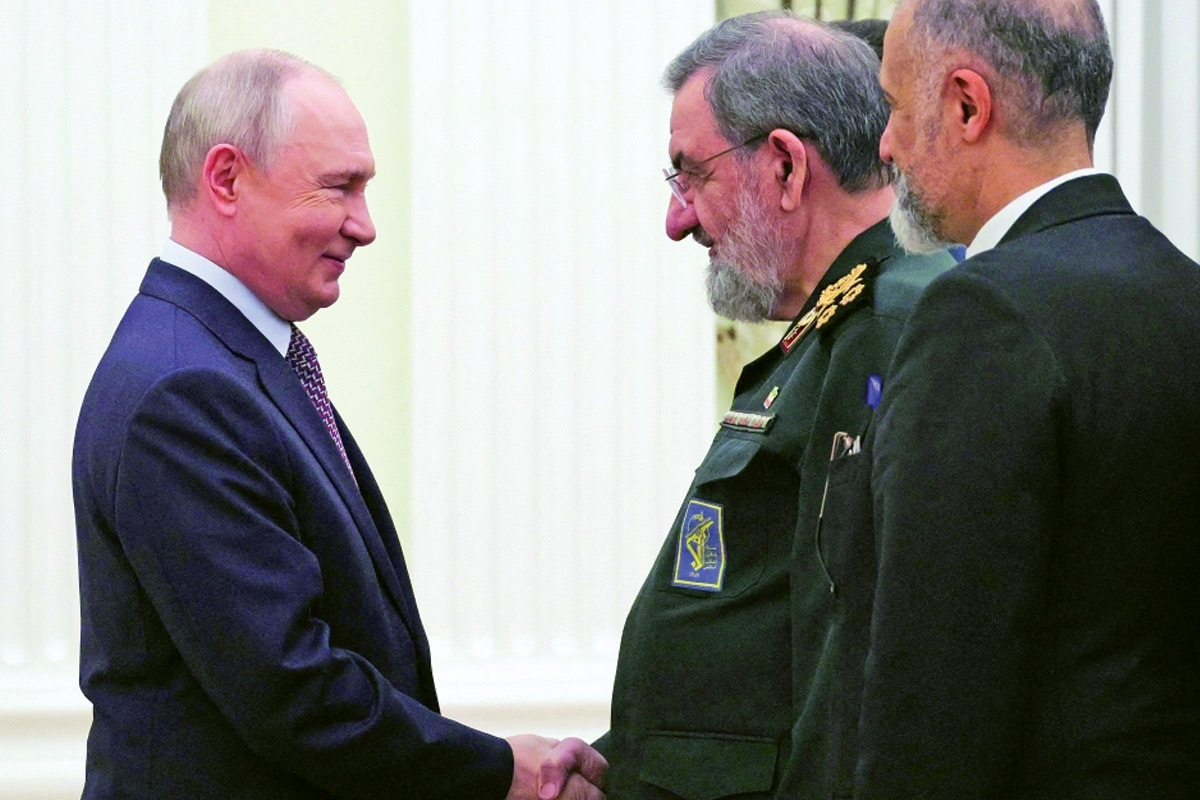
Iran’s Supreme National Security Council Secretary, Mohsen Rezaee, increasingly viewed as the most powerful figure in Tehran, visited Moscow yesterday, where he met with President Vladimir Putin. Iranian news agencies reported that Rezaee delivered a message from Supreme Leader Mojtaba Khamenei to Putin.
Rezaee had previously held a phone call with Putin a few days earlier, after receiving a message from US Vice President JD Vance proposing a resolution to the differences between the two countries and an end to the war.
Iranian sources told Al-Jarida that Rezaee may discuss Vance’s message and the conditions for a settlement with Putin, including the possibility of Moscow providing guarantees regarding the high-enriched uranium that the United States demands be removed from Iran.
Meanwhile, Foreign Minister Sheikh Jara Al-Jaber received a phone call from his Iranian counterpart, Abbas Araghchi, yesterday, during which they discussed the latest developments in the region and diplomatic efforts aimed at de-escalation, contributing to enhanced regional security and stability.
In the meantime, Araghchi discussed the “latest developments” in diplomatic efforts to establish stability in the region with his Saudi and Qatari counterparts, Faisal bin Farhan and Mohammed bin Abdulrahman, respectively, according to a statement from the Iranian Foreign Ministry.
This came during a phone call between Omani Foreign Minister Badar Al Busaidi and Araghchi, during which they reviewed the latest status of communications and negotiations aimed at reaching practical, political, and technical understandings that would lead to the resumption of navigation through the Strait of Hormuz without obstacles.
The two ministers emphasized “the importance of transitioning from a phase of tension reduction to a phase of consolidating sustainable understandings, based on practical arrangements to ensure the safety of sea lanes, and joint technical mechanisms to secure the flow of international trade and energy, thereby ending the state of war and preventing the recurrence of confrontations in the region.”
The statement noted that “it was confirmed that these hoped-for understandings must be based on respecting the sovereignty of states, considering the legitimate interests of all parties, and creating suitable conditions for restoring dialogue and negotiation tracks and addressing outstanding issues behind the escalation.” The two sides agreed to “continue consultations and coordination, and support all diplomatic efforts aimed at consolidating regional security and stability.”
A source in Iran’s Supreme National Security Council told Al-Jarida that the US side had halted communication with Iran through intermediaries since last Tuesday, the eve of the midterm elections.
According to the source, Iran, which announced days ago that it had responded to a new settlement proposal, has not received any new US response or comment. The source added that Iranian assessments suggest the communication break may be due to the Trump administration being preoccupied with the elections, or that it was using negotiations to keep the ground situation under control and ensure the vote proceeded peacefully, and no longer needs this now.
He noted that, in Iran’s view, U.S. forces in the region remain in an offensive posture and have completed all preparations to resume military operations if political orders are issued. He added that Iranian assessments do not rule out the possibility of a U.S. attack at the end of the week, or that Washington might wait for the arrival of a third aircraft carrier in the region, with estimates placing its arrival by the end of the current month at the latest.
The Wall Street Journal reported that some hawks in the administration are pressuring Trump to end the conflict by launching surprise military strikes before the new Congress takes office in January. In contrast, another faction advocates minimizing losses and halting combat operations. The newspaper added that the Pentagon, for its part, continues preparations and is deploying additional air defense assets and warships to the region.
Meanwhile, the New York Times reported that the U.S. and Israeli militaries have drawn up plans for a short, intensive operation to strike targets in Iran, likely including attacks on Iran’s energy infrastructure.
On the ground, the Strait of Hormuz witnessed an Iranian escalation. The Islamic Revolutionary Guard Corps announced that fires broke out on two oil tankers and a tugboat as they transited the strait, and claimed to have taken control of two U.S. “Lusca” drones. In a subsequent development, Iranian statements indicated that four oil tankers caught fire after colliding with mines while attempting to cross the strait.
