'Chinese Cultural Center': Consolidating Cultural Exchange with Kuwait
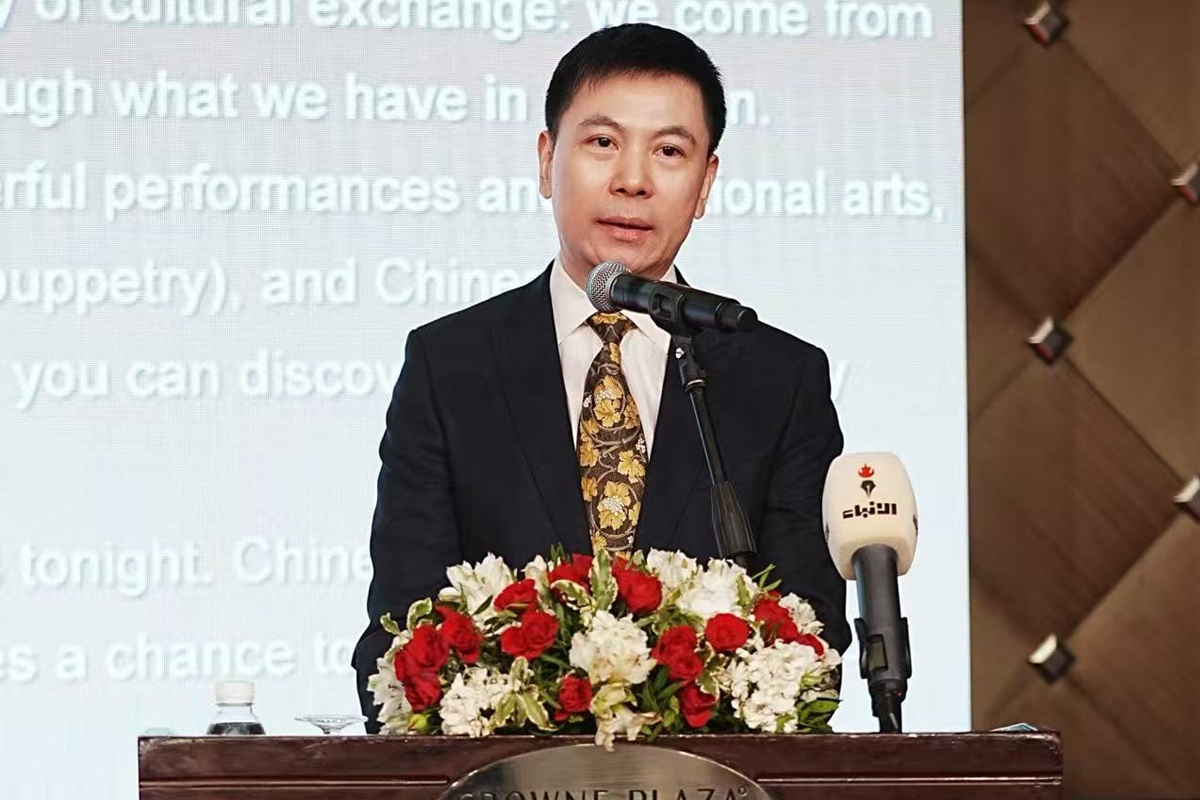
Chinese Cultural Center in Kuwait Organizes Events to Enhance Friendship and Cultural Exchange with Kuwait and the Gulf
Translated by Alqyas from Al-Jarida — Original source
- Kuwait and China enjoy distinguished historical relations, as Kuwait was the first Arab Gulf country to establish diplomatic ties with China. This year marks the 55th anniversary of these relations. The Chinese Cultural Center in Kuwait began its pilot operations on September 17, 2023, and was officially inaugurated on October 12, 2025, becoming the first of its kind in the Gulf region.
The Center reflects the friendship between the two countries and their shared commitment to bringing their peoples closer through cultural exchange. It provides an open space for Kuwaitis to learn about China and build friendships through Chinese language courses, cultural activities, and tourism events that offer continuous opportunities for communication and interaction.
Friendship between nations grows stronger when their peoples get to know each other better. Our role is not limited to introducing Chinese culture; we also strive to enhance dialogue and mutual learning. In May 2026, in collaboration with the Kuwait Photographic Society, we organized the exhibition “China Through Your Lens... Photos and Travel Stories,” which allowed local photographers to share their experiences in China through their images.
Our message to Kuwait and the Gulf region is that China respects the diversity of civilizations and seeks to deepen dialogue and achieve common development through equal and mutually respectful exchange. From Kuwait, we aspire to expand our cultural outreach to encompass the entire Gulf region through artistic and cultural activities and tourism promotion, presenting a comprehensive image of China, from its history and culture to its contemporary life and innovations.
• What are the similarities between Chinese and Kuwaiti cultures? How can cultural exchange enhance mutual understanding between the two peoples?
China and Kuwait share long-standing ties throughout history, despite the distinctiveness of each culture. There are several common ground points, most notably the importance of family, respect for elders, and hospitality. These values form a natural foundation for dialogue and understanding between the two peoples, with tea serving as a clear example.
In June 2026, in collaboration with the Kuwait Old Crafts Association, we organized the event “Harmony of Strings and Ink: Dialogue and Communication” to mark the International Day for Dialogue among Civilizations. The interaction between Chinese and Kuwaiti calligraphers demonstrated art’s ability to build bridges of understanding and deepen cultural rapprochement.
We strive to provide more opportunities for people to meet and engage in equal dialogue. Learning about others’ traditions and daily lives helps us recognize shared emotions and values, and understand the reasons behind differences in customs and traditions. Over time, these encounters become a foundation for enhancing mutual understanding, respect, and trust.
• Which activities have received the highest public attendance? Do you notice growing interest among youth in Chinese culture?
Activities related to daily life that allow the public to participate and interact directly have received positive responses. In February 2026, more than 800 people participated in the “Happy Chinese New Year” festival, while the cultural event series “Mid-Autumn in Poetry... Discover Xie” attracted more than 500 guests last September.
We also observe growing interest among Kuwaiti youth in the Chinese language, arts, and contemporary life in China. Chinese language courses and the “Chinese Cinema Night” series provide young people with opportunities to delve deeper into Chinese culture and continue participating in cultural activities.
The growing international presence of Chinese films and TV series is opening new horizons for cultural exchange. We hope to build on young people’s interest in these works by connecting what they watch on digital platforms with opportunities for direct dialogue and cultural exchange, thereby helping them gain a deeper understanding of Chinese culture and the lifestyles reflected in these productions.
Learning the language serves as a fundamental entry point to understanding the culture it expresses. To this end, we offer structured Chinese language courses that combine classroom instruction with cultural experiences, enabling students, as their skills develop, to communicate with Chinese people and explore China firsthand. The courses are taught by a specialist teacher dispatched by the Center for Chinese Language Education and Cooperation under China’s Ministry of Education. The curriculum follows the HSK (Hanyu Shuiping Kaoshi) Chinese Proficiency Test framework. We are currently in the second semester, with more than 120 students having participated so far.
Continuing language learning helps develop proficiency, prepares students for travel to or study in China, and facilitates participation in exchange programs. We also aim to encourage students to explore Chinese literature and ideas through the language, using it to express their own feelings and thoughts.
• How can heritage and traditions be preserved and made more relevant to young people’s interests? Do you plan to launch joint projects in this area?
Preserving heritage and innovating its presentation must go hand in hand. It is essential to safeguard traditional skills and the cultural memory they carry, while leveraging technology and engaging the public to reach new audiences, especially young people.
Key approaches in this field include using technology to document traditional crafts and provide interactive experiences. In China, video recordings, digital exhibitions, and interactive activities are employed to preserve traditions and pass them on to new generations.
Next year, we plan to host the program “Dunhuang in Your Hands: An Interactive Cultural Experience” in Kuwait. This initiative combines virtual reality tours with hands-on activities, such as copying mural designs, allowing participants to learn about Dunhuang art and its historical and cultural significance. Another approach involves leveraging media preferred by young people, such as video games.
Contemporary design represents an additional area for cooperation. In China, traditional skills like embroidery and weaving are applied to fashion, home furnishings, and other daily products. Adapting crafts to contemporary tastes and practical needs helps sustain the associated skills and traditions.
We wish to explore cooperation opportunities with Kuwaiti institutions, such as the Bayt Al-Saddu and the Kuwait Old Crafts Association, by bringing together young artisans and designers from both countries to exchange expertise and produce new works. Such partnerships can yield products that combine authenticity and innovation, ensuring that traditional crafts maintain a continuous presence in contemporary life.
• What are your key plans for the coming phase? How will you strengthen institutional partnerships and encourage two-way cultural exchange?
We aim to build on the events and programs we have launched by enhancing cooperation with local partners and developing sustainable projects that facilitate two-way cultural exchange, while strengthening the link between culture and tourism.
We are planning to host the “Chinese Cultural Night” event this month, and we are also preparing to organize the “Happy Chinese New Year” festival for 2027, alongside continuing to develop Chinese language courses and the “Chinese Cinema Night” series, thereby enabling a broader segment of the public to participate in our activities.
At the same time, we aim to introduce Kuwait to the Chinese public on a wider scale, and to help Kuwaiti artists and cultural institutions connect with their counterparts in China. Joint exhibitions, artist exchanges, and the online publication of cultural materials can enable the Chinese public to learn about Kuwait’s history, arts, and contemporary life.
Tourism represents another area where we can build on our existing cooperation. China’s current visa exemption policy facilitates travel, allowing Kuwaiti citizens holding ordinary passports to visit China for tourism and stay for up to 30 days.
