Trump Under Pressure Over Iran War After Midterm Election Defeat
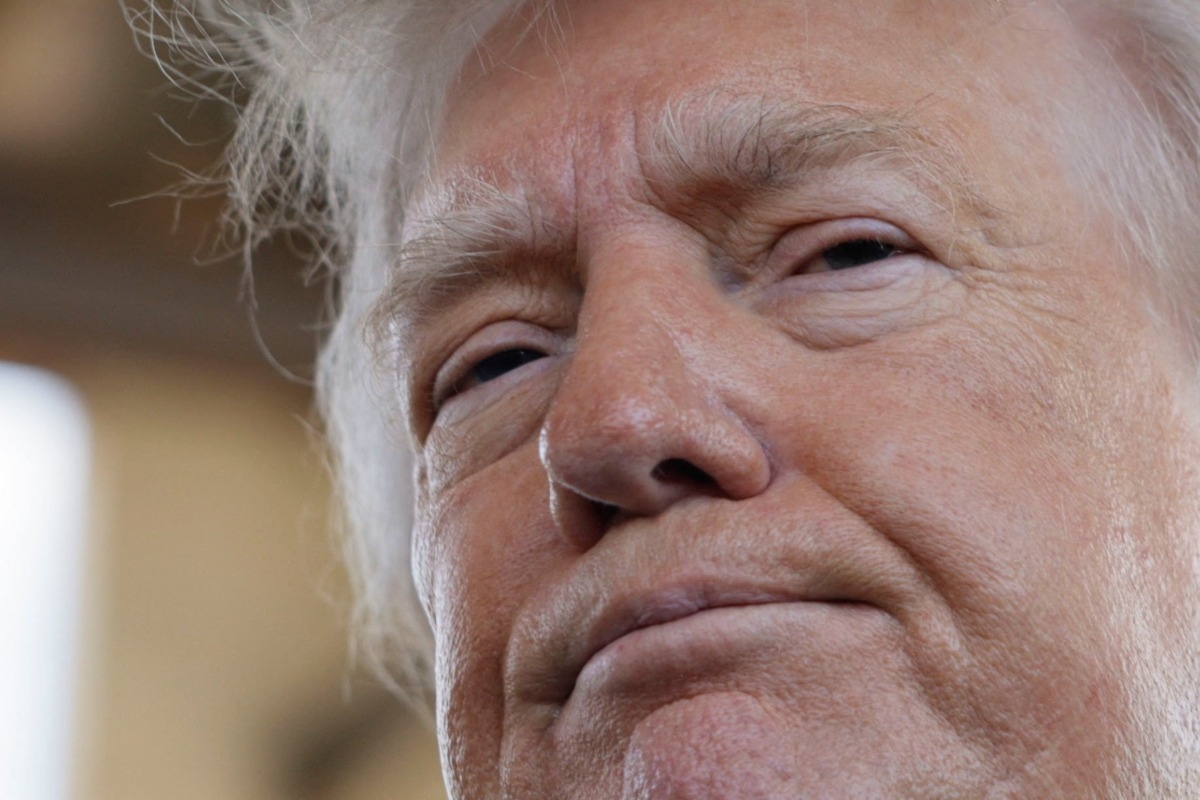
The US President faces pressure following electoral defeat and acknowledges the war's role in rising prices.
Translated by Qiyas from الجريدة — Original source
US President Donald Trump acknowledged that the war he waged against Iran was partially responsible for his Republican Party’s defeat in the midterm elections, and amid the pressures he faces, analysts believe he has few options for the next phase.
Trump’s future trajectory remains under close scrutiny after the elections left him in a weaker position, following Democrats’ control of both the Senate and the House of Representatives on Tuesday.
The US president has remained torn between his desire to reach a diplomatic settlement for the war, which caused a sharp rise in gasoline prices in the United States, and his threats to “destroy” the Islamic Republic.
Sina Toosi, a researcher at the Center for International Policy, said, “Trump now finds himself in a bind. Escalation does not offer a clear path to victory; rather, it carries risks that could further undermine his presidency, while diplomacy offers a potential way out.”
Toosi added in a statement to Agence France-Presse, “The new Congress, dominated by Democrats, will wield significant powers in oversight and funding starting in January, which will further constrain his options.”
On Wednesday, Trump said it was “largely correct” to blame the war on Iran and the resulting fuel price hikes for the Republicans’ crushing defeat.
However, he repeated a statement he made after polls closed on Tuesday, saying he would “do the same thing again,” despite the electoral loss.
His remarks were echoed more bluntly by his vice president, JD Vance, a potential successor in the 2028 election.
Vance wrote on the platform X, “The war is the reason for our defeat. The president himself said so last night.”
Many American voters cited the rising cost of living and the war on Iran to justify their voting choices.
Charles Hall, CEO of the North Carolina Soybean Producers Association, told Agence France-Presse that soaring energy costs “are actually driving despair” among traditional Republican voters, such as farmers.
Hall, a voter from North Carolina himself, pointed to significant shifts toward Democrats in his state, adding, “For me, this means they are voting against something.”
Tehran’s response to US-Israeli strikes targeting it since February 28 included disrupting navigation in the vital Hormuz Strait for global energy transport, leading to a sharp rise in oil prices.
However, James Lindsay, a researcher at the Council on Foreign Relations, told Agence France-Presse that “the Republicans’ overwhelming defeat on election day occurred for reasons far beyond the Iran file.”
He described the “Blue Tsunami” as a rejection of much of Trump’s agenda, especially since the president was elected in 2024 on a pledge to make the cost of living affordable.
Lindsay added, “What we have seen over the past two years is that Americans have come to view the cost of living as higher than ever. Clearly, the war on Iran contributed to this by raising gasoline and diesel prices.”
Compounding the situation, Trump “often acted in ways that suggested he was indifferent to the pain and suffering of Americans,” he said.
Toosi concluded that “the voters’ message is clear: they want to mitigate the economic consequences of the war, not more war.”
Chuck Schumer, the top Democrat in the Senate, stated on Wednesday that the war with Iran “must end,” while Hakeem Jeffries, the candidate for Speaker of the House, expressed a similar stance.
However, it remains unclear whether Trump will heed voters and seek to end the war quickly, or continue it. Lindsey says, “Regardless of the election, moving forward with intensified pressure on Iran has always been a risky strategy.” A new round of intense attacks, even if short-lived, could backfire, with Iran likely to retaliate by targeting facilities across the Gulf region. The Council on Foreign Relations researcher adds, “It could get out of control,” while acknowledging that the other options available to Trump “are not exactly great either.” At the same time, the continuation of a naval blockade off Iran’s coast is straining the U.S. military, while negotiations have so far yielded no tangible progress. He adds that if Vance’s views on the war enjoy broad support among Republican lawmakers, Trump would face new political risks should he decide to escalate the war against Iran.
