Hakeem Jeffries on Track to Become First Black Speaker of the US House of Representatives
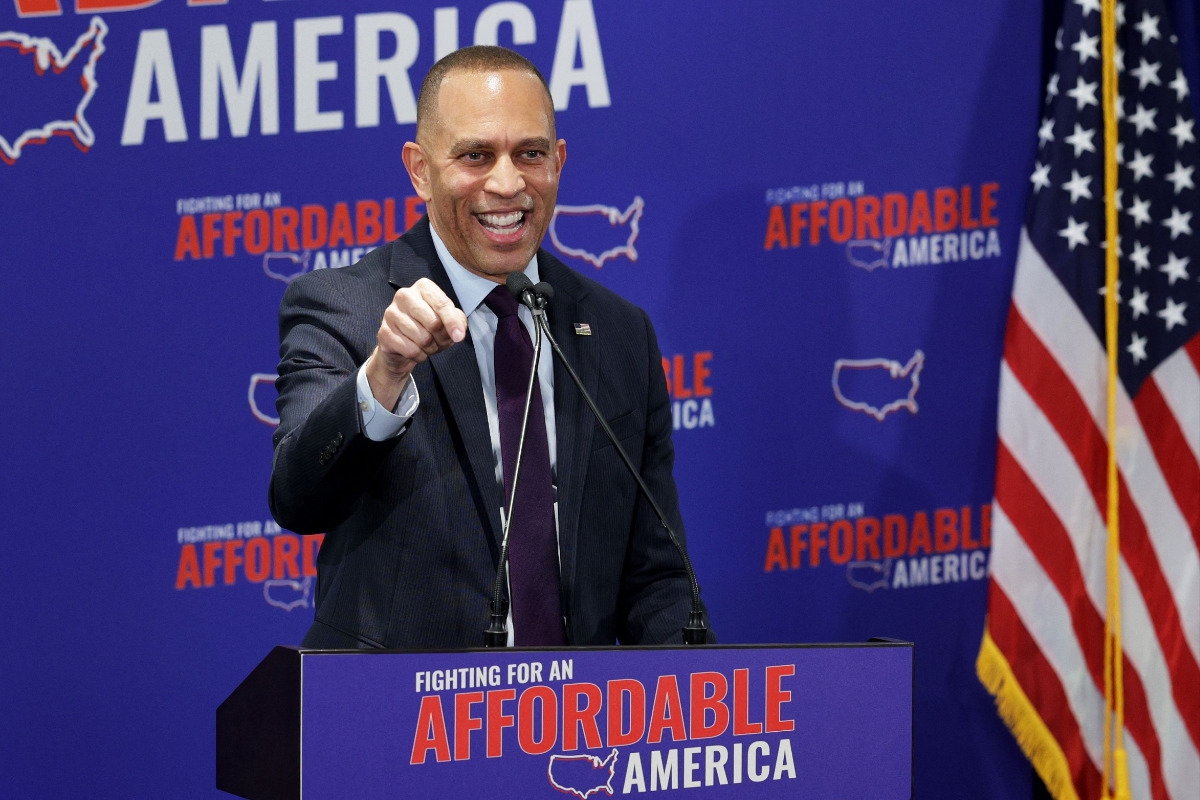
Democratic victory paves the way for Jeffries to become Speaker of the House.
Translated by Qiyas from الجريدة — Original source
The Democratic victory in the U.S. midterm elections paves the way for Hakeem Jeffries to become the first Black speaker of the House of Representatives, but he will face a dual challenge: confronting President Donald Trump and bridging the divide between moderates and progressives within the Democratic Party.
If he assumes the speakership, Jeffries, 56, who represents a New York City district, will lead the majority that is set to be sworn in during the first week of January, after Republicans controlled the chamber for the past four years.
In a victory speech delivered late Tuesday night, after media outlets projected Democratic majorities in both the House and the Senate, Jeffries said, “Today begins America’s great return.”
Jeffries attacked the Republican agenda led by Trump in Congress over the past two years, pledging to pass legislation that would reverse deep cuts to Medicaid, the healthcare program for low-income and disabled Americans, which were enacted under a law passed on July 4, 2025.
Jeffries stated, “The American people have spoken, making it clear they are tired of extremism and tired of corruption. They want a Congress that actually works for the benefit of the American people.”
Jeffries has long said that while his caucus will focus on helping the poor and the middle class cope with rising living costs, Democrats will also investigate the Trump administration’s dealings with corporate executives, including those who made large donations to his campaigns and various projects. However, he stopped short of saying that the House under his leadership would attempt to impeach Trump for a third time.
As votes continued to be counted across most of the country following Tuesday’s elections, the size of the Democratic majority in the House over the next two years remained unclear.
The Speaker of the House is the chief officer responsible for managing the chamber, which comprises 435 members and often features raucous debates, and decides which legislation will be brought to a vote and which will be excluded. The Speaker also holds the second position in the presidential line of succession, directly after Vice President J.D. Vance.
Later this month, newly elected Democratic House members will meet behind closed doors to select their candidate for the January speakership election. According to several Democratic aides, no one appears to pose a serious threat to Jeffries’ chances of securing the nomination.
Weeks later, as the new Congress convenes, the full House will vote to choose its 57th speaker since 1789, with Republicans presenting their own candidate who is almost certain to lose.
Nevertheless, Jeffries still has work to do to ensure the support of several progressive, far-left members of the Democratic Party, including Deliaza Avila Chevalier, a fellow New York representative-elect.
In an interview with Vanity Fair on September 30, Avila Chevalier declined to commit to voting for Jeffries.
Instead, she outlined a list of policies she said the next speaker must support, including voting rights reforms, investment in public housing, halting the delivery of offensive weapons to Israel, and providing healthcare for all.
Nevertheless, pro-Israel groups are among the largest contributors to Jeffries’s campaign, despite his cautious stance on the “Medicare for All” healthcare proposals, which many moderate Democrats fear would be prohibitively expensive.
Michelle Sowers, a professor of governance and American politics at Georgetown University, said, “The question is what he has to offer them to win their support.”
However, leaning too far to the left could trigger a rebellion among moderate Democrats.
A senior Democratic House aide said there is a series of bills Jeffries could introduce that are likely to unite Democrats, such as ending the war in Iran and restoring support for clean energy.
These would be relatively easy wins, though Trump may use his veto power to block some of them. The greater challenge for Jeffries will be building bipartisan cooperation with the Republican Party to pass critical legislation. This includes raising the U.S. debt ceiling to avoid a government default, and approving federal spending to prevent a government shutdown.
Jeffries will also advance other Democratic priorities, such as protecting Social Security, reversing $900 billion in Republican cuts to Medicaid, and reforming immigration laws.
Kate Degroyter, spokesperson for Third Way, a moderate Democratic think tank, said he must resist calls from progressive members of the Democratic Party to hold the president accountable through impeachment.
David Miller, a political science professor at American University, said that elected progressives “are likely to arrive in Washington expecting to be able to change the world from day one. The challenge for Jeffries will be to temper those expectations, given that Democrats do not control the White House.”
