Trump admits Republican defeat in midterms... blames Iran war
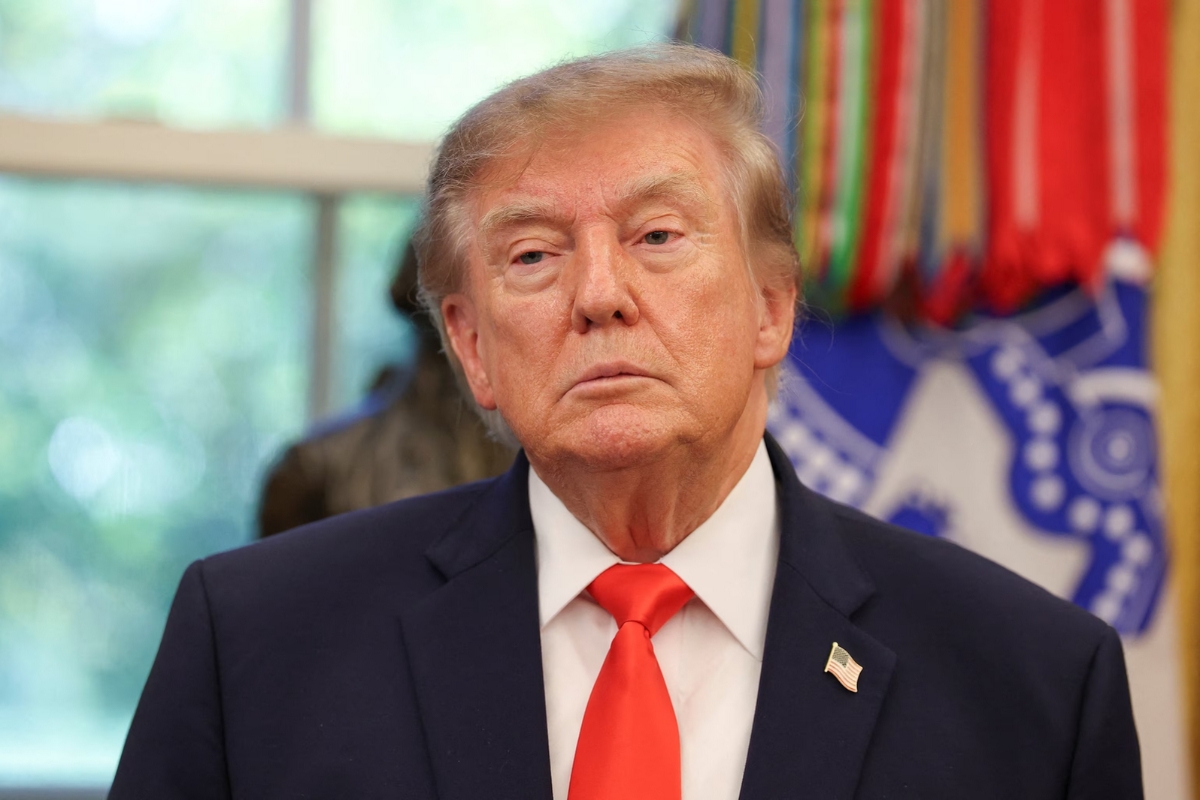
Trump admitted Republican defeat in the midterms, blaming the war with Iran for the loss, while Democrats took control of the Senate and moved to secure the House.
Translated by Qiyas from الجريدة — Original source
US President Donald Trump acknowledged his party’s defeat in the midterm elections, admitting that the conflict with Iran contributed to the Republicans’ crushing loss, after Democrats seized control of the Senate and moved close to securing the House of Representatives, dealing a severe blow to his legislative agenda.
In a telephone interview with Fox News on Tuesday evening, Trump said, “I think it’s partly due to Iran, but at the same time, people recognize the importance of what I did regarding Iran.”
He suggested that Americans may not have been prepared for the short-term consequences of rising gas prices, adding that the mission in Iran is not yet complete, “and we may or may not proceed with that.”
The US president congratulated the Democrats, saying he looks forward to working with them “for the sake of our country,” but stressed that despite their control of Congress, they are not in a position to impose their will. He predicted they would send him legislation he described as “crazy,” vowing to veto it.
Trump also placed part of the blame for the losses on Fox News itself, accusing the network of continuing to host Democratic opponents.
Democrats have so far won 52 of the 100 seats in the Senate, taking six seats from Republicans, while more than six seats in the House of Representatives have shifted in their favor, according to the Associated Press.
Democrats also took governorships from Republicans, with Keisha Lance Bottoms winning in Georgia, Amy Acton in Ohio, Gina Hinojosa in Texas, and Rod Sand in Iowa.
An AP Vote Cast poll showed that most voters hold the Trump administration responsible for rising costs and want Congress to impose further restrictions on him.
Republican campaign officials quickly blamed Trump for the sweeping losses, particularly in Senate races.
Two officials in these campaigns viewed the defeats in South Carolina, Ohio, and Texas—states Trump had won easily two years prior—as a clear and direct rejection of the president.
Republican strategic advisers, who requested anonymity to share internal deliberations, said Trump had asked voters to treat him as if he were personally on the ballot, which they did, but not in the way he had hoped.
They added that voters were dissatisfied with his policies and upset by what they perceived as his exacerbation of the cost-of-living crisis, emphasizing that party leaders recognize that Trump and his team were responsible for the loss.
After Democrats took a Texas Senate seat for the first time since 1988, along with the governorship, former Texas Republican Party chairman Wayne Hamilton said, “Does the phrase ‘We’ve been taught a harsh lesson and suffered a crushing defeat! Is the situation clear enough?’ summarize it? Simply put, you cannot overcome such a charged atmosphere.”
