National Identity... and Reform Pathways
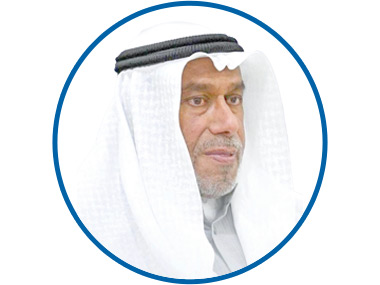
The text outlines comprehensive reform pathways in Kuwait, focusing on national identity and combating financial and administrative corruption.
Translated by Qiyas from الجريدة — Original source
For many years, the Kuwaiti government has, in line with the noble directives of His Highness the Amir, may God protect him, pursued an unprecedented reformist path in the country’s history. Over the past four decades, Kuwait witnessed a lamentable decline across all state sectors, with various forms of corruption becoming rampant. The country fell into a deeply regrettable state marked by alarming regress in education and employment, as well as the abusive exploitation of public services and financial hemorrhaging in projects, tenders, services, and subsidies. Consequently, dependency on the state spread across most sectors, beginning with citizens’ livelihoods and services. This led to a loss of control over the abusive exploitation of healthcare services, whether through the unrestricted dispensing of medications without regulations or limits, or through tenders for pharmaceuticals and medical equipment. It also extended to treatment abroad, characterized by bloated budgets and gross exploitation, primarily driven by those with decision-making power and authority, such as members of the National Assembly, senior executive officials, and their networks within government agencies. This culminated in the “welfare guarantee” scheme, which stood as a glaring example of financial waste, favoritism, and populist profiteering at the state’s expense.
Financial waste, corruption, and favoritism manifested across all sectors, including various forms of subsidies, rationing and its unjustified waste, and large-scale tenders and projects, such as the University of Kuwait project in Shaddadiya.
God blessed Kuwait by entrusting His Highness the Amir, may God protect him, with the reins of power in December 2023, ushering the country into a new, unprecedented era defined by practical and effective reform. This period has been characterized by seriousness, the curbing of corruption, and the closure of its sources. Financial reforms have followed without waste or corruption, accompanied by strict, simultaneous oversight. Expenditure has been directed toward projects that benefit and develop the country, reviving stalled, postponed, or fluctuating initiatives. As a result, we have seen radical improvements in infrastructure, including roads, the airport, digital transformation, and service enhancements. All forms of corruption and mismanagement have been halted. The civil service system has been entered with unprecedented seriousness, discipline, and commitment, transforming the state of government agencies and their employees. All forms of corruption have been combated, including money laundering and bribery, alongside effective measures against drug trafficking, smuggling, and trade. Furthermore, traffic regulations and their penalties have been tightened, achieving unprecedented deterrence.
Perhaps the most prominent aspect of reform has been the national identity file, whether concerning citizenship—which has been cleansed of accumulated mismanagement, forgery, false affiliation, and deception, as well as acquisitions lacking a sound legal basis—or immigration and residency, where all manifestations of corruption have been corrected alongside labor issues. All of this has been achieved thanks to the noble directives of His Highness the Amir, and the diligent efforts of the government and its pioneering model, the Supreme Committee for Citizenship, chaired by Sheikh Fahad Al-Yousef, and the working team under his guidance.
It must be emphasized here that no reform occurs without consequences, side effects, or even errors. However, these remain confined to a limited scope, and their negative impacts can be addressed through subsequent corrective measures. No reform process in any country can be preceded by a complete, pre-established mechanism. What stands out is the prompt and subsequent handling of the effects and repercussions of reforms, to the greatest extent possible, in a continuous and urgent manner.
It is no secret that reform trajectories have their adversaries, who seek to obstruct them, complain about their efforts, or spread misleading narratives and reports about them. Moreover, reforms will never achieve full approval from every segment of society in any country, particularly those whose interests were affected, whose corruption was exposed, or whose nests of vested interests were disrupted. What remains undeniable is that the reforms undertaken, under the wise leadership of His Highness the Amir and the Government, have been unprecedented. They have restored the state’s prestige and dignity, revitalized its institutions and systems, and closed all avenues of corruption.
Despite the strenuous diplomatic efforts by Gulf and regional states to prevent a comprehensive war and the complete destruction of Iran—efforts that are commendable—Iran, with its expansionist intentions, its goal of exporting the revolution, and its incitement and arming of its malicious proxies, remains the embers smoldering beneath the ashes. No side can feel secure regarding Iran as long as its current orientation persists.
