Research Authority: Protecting Tidal Zones Supports Food Security
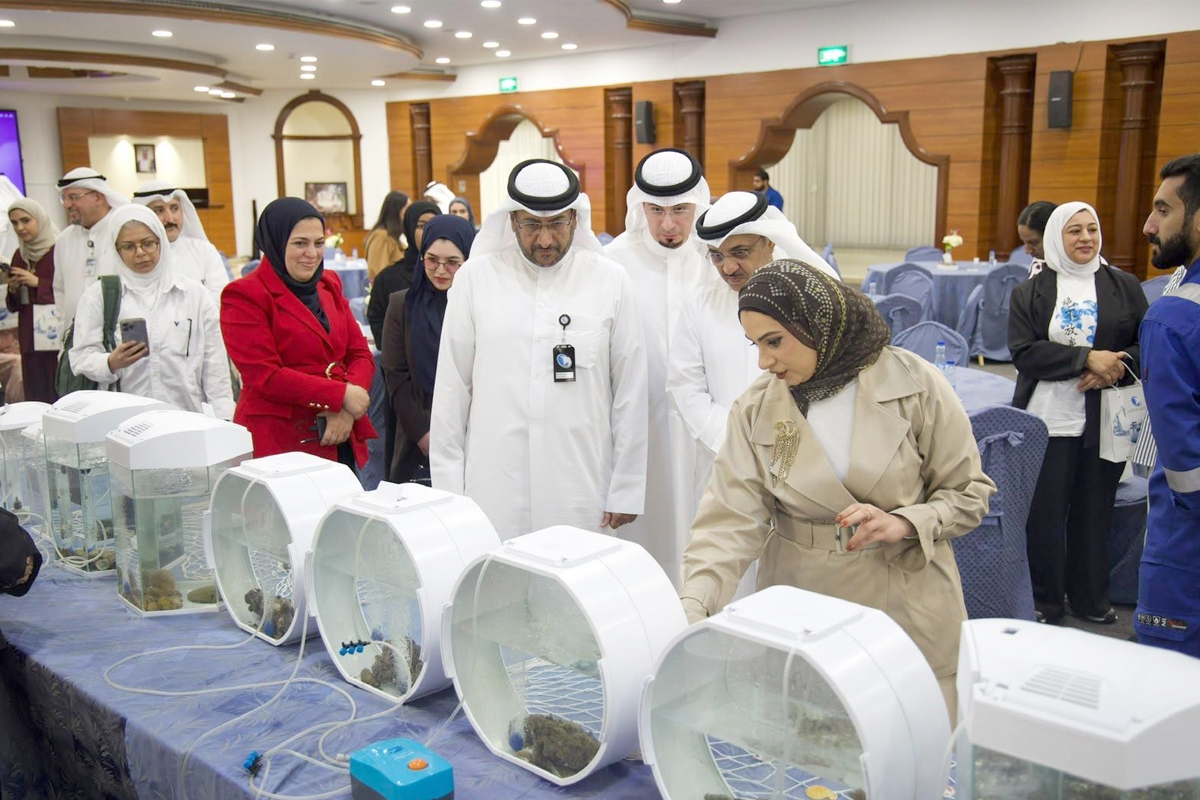
Dr. Manal Al-Kandari affirmed that the degradation of tidal zones threatens food security and the economy, during a workshop organized by the Kuwait Gulf Oil Company, attended by Mohammed Al-Dosari.
Translated by Qiyas from الجريدة — Original source
Dr. Manal Al-Kandari, a scientific researcher at the Center for Environmental and Life Sciences Research, emphasized that the degradation or damage of intertidal zones and the marine organisms inhabiting them could disrupt interconnected food chains and upset ecological balance. She highlighted the importance of awareness-raising and educating the public about environmental risks and the need to protect these ecosystems.
This statement was made during her participation, representing the Kuwait Institute for Scientific Research, in the workshop “Kuwait’s Sea Under the Microscope: From Water to Life… Discoveries and Stories from the Field,” organized by the Kuwait Gulf Oil Company, with the attendance of Mohammed Al-Dosari, Director of the Risk Management Group.
Al-Kandari noted that the negative impacts of any damage to intertidal zones extend to fish stocks, food security, and the sustainability of marine resources, thereby affecting the national economy, as well as their implications for the sustainability of the marine environment for future generations.
She shed light on the challenges facing intertidal zones, which are among the coastal environments most exposed to human activities, including land reclamation, coastal construction, and the establishment of marine moorings and beach villas. She also pointed to the impact of plastic waste, practices of some beachgoers, abandoned fishing gear, and the discharge of nutrient-laden and polluted waters through certain coastal outlets and stormwater drains, which can lead to increased nutrient concentrations that contribute to harmful algal blooms.
