Al-Anzi: Media Regulation Bylaw to be Issued Within Five Months
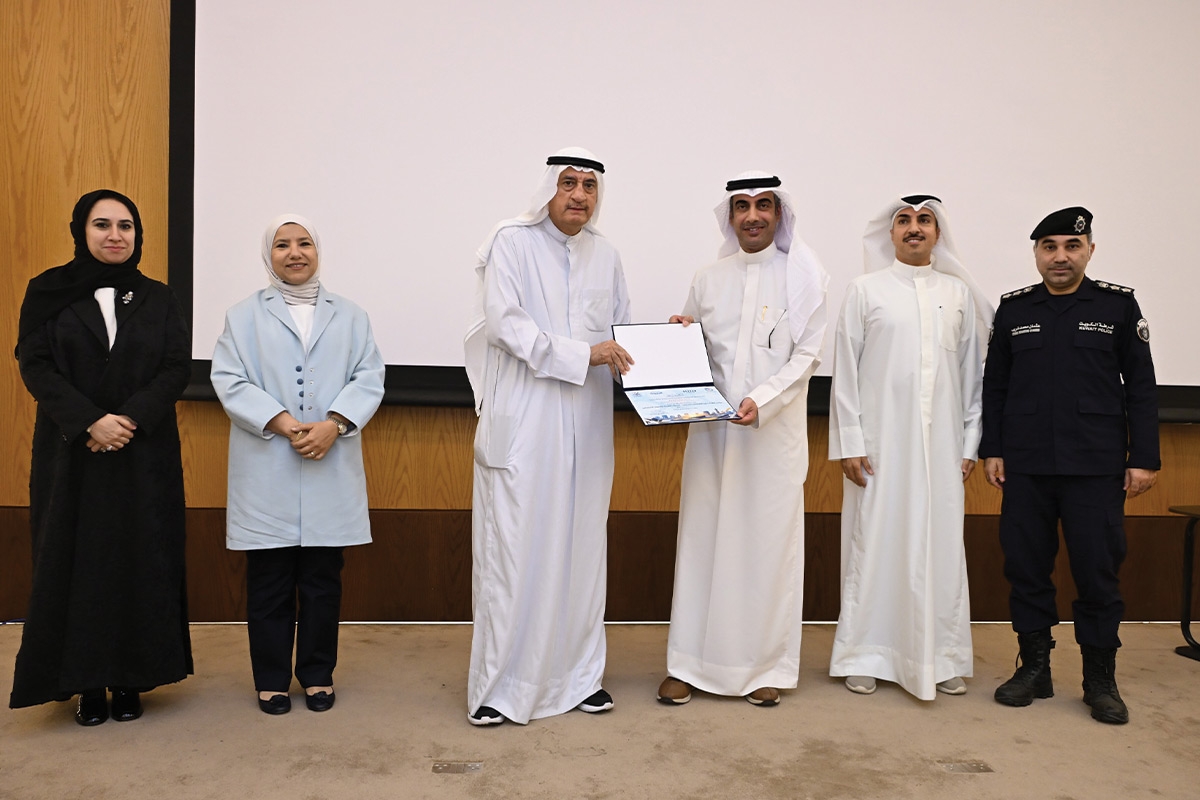
Bader Al-Anzi announced the issuance of the executive bylaw for the media regulation law within five months, while Othman Gharib stressed the importance of official sources in crisis management, and Mohammed Al-Anzi discussed the impact of artificial intelligence on education.
Translated by Qiyas from الجريدة — Original source
The conference “Youth Between Investment and Empowerment: Challenges of Development and Social Transformation” concluded its activities today at the Socialists Association, with a wide attendance, to discuss enhancing media awareness among youth and strengthening their ability to handle crises and digital transformations in the era of artificial intelligence and information verification.
During a session titled “The Role of Youth in Confronting Crises,” under the slogan “Flower of Resilience,” Dr. Bader Al-Anzi, Director General of the General Administration of Media Regulation at the Ministry of Information, revealed that the executive regulations of the upcoming Media Regulation Law will be issued within five months, following the law’s promulgation last October. These regulations will introduce further controls and detailed provisions governing media activities, keeping pace with digital content developments and addressing negative aspects associated with the use of social media platforms.
Al-Anzi clarified that the philosophy of the law is based on the principle of “regulation, not prohibition.” He noted that the executive regulations will cover the organization of permits and licenses related to accounts engaged in advertising and promotional activities, whether for products or ideas, taking into account the nature of the activity and its impact on society.
He added that regulation will not be limited to circulating news but will extend to various forms of content that may affect social cohesion and youth awareness, such as news, dramas, and artistic content. He emphasized the importance of establishing controls for practices involving the unethical exploitation of children or individuals, thereby promoting responsibility and protecting society and future generations.
Al-Anzi stated that the preparation of the regulations relies on consulting experts and academics, engaging in dialogue with youth, and drawing on Gulf experiences, with the aim of achieving more precise and appropriate regulation suited to the evolving media landscape.
During the session, Colonel Othman Gharib, Director of the Public Relations Department at the Ministry of Interior, emphasized the crucial role of media in crisis management and enhancing community reassurance. He stressed the necessity of relying on official sources and verified information, and avoiding the dissemination of unconfirmed news that may incite fear and confusion among members of society.
Gharib explained that the response to recent crises saw active participation from youth working in the Ministries of Interior and Information, who continued their field and media duties for extended hours beyond normal working times. Reporters and presenters contributed by broadcasting updates from various locations, helping to convey information to the public accurately and correctly.
He noted that some youth positively utilized social media platforms by sharing accurate security news and supporting awareness and guidance messages. He pointed out cooperation between the Ministry of Interior, the Ministry of Information, and relevant authorities to unify verified information and disseminate it via Kuwait Television.
Gharib called for obtaining news from authorized sources, primarily the Ministry of Information, the Kuwait News Agency (KUNA), the Government Communications Center, and official ministry websites. He warned against reposting misleading information due to the fear and confusion it may cause, noting that in some cases, it may necessitate taking legal action.
In a session titled “Education and Youth Empowerment: Between Genuine Formation and Emptying Meaning,” Dr. Shikha Al-Kuwari, Professor of Anthropology and Sociology at Qatar University, emphasized that empowering youth in the digital age requires moving beyond merely using artificial intelligence tools to engaging in dialogue and critical interaction with them. This approach enables new generations to understand the mechanisms behind knowledge production and prevents them from treating AI outputs as absolute truths.
Al-Kuwari stated that investment in youth should keep pace with technological transformations while preserving cultural specificity, thereby enhancing their ability to harness technology to serve their communities, participate in knowledge production, and shape their own futures, rather than merely consuming content that may not necessarily reflect their reality and identity.
Dr. Mohammed Al-Anzi, a professor of nanotechnology at the Public Authority for Applied Education and Training, offered a critical perspective on the transformations artificial intelligence has wrought in the education system. He argued that traditional educational methods face a fundamental challenge from the rapid advancement of technology and its unprecedented potential for accessing and processing knowledge.
He noted that understanding these transformations requires examining the nature of human brain function, neural networks, and the complex interconnections underpinning thinking and learning processes. He clarified that what occurs within the brain cannot be reduced to the mere reception of information; rather, it involves overlapping and repetitive processes that interact and evolve in response to the nature of the experiences and knowledge acquired by individuals.
Al-Anzi used a striking phrase to describe this transformation, stating that “the death certificate of education has been issued, and its publication date is approaching,” referring to the profound shifts that necessitate a review of the prevailing educational model, though not necessarily abandoning learning as a human process.
