Gold drops to $3,875 per ounce
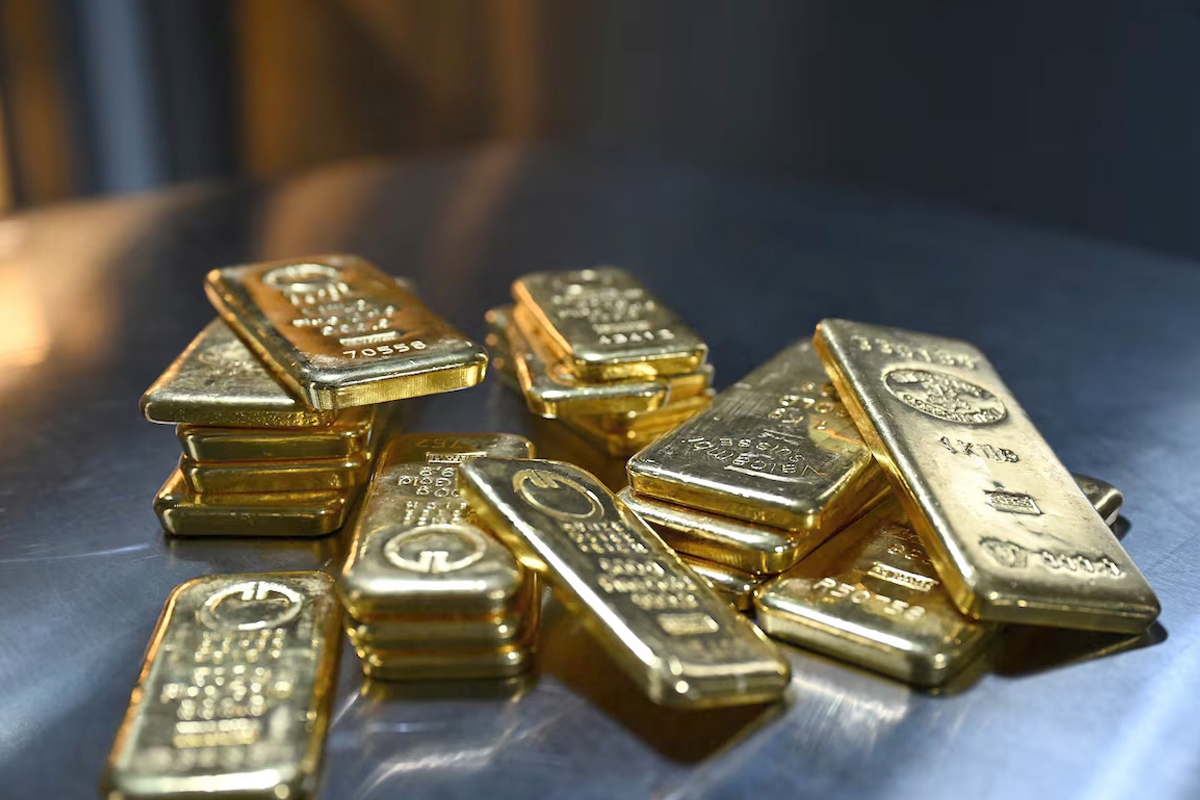
Dar Al Sibak's report highlights gold's decline to $3,875, influenced by US employment data and OPEC+ developments.
Translated by Qiyas from الجريدة — Original source
A report issued by Kuwaiti company Dar Al Sibaak today stated that a sell-off in global technology stocks and concerns over rising artificial intelligence spending contributed to increased asset liquidation and margin position coverage, adding pressure to gold despite ongoing geopolitical tensions.
The report clarified that markets are entering a new week amid anticipation of several key U.S. economic data releases, including manufacturing and services purchasing managers’ indices (PMIs), job openings data, and the private sector employment report, culminating in the non-farm payrolls report on Friday, the 6th, which is considered the most significant event of the week.
It added that these data points will be influential in shaping expectations for U.S. interest rates in the coming period, as investors focus on economic activity indicators and labor market conditions.
The report noted that sustained employment strength and rising wages could bolster the likelihood of interest rates remaining high, thereby supporting the dollar and bond yields while increasing pressure on gold.
Conversely, it indicated that signs of a cooling labor market could ease expectations of monetary tightening, providing an opportunity for the precious metal to recover.
The report highlighted that markets are also closely watching the U.S. midterm elections tomorrow, given their potential impact on fiscal policies, government spending, and deficits, alongside monitoring statements from Federal Reserve officials and developments related to the upcoming December meeting.
Dar Al Sibaak’s report added that oil prices and developments in the Middle East will remain among the most influential factors affecting markets, amid ongoing concerns about supply disruptions and maritime routes, as markets also anticipate the OPEC+ alliance meeting and its signals regarding future production levels.
It stated that gold faces a dual impact from rising oil prices: on one hand, higher prices may boost demand for gold as a hedge against inflation and geopolitical risks; on the other hand, increased energy costs could delay monetary easing, thereby pressuring prices due to higher yields and a stronger dollar.
The report pointed out that the results and future outlooks of these companies will be influential in determining risk appetite, particularly following the recent wave of declines in technology stocks.
It noted that markets are also tracking China’s purchasing managers’ indices, considered a key indicator of global industrial demand and demand for precious and industrial metals, particularly silver.
Technically, Dar Al Sibaak’s report stated that gold faces pressure after closing at $3,875 per ounce, with trading continuing below previous support levels.
It clarified that the $3,800 level stands out as a key support zone; a break below it could lead to a test of $3,700, and then $3,500 if selling pressure persists.
Conversely, it added that gold needs to reclaim the $3,886 level, then $3,900, to improve short-term momentum, while the $4,000 level represents a significant psychological and technical resistance; a breakout above it could pave the way for a test of $4,100, then $4,200.
It explained that reclaiming the $3,900 and then $4,000 per ounce levels could serve as an initial indicator of improving buying momentum, whereas a break below support levels could open the door for a deeper correction toward lower levels.
He noted that gold’s movements in November will remain tied to the extent of inflation’s decline and shifts in expectations for U.S. interest rates, alongside developments in energy markets and geopolitical tensions, making the monitoring of technical levels and risk management essential for investment decisions in the coming period.
On the local front, a report by Dar Al-Suwayeh stated that gold prices in the Kuwaiti market continue to be influenced by global ounce movements, with the price of 24-karat gold reaching approximately 39.34 Kuwaiti dinars (around $127) per gram, while 22-karat gold recorded around 36 dinars (approximately $116).
The report also noted that the price of a kilogram of silver stood at around 553 dinars (roughly $1,700), as traders awaited global developments in precious metals and energy prices, as well as U.S. monetary policy decisions.
