Wajhat Watan: Side Conversations at Money Tech
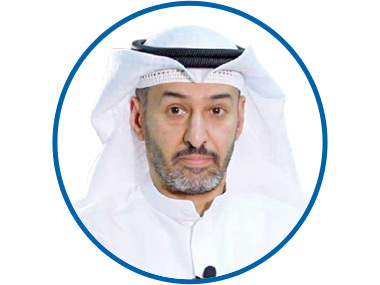
An interview with Editor-in-Chief Yasser Al-Saadi on business concerns and inflation.
Translated by Qiyas from الجريدة — Original source
Those who know me are aware that I am not particularly fond of financial technology and its myriad complexities; in most transactions, I prefer the sound of a coin clinking over the notification alerts of apps with every financial operation.
Nevertheless, for the fifth consecutive year, I have made it a point to attend the annual MoneyTech conference for several reasons, the most important being my work at Al-Jarida newspaper, as well as taking the annual photo with my older brother and dear colleague, Editor-in-Chief Yasser Al-Saadi.
However, this year’s conference was significantly different, not only in the expansion of its topics, which discussed broader issues related to the economic and logistical repercussions of the regional war crisis and the challenges posed by technological developments, but also due to the friendly side conversations I had with many visitors and attendees.
The discussions on the sidelines of the conference varied, involving friends, colleagues, acquaintances, and “journalistic sources,” covering general external and internal conditions, as well as fears, expectations, and future predictions ranging from optimism to pessimism, all stemming from impacts on business and trade, as well as small and medium-sized enterprises.
In the conference corridors and informal side chats, I spoke with various segments of business owners—both the wealthy and the entrepreneurial, as well as speculators or those “playing the market,” and also employees—about issues and stories that are difficult to convey clearly in rushed, awkward phone calls or brief WhatsApp messages, which may leave the idea incomplete or truncated.
The wealthy fear a sudden shift in circumstances and the continuation of the “neither peace nor war” state in the region; the speculator complains of rising risk margins; the entrepreneur suffers from the hardships of rising import costs and soaring rental prices, in addition to the contradiction between official statements regarding bureaucratic procedures and the reality on the ground; and the employee, for whom even a single dinar now makes a difference in managing monthly expenses.
Who sees opportunity in the current reality? Who fears future transformations? Will the regional war lead to a new reality for life, work, or trade and business? What will that reality look like? Will it be worse or better? Will the recently accelerated measures, policies, and laws support the country’s economic conditions or not? What about inflation, ease of doing business, and opportunities?
In truth, there were no comprehensive answers to all these questions. In fact, some carried contradictory answers dominated by ambiguity and uncertainty, with most taking the form of fears or reflections of anxiety and apprehension. What stood out, however, was the transparency of the discussions, the clarity of the dialogues, and the ability to express fears with the same ease as others expressed their relief and satisfaction.
The idea of meeting large numbers of people directly, without the constraints of social media and the rigidity of technology, still retains its appeal, credibility, and transparency when heard from diverse segments of society.
