Oil Jumps to 6-Month High on Fears of Iran War Escalation
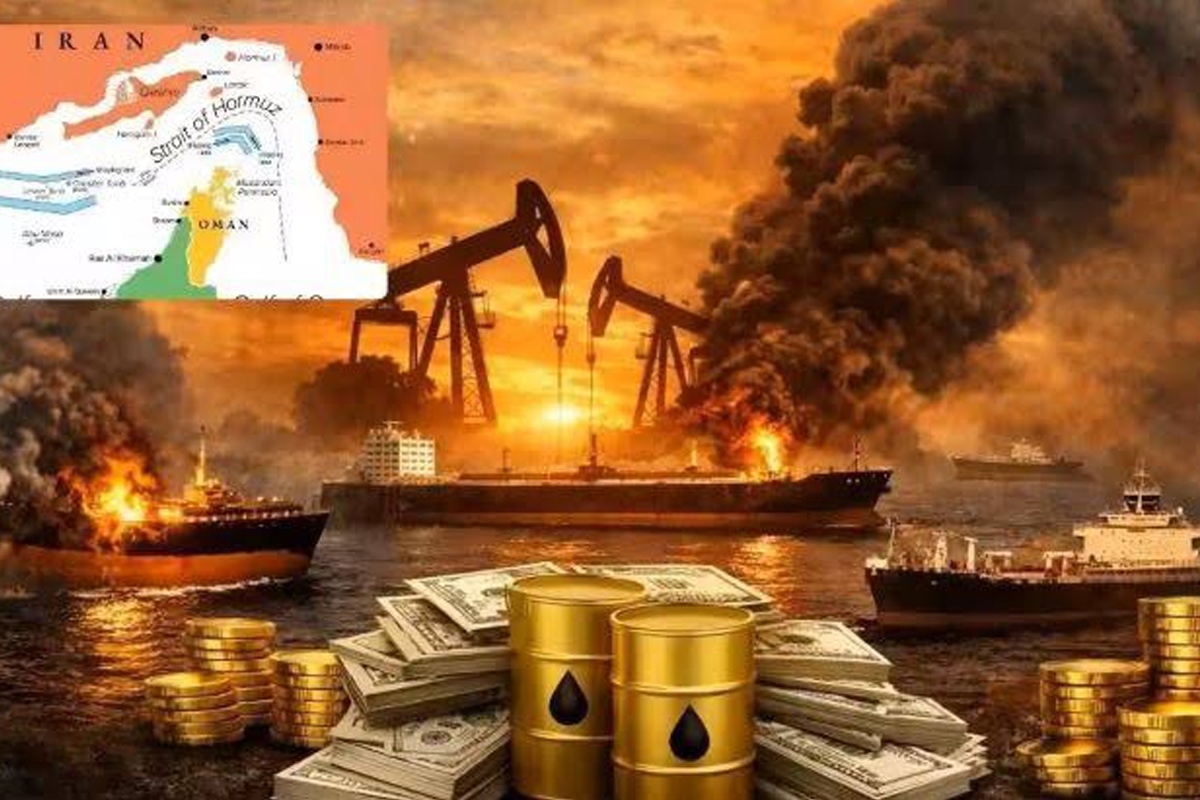
Oil prices rose to their highest level since April due to fears of escalating conflict in the Middle East, amid attacks on tankers in the Strait of Hormuz and diplomatic tensions.
Translated by Qiyas from الجريدة — Original source
Oil prices rose more than 2 percent on Friday, hitting their highest settlement levels since late April, as traders anticipated the possibility of an escalating conflict between the United States and Iran following the U.S. midterm congressional elections. Meanwhile, an attack on a tanker in the Strait of Hormuz highlighted the supply risks stemming from this conflict.
December Brent crude futures, which expired on Friday, rose $2.76, or 2.4 percent, to settle at $117.64 per barrel, after touching a high of $118 per barrel. The most actively traded January Brent contract increased by $2.63 to $113.43 per barrel.
For its part, the price of a barrel of Kuwaiti Oil rose by $3.99, reaching $114.76 per barrel in Friday’s trading, compared to $110.77 in the previous day’s trading, according to the price announced by the Kuwait Petroleum Corporation.
Denis Kessler, Senior Vice President of Trading at B.O.K. Financial, said, “Traders will continue to focus on oil flows from the Middle East and potential escalation by the United States and allied forces.”
The UK Maritime Trade Operations agency reported that a tanker was attacked with explosives mounted on a small boat in the Strait of Hormuz, a vital maritime passage for oil and fuel supplies from the Gulf region. It was not yet clear who was responsible for the attack.
Maritime sources stated that this is the first known successful attack in this sea lane using sticky mines—explosives attached to a ship’s hull from a small boat—since the outbreak of the U.S.-Israeli war against Iran in February.
The U.S. Embassy in Riyadh announced that the United States ordered non-essential government employees and their families to leave Saudi Arabia starting October 23 due to security risks, citing Houthi attacks, allied with Iran, on civilian airports and other critical infrastructure.
The Houthis announced on Thursday that they had launched attacks on several sites in Saudi Arabia, including the Ras Tanura refinery, the largest in the kingdom, the Rabigh refinery, and an Aramco facility in Biquq.
A source familiar with the matter told Reuters that Qatari mediators returned to Tehran on Friday as part of efforts to reach an agreement between the United States and Iran.
U.S. President Donald Trump stated today that his Vice President, J.D. Vance, had contacted Iran to assist it in obtaining medical supplies, following U.S. media reports that Vance had reached out to the highest security official in Tehran to revive ceasefire talks.
Tasnim News Agency reported that Iran had received a message from Vance but had not yet responded, adding that Tehran wanted the United States to meet its conditions and that “any stance contrary to this framework is unacceptable.”
Two out of three companies specializing in ship tracking reported that Saudi crude oil exports increased in October compared to September, despite Iranian attacks on ships in the Gulf and Houthi claims of launching attacks on Saudi oil facilities.
The number of oil drilling rigs in the United States, an indicator of future production, increased by two. The U.S. Energy Information Administration reported in its monthly oil supply report, released on Friday, that U.S. crude oil production rose in August, while demand for crude oil and petroleum products declined.
Two out of three companies specializing in ship tracking reported that Saudi crude oil exports rose in October compared to September, despite Iranian attacks on maritime navigation in the Gulf and the announcement by the Iran-aligned Yemeni Houthi group of attacks on oil facilities in the Kingdom.
Data from Kpler, the third ship-tracking company, showed a decline in exports, with many tankers turning off their tracking signals, making it difficult to accurately determine actual volumes.
The Tankers.com website stated that Saudi crude oil exports averaged approximately 7.9 million barrels per day through October 29, up from 5.8 million in September. Preliminary data showed this figure included 3.32 million barrels per day from the western coast and 4.55 million from the east.
Petro-Logistics, a company specializing in tracking oil tankers, noted that exports from the Saudi port of Yanbu increased after declining in September.
Virginie Bannic of Petro-Logistics said, “Total volumes exiting the Strait of Hormuz fell by between 2 million and 3 million barrels per day from the peaks recorded earlier in October.” She added, “But Saudi exports overall remain strong and will end the month at a higher level than in September.”
Kpler data showed that total Saudi crude oil exports reached 5.72 million barrels per day since the beginning of the month, compared to 6.70 million in September. Tracking company data do not always align and are likely to be revised again as more information becomes available.
Verifying exports through the Strait of Hormuz has become more difficult since many tankers turned off their tracking signals amid security risks, prompting analysts to rely more heavily on satellite imagery, port monitoring, and other data to estimate flow volumes.
Meanwhile, Libya’s National Oil Corporation said an armed group closed a valve on a pipeline connecting the Al-Hamada oil field to the Zawiya refinery. It explained that closing the valve halted the flow of approximately 15,000 barrels per day.
