Europe and Canada Strengthen Strategic Partnership in Critical Minerals and AI
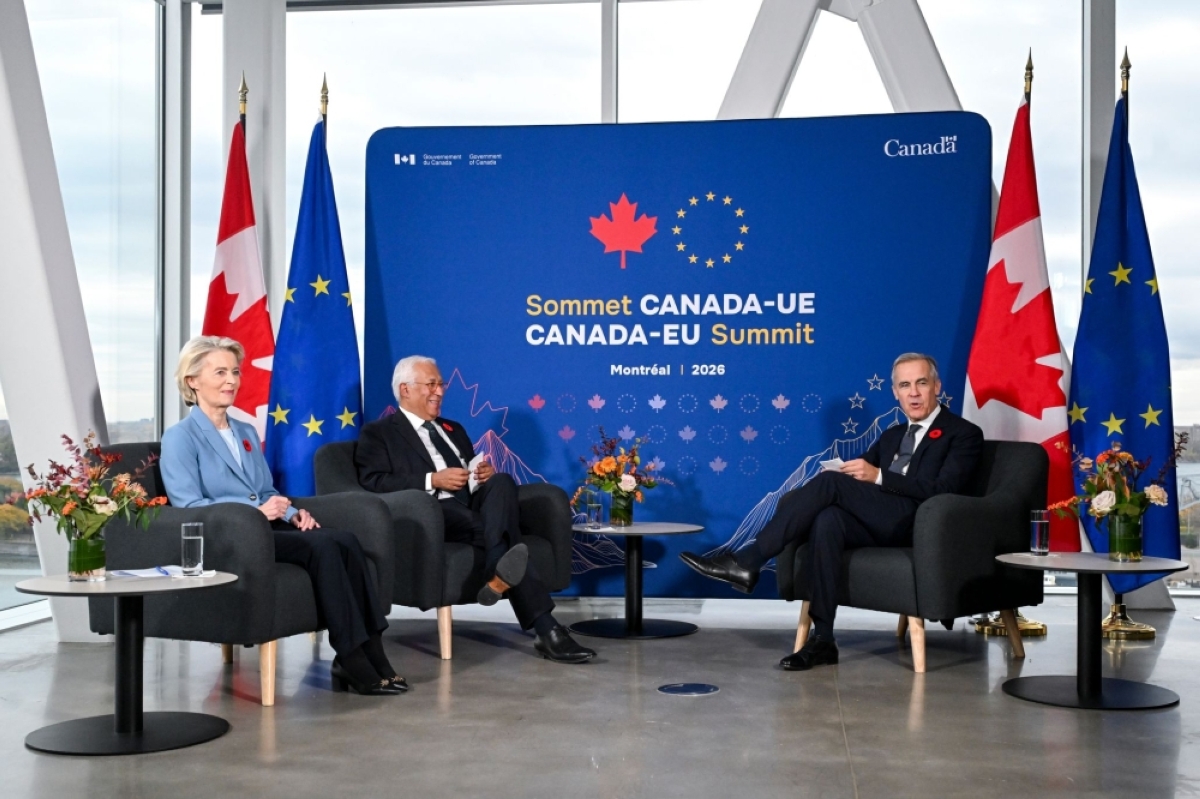
The European Union and Canada forge a strategic alliance in minerals and artificial intelligence
Translated by Qiyas from الجريدة — Original source
The European Union and Canada signed a deal on Friday establishing the “closest ever” partnership between the EU and a non-European country, centered primarily on enhancing cooperation in strategic areas such as critical minerals and artificial intelligence.
In a prominent symbolic move, Canada also announced its intention to participate in the €90 billion loan approved by the European Union for Ukraine.
The joint statement issued at the conclusion of the summit stated that this partnership would make “Canada and the European Union better equipped to face shared global challenges.”
Canadian Prime Minister Mark Carney said before the meeting that this partnership means “sovereignty” and “greater resilience,” enabling the two partners to “weather shocks together” in a world dominated by the United States and China.
The two sides, already linked by a free trade agreement known as CETA for a decade, accelerated their rapprochement following the return of US President Donald Trump to the White House in early 2025, amid strained relations between him and the two countries.
The summit, held on Thursday and Friday in Montreal, allowed the two parties to advance their cooperation much further, according to European Council President António Costa, who emphasized the building of the “closest, deepest, and strongest partnership ever concluded between the European Union and a non-European country. Canada is, by far, the most European of non-European countries.”
Critical minerals formed a central focus of the summit; they are essential for green technologies, such as electric vehicle batteries and wind turbines. The European industry relies heavily on China for these crucial minerals, while Canadian lands are rich in them.
However, Canada, seeking to reduce its dependence on the United States, needs to attract investors to accelerate the launch of mining projects.
Brussels and Ottawa will also cooperate in the field of artificial intelligence, aiming to defend their sovereignty against US and Chinese dominance in the sector.
On Thursday, Ottawa announced an investment of €1 billion in the Canadian AI company Cohere. The company has formed a partnership with the German firm Aleph Alpha, a move Prime Minister Carney described as “a concrete example of what Canada and Europe can build together.”
Carney said, “We will not wait for the future of artificial intelligence to be decided elsewhere, by people we do not know or do not trust.”
The agreements also included Canada’s future accession to or participation in European programs, such as the Erasmus youth program, which allows university students to spend a semester abroad, and the Galileo satellite navigation program, an alternative to the US Global Positioning System (GPS).
In the longer term, the two partners seek to expand the “Alliance for the Future” to include other reliable allies, such as Japan, South Korea, and Australia. The idea is to lay the foundations for economic and customs coordination in a world disrupted by the additional tariffs imposed by Trump.
However, Carney, who had confronted the US President over the halt of trade negotiations with the White House in late August, sought on Thursday to reassure its southern neighbor, stating that the United States would “feel the benefits” of this rapprochement.
