UAE: Control Over Oil Spill from Tanker 'J2'
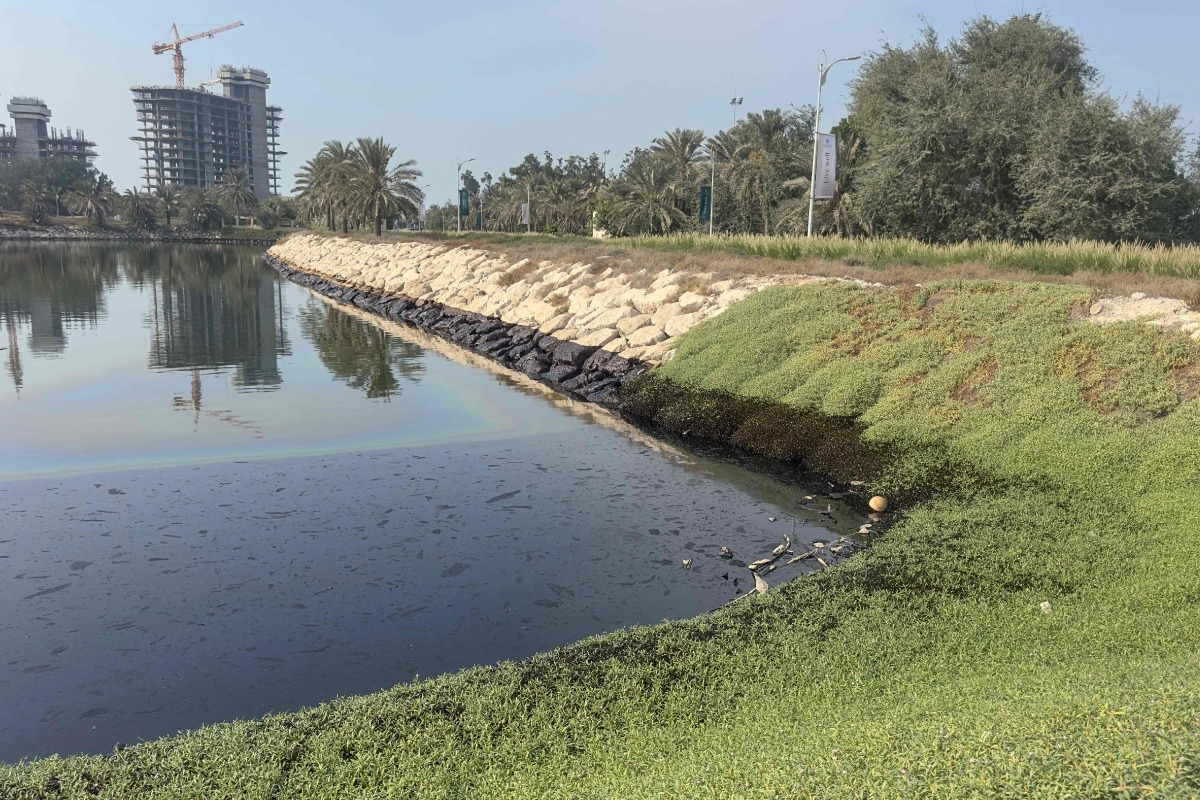
Emirati ministries coordinate to contain oil spill from tanker J2 off Umm Al-Quwain coast
Translated by Qiyas from الجريدة — Original source
The UAE Ministry of Energy and Infrastructure confirmed on Friday that joint coordination continues with the Ministry of Climate Change and Environment, the National Emergency Crisis and Disasters Management Authority, and relevant federal and local authorities to monitor efforts to secure the oil tanker “JCM 2” following an incident in the country’s territorial waters, and to take necessary measures to mitigate associated risks and ensure the safety of maritime navigation.
In a press statement released on Friday and reported by the Emirates News Agency (WAM), the ministry clarified that specialized technical teams are continuing their technical remediation work on the tanker, which has included repairing damaged parts, restoring certain operational systems, and assessing the structural integrity of the vessel to determine the most appropriate options for handling it safely.
The ministry noted that, according to the latest field assessments, no new oil spills have been detected from the tanker. Meanwhile, maritime and aerial surveillance operations continue, supplemented by the use of satellite imagery to closely monitor the situation and track any developments.
For its part, the Ministry of Climate Change and Environment confirmed that its technical teams are continuing to address marine pollution caused by the oil spill, in continuous coordination with relevant federal and local authorities. Field surveys, monitoring, and cleanup operations are being conducted in coastal areas affected by the spill, with the ministry emphasizing that community safety remains the top priority.
The ministry added that, based on the latest satellite imagery as of today, the oil slick is concentrated off the coast of Ajman, extending partially toward coastal areas in Ras Al Khaimah, Ajman, and Sharjah.
It confirmed that the observed pollution density is showing a noticeable decline, as containment and remediation efforts continue for the spill, which has been stopped at its source.
The Ministry of Climate Change and Environment explained that containment and remediation efforts rely primarily on mechanical response methods, alongside the use of chemical dispersants in accordance with international standards and approved technical guidelines, and in coordination with relevant authorities.
The ministry stressed that the temporary closure of certain beaches and coastal areas is a precautionary measure, clarifying that this does not necessarily mean pollution has been detected at all closed sites. Rather, it reflects a commitment to safeguarding public health and the marine environment, and to allow for the completion of survey and remediation work.
The ministry affirmed the safety of fish and food products available in markets, confirming their suitability for human consumption, and highlighted the effectiveness of the country’s food security system in ensuring food safety.
