Na'im Qasim: No debate on Hezbollah's weapons as long as occupation continues
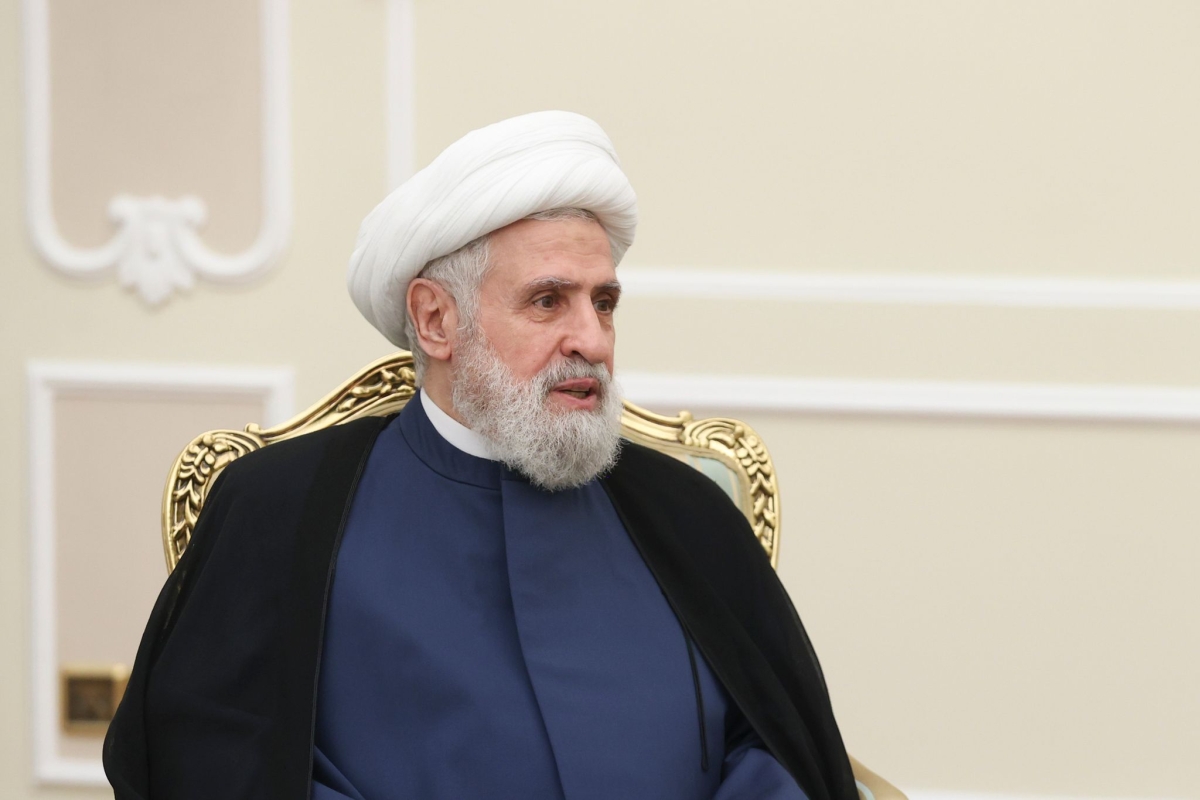
Na'im Qasim affirmed the continuation of resistance and rejection of disarming, while praising the Iranian-American agreement.
Translated by Qiyas from الجريدة — Original source
Hezbollah Secretary-General Sheikh Naim Qassem affirmed in a statement on Wednesday evening that the resistance will continue and that there will be no discussion about disarming Hezbollah as long as the occupation remains, adding that the Framework Agreement is illegitimate because it violates the constitution, the Taif Agreement, and existing laws.
Qassem stressed that “the resistance will continue, grounded in the legitimate right of resistance and as guaranteed by the Taif Agreement, and it will confront aggression against itself and against Lebanon. There is no room for discussion regarding the withdrawal of its weapons as long as the occupation persists and its aggression continues.”
He expressed his interest in the Iran–United States agreement, describing it as the only available source of strength alongside the resilience of the resistance, the Lebanese people, and their supporters. He noted that the agreement proved its effectiveness immediately upon the issuance of the memorandum of understanding, which led to a reduction in the level of aggression against Lebanon. He added that the Islamic Republic of Iran places at the top of its priorities halting Israeli aggression against Lebanon and withdrawing from its territories, representing a great sacrifice that they appreciate from the icon of freedom worldwide.
Qassem continued, “We do not care who governs the usurping Israeli entity. But let them know that it will not be able to continue its occupation and must withdraw from our land.”
Qassem reassured that the relationship between Hezbollah and the Amal Movement, as well as allied forces supportive of the resistance, remains strong. He emphasized shared positions on Lebanese sovereignty, the importance of the role of the national army and its support, the rejection of fitna (sectarian strife) in all its forms, and the commitment to dialogue and understanding with all components of the Lebanese people and authorities, within the framework of the constants of sovereignty and the constitution.
