Foreign Minister: Diplomacy is a Pillar for Peace, and Kuwait is Committed to Supporting International Pluralism
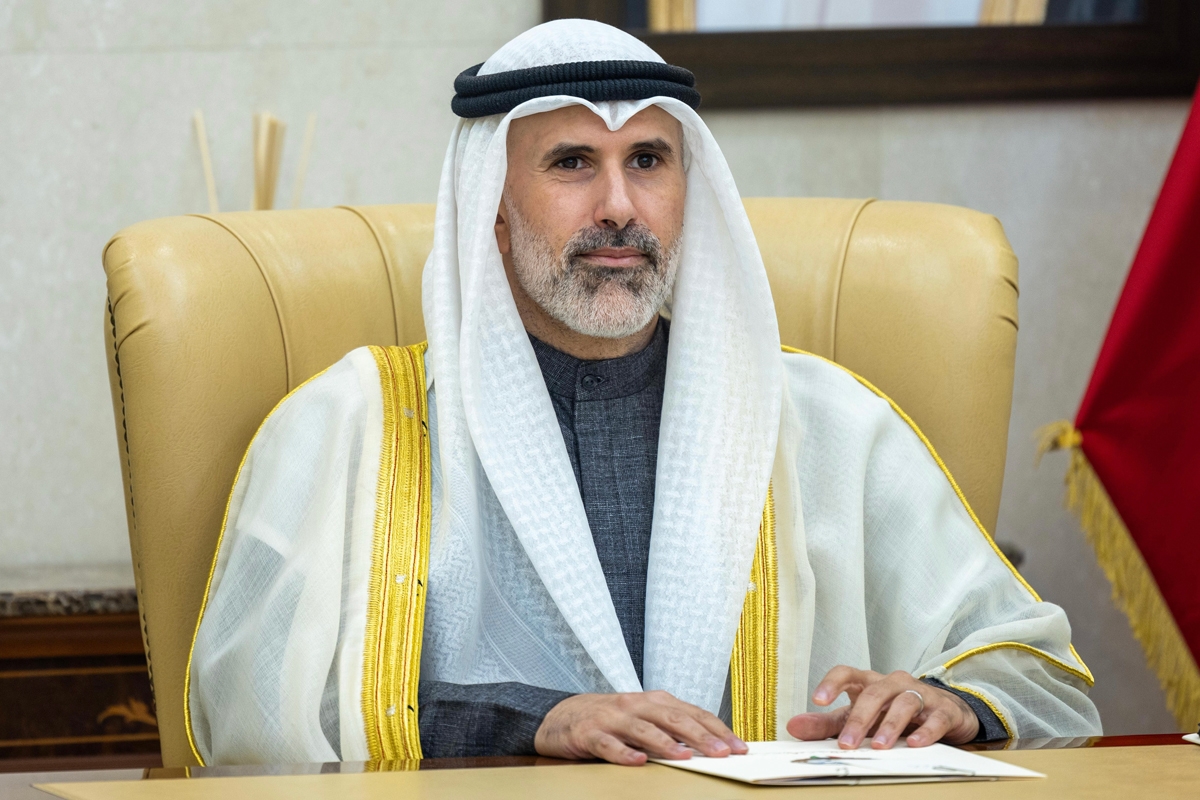
Foreign Minister Jara Al-Jaber and UN Under-Secretary-General Ghada Fathi emphasized the role of diplomacy in maintaining peace.
Translated by Qiyas from الجريدة — Original source
Foreign Minister Sheikh Jara Al-Jaber affirmed that diplomacy serves as a fundamental pillar for preserving peace, preventing conflicts, bridging differences, and building trust among nations, even under the most complex circumstances. He emphasized that its effectiveness is contingent upon adherence to the United Nations Charter and international law, as well as the strengthening of the multilateral system.
This statement was made in a speech delivered by Al-Jaber on the occasion of United Nations Day, observed annually on October 24, under the theme “The Power of Diplomacy.” Addressing the backdrop of overlapping crises, ongoing conflicts, and escalating geopolitical tensions, he stressed that diplomacy is not merely a tool for managing interstate relations, but an essential means of preserving peace, avoiding conflicts, and enhancing international dialogue and cooperation.
He stated that, for Kuwait, the power of diplomacy is not a theoretical concept, but a cornerstone of its national identity and foreign policy. He recalled the historical role of the United Nations and its bodies, particularly the Security Council, following the Iraqi invasion of Kuwait in 1990, noting that the international community’s commitment to the principles of justice contributed to the liberation of Kuwait and the restoration of its sovereignty in 1991.
He affirmed that this episode represents one of the most prominent success stories of the international organization, underscoring the importance of international law and the principles of the UN Charter. It also reinforced Kuwait’s conviction that the rule of law and international multilateralism are essential guarantees for protecting states, especially during times of crisis.
He clarified that Kuwait’s partnership with the United Nations, spanning more than six decades, has yielded significant humanitarian and developmental initiatives. These include supporting communities affected by conflicts and natural disasters, contributing to the achievement of the Sustainable Development Goals, and enhancing cooperation with UN agencies, programs, and funds.
He emphasized that humanitarian diplomacy is deeply rooted in Kuwait’s national identity, as assisting others in times of need has been an authentic characteristic of the Kuwaiti people even before the discovery of oil. This spirit later became an integral part of foreign policy, with the establishment of the Kuwait Fund for Arab Economic Development in 1961 being one of its most prominent manifestations.
He affirmed that, under the wise leadership of His Highness the Amir of Kuwait, Sheikh Meshal Al-Ahmad Al-Jaber Al-Sabah, and His Highness the Crown Prince, Sheikh Sabah Khaled Al-Hamad Al-Sabah, Kuwait will remain an active and reliable partner to the United Nations. It will continue to support international multilateralism, peaceful diplomatic solutions, and humanitarian efforts, thereby contributing to the realization of peace, stability, and prosperity.
He concluded by reiterating that United Nations Day is not merely an occasion to recall past achievements, but a renewed opportunity to reaffirm commitment to the principles upon which the organization was founded. These include the belief in the capacity of dialogue to overcome divisions and the importance of cooperation in addressing shared challenges. He reiterated Kuwait’s steadfast support for the United Nations and its Charter, emphasizing that enhancing the organization’s effectiveness and consolidating diplomacy constitute two fundamental pillars for building a more stable, peaceful, and prosperous world.
For her part, Ghada Taher, the Representative of the UN Secretary-General and UN Resident Coordinator in Kuwait, affirmed that diplomacy represents a strategic choice and an essential tool for preventing conflicts, containing crises, and building peace. She stressed that international dialogue, cooperation, and respect for international law are indispensable pillars for achieving security and stability, amid escalating global and regional conflicts and challenges.
Al-Taher stated that, 81 years after the establishment of the United Nations, the world remains in urgent need of strengthening multilateral action and prioritizing dialogue over confrontation. She recalled that the UN Charter was founded on the promise of sparing future generations from the scourge of war, following the harsh experiences left by the world wars.
She added that diplomacy transcends the management of relations between states, embodying political courage, wisdom, and ethical responsibility. Engaging with adversaries, listening to diverse viewpoints, and seeking common ground require genuine will and the capacity to overcome differences. She emphasized that true strength lies in preventing conflicts and protecting civilians, not in the capacity for destruction.
Al-Taher praised Kuwait’s contributions to multilateral work, affirming that since its accession to the United Nations in 1963, the country has solidified its status as an active partner in supporting mediation, humanitarian diplomacy, and the provision of developmental aid. She highlighted Kuwait’s role in bridging differences, facilitating dialogue among parties, and supporting efforts to contain crises and resolve conflicts, as well as its hosting of prominent humanitarian conferences that helped mobilize international support for millions affected by crises and disasters.
