Kuwait Showcases Its Efforts to Enhance Peaceful Uses of Nuclear Energy
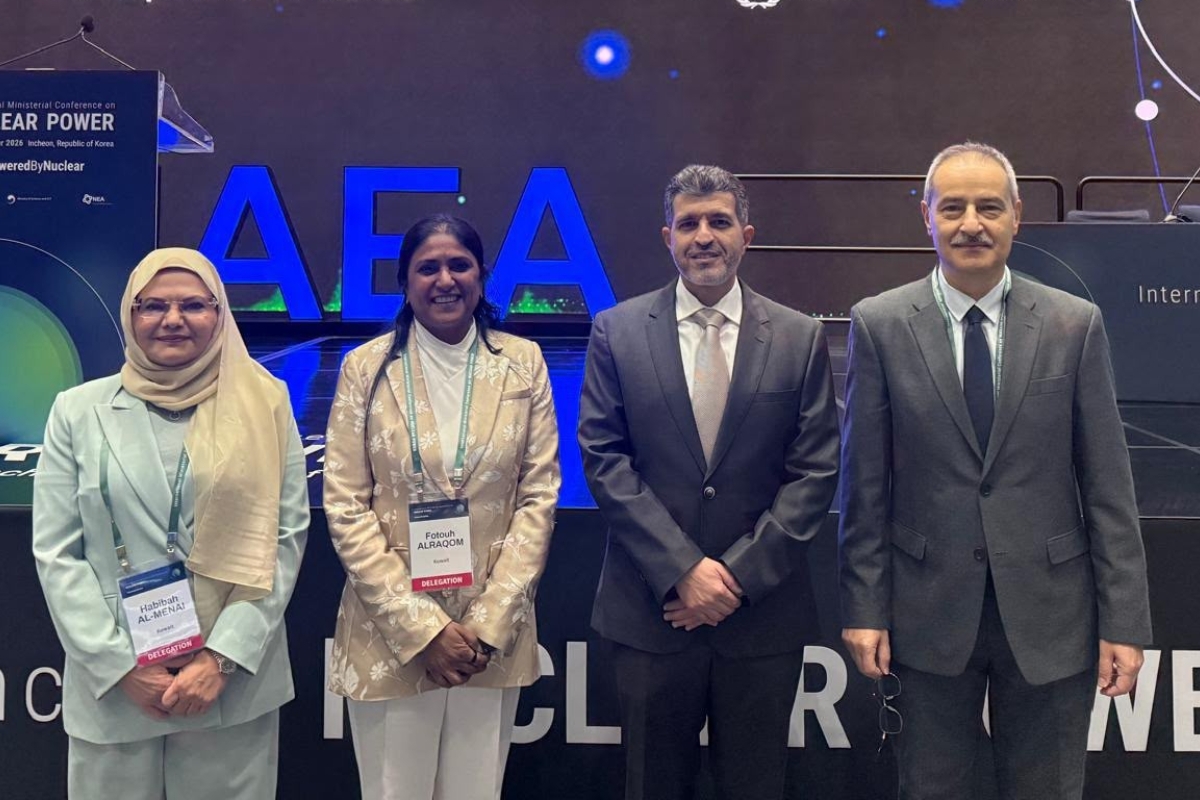
Dr. Faisal Al-Humaidan reaffirms Kuwait's commitment to contributing to the International Atomic Energy Agency's work and enhancing international cooperation in the peaceful uses of nuclear energy during the Incheon 2026 conference.
Translated by Qiyas from الجريدة — Original source
Dr. Faisal Al-Humaidan, Director General of the Kuwait Institute for Scientific Research (KISR), affirmed during his speech today at the 2026 International Ministerial Conference on Nuclear Energy, held in Incheon, Republic of Korea, from October 27 to 29, Kuwait’s commitment to making an active contribution to the work of the International Atomic Energy Agency (IAEA) and to enhancing international cooperation in the field of peaceful uses of nuclear energy.
Al-Humaidan explained that Kuwait’s participation in this conference coincides with its membership on the IAEA Board of Governors for the period 2026–2028, reflecting the country’s dedication to actively contributing to the Agency’s work and strengthening international cooperation in the peaceful uses of nuclear energy.
He noted that the energy sector is witnessing rapid developments, as countries strive to enhance energy security, meet growing demand, reduce emissions, and support sustainable development. He emphasized that there is no single energy pathway suitable for all countries; rather, each nation must determine its options based on its needs, resources, and national priorities.
He pointed out that energy security in Kuwait is closely linked to water security. The rising demand for electricity, coupled with reliance on water desalination—which requires significant energy consumption—makes long-term planning for the energy sector of paramount importance.
He added that Kuwait closely monitors rapid advancements in nuclear energy technology, particularly small modular reactors and their potential applications in electricity generation and water desalination. He clarified that any future assessment of this technology will be based on national needs and priorities, as well as nuclear safety, security, and safeguards requirements, alongside considerations of economic viability and sustainability.
He stressed that Kuwait has consistently supported the pivotal role played by the IAEA in promoting the peaceful uses of nuclear energy through its contributions to key initiatives, including the three phases of the Agency’s laboratory development program in Seibersdorf, the Peaceful Uses Initiative, and the Agency’s Nuclear Fuel Bank.
He indicated that Kuwait continues to strengthen its cooperation with the IAEA through the framework of the Fourth Country Programme for Technical Cooperation (2026–2035), signed on September 15, 2025, which outlines priorities for technical cooperation and directs efforts in nuclear technology transfer and capacity building toward supporting national development objectives.
He highlighted that the longstanding partnership between Kuwait and the IAEA forms a solid foundation for enhancing scientific cooperation and building national capacities. He noted the participation of Kuwaiti institutions in Agency-coordinated research projects in the fields of sustainable energy and hybrid energy systems that combine nuclear and renewable energy, thereby contributing to building the necessary knowledge and scientific base to understand and evaluate future energy options.
He affirmed that this experience underscores a crucial principle: the necessity for countries to possess the capabilities to understand and evaluate technology before making decisions on its adoption.
The Director General of KISR also expressed his sincere gratitude and appreciation to the Republic of Korea for hosting this important ministerial conference, and to the IAEA, headed by its Director General, Mr. Rafael Mariano Grossi, for their efforts in bringing member states together to discuss the future of nuclear energy and enhance international cooperation.
For her part, Dr. Fathoua Abdulaziz Al-Rumaih, Acting Executive Director of the Energy and Building Research Center at the Institute, clarified that most countries participating in the Sixth International Ministerial Conference on Nuclear Energy called for assessing their energy needs and the peaceful uses of nuclear technologies, including in medicine and agriculture, with a vision encompassing the entire value chain, from waste management and safe decommissioning to enhancing transparency and commitment to nuclear safety and security requirements and International Atomic Energy Agency (IAEA) safeguards.
She emphasized a gradual approach to institution-building, developing legislation, oversight, and governance, and entrenching a culture of safety and security, enabling countries to develop their competencies through long-term international partnerships, knowledge exchange, sustainable financing, and reliable supply chains, stressing that building these capabilities requires years of continuous effort.
She affirmed that technological progress does not replace the need for prevention, oversight, and emergency preparedness to minimize accidents and their impacts on humans and the environment, which may transcend national borders.
For his part, Dr. Osama Al-Sayegh highlighted the importance of the conference in providing an opportunity for the State of Kuwait delegation to meet with participating delegations, particularly those from the region, to explore ways to enhance cooperation and exchange expertise in building knowledge and institutional capacities in advanced nuclear energy technologies, thereby keeping pace with rapid technological developments and enhancing knowledge of their applications and prospects for benefit.
For her part, Dr. Habiba Saud Al-Muneef, Kuwait’s National Contact Point to the IAEA, affirmed Kuwait’s commitment to continuing to strengthen its cooperation with the Agency and to benefit from its technical cooperation programs, as well as the exchange of expertise and scientific knowledge, to help develop national capacities and competencies and to harness peaceful nuclear technologies to serve vital sectors and support sustainable development.
In conclusion, Dr. Faisal Salman Al-Humaidan expressed his profound gratitude and appreciation to His Excellencies the Ambassadors of the State of Kuwait and Kuwaiti diplomatic missions in Vienna and the Republic of Korea, commending their efforts in providing necessary support, coordination, and facilitation, and the warm reception accorded to the Kuwaiti delegation, which contributed to facilitating its participation in the conference proceedings.
