Al-Jassar: Dasmeh Theater Witnesses the Impact of Haya Al-Fahad's Life on Kuwaiti Art
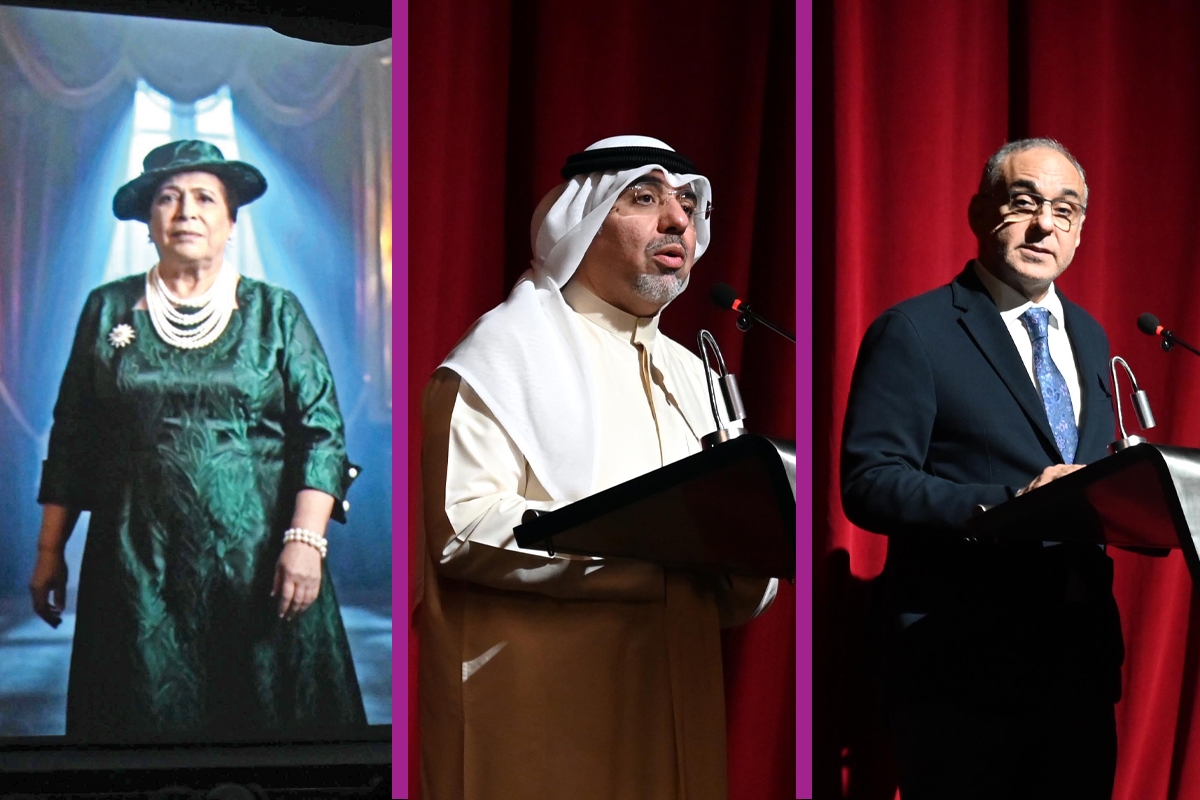
The National Council for Culture, Arts and Letters commemorated the artist Haya Al-Fahad by screening a documentary film, coinciding with the reopening of Dasmeh Theater after renovations, amidst praise from artists for her artistic legacy.
Translated by Qiyas from الجريدة — Original source
The National Council for Culture, Arts and Letters (NCCAL) commemorated the memory of the late Kuwaiti artist Haya Yasser Al-Fahad, known as the “Lady of the Gulf Screen,” yesterday by screening the documentary “Qissat Hayat” (The Story of Hayat). The film revisits more than six decades of her artistic and humanitarian contributions, coinciding with the reopening of the Dasma Theater following comprehensive development and maintenance works. The theater had long been a witness to the late artist’s theatrical career.
The event featured the screening of the documentary, produced by the NCCAL under the patronage of Secretary General Dr. Mohammed Al-Jassar, with overall vision and supervision by Assistant Secretary General for Financial, Administrative, and Supporting Affairs Muhsin Al-Zamil. It was directed by Dr. Ali Hassan and prepared by Badr Al-Jazzaf.
In his speech, Dr. Al-Jassar emphasized that honoring the late Haya Yasser Al-Fahad at the Dasma Theater—witness to her creativity and impact on Kuwaiti art—is an act of gratitude to an artistic figure who left an indelible mark on the hearts of Kuwaiti and Gulf audiences. He noted her decades-long contribution to enriching the artistic movement and consolidating Kuwait’s status as a beacon of cultural and artistic creativity.
Dr. Al-Jassar praised the strategic partnership between the public and private sectors that contributed to the project’s success, commending the efforts of the implementing company (Al-Salam Group) and artist Dr. Abdulaziz Al-Muslem in rehabilitating the theater and presenting it in a modern architectural and artistic style befitting its historical significance and role in the trajectory of Kuwaiti theater.
He clarified that the NCCAL has adopted a new strategy in recent years aimed at revitalizing theaters and enhancing the role of the private sector in operating and investing in cultural facilities. He pointed out that offering the Dasma Theater for investment represents a first-of-its-kind experience for the National Council, with the Al-Salam Group, chaired by Dr. Abdulaziz Al-Muslem, winning the bid. He commended Dr. Al-Muslem’s efforts in rehabilitating and developing the theater’s facilities to international standards, as one of the sons of this great artistic institution.
The documentary “Qissat Hayat” highlights the key milestones that shaped Haya Yasser Al-Fahad’s presence in Gulf drama, shedding light on the diversity of her experience in acting and writing, and the characters and artistic works she presented that became embedded in the public’s memory across generations, through personal testimonies from artists and critics who witnessed different stages of her career.
For her part, her friend and companion in the journey, artist Suad Abdullah, stated that their beginnings were simultaneous, and they never considered themselves competitors; rather, they were preoccupied with work and creativity. She described the late artist as a creative artist with great energy.
On his part, artist Abdullah Al-Hubail praised Haya Yasser Al-Fahad’s genius in performance, particularly in the film “Bas Ya Bahr” (Just Oh Sea), the first Kuwaiti film to win international awards. He affirmed that the competition among them was about completing each other, not surpassing one another, which was the secret to the success of the pioneer generation.
For his part, artist Saad Al-Faraj said that Haya Yasser Al-Fahad was an exceptional talent that will not be repeated. She presented diverse and unique models reflecting a profound human experience, and she succeeded in embodying societal conflicts and issues. Therefore, she was one of the most authentic artistic experiences and closest to the audience; she was a complete life, even after her passing.
Meanwhile, artist Jasem Al-Nabhan affirmed that Haya Yasser Al-Fahad possessed a strong drive and determination to prove herself, facing social and family difficulties until she eventually gained societal support and appreciation.
Artist Mohammed Al-Mansour clarified that members of that generation were one team, with no feelings of envy or hatred among them, but rather a noble competition that drove them to develop their experiences. He commended Haya Yasser Al-Fahad’s experience, which was a unique human and artistic model that will not be repeated.
Artist Mohamed Jaber emphasized that financial gain was not the focus of their attention in the early days as a pioneering generation; their primary goal was to reach out to people and connect with them through their work. From this perspective, Haya Al-Fahd offered an immensely rich, invaluable artistic experience that remains unforgettable, no matter how many years pass.
For his part, artist Abdulrahman Al-Aqil highlighted Haya Al-Fahd’s dedication to delivering works that touch the audience’s hearts and leave a lasting impression on their souls, which she successfully achieved. She carved her name into the firmament of artistic stars, and “her brilliance still shines; despite her passing from our world, she remains in our hearts.”
Dr. Khaled Ramadan addressed some of the challenges faced by pioneering female artists, underscoring Haya Al-Fahd’s determination, along with that of Mariam Al-Saleh, Mariam Al-Ghodban, and Aisha Ibrahim, to enter the artistic field. They endured significant hardships to solidify their presence during a period when the path was not paved for women to work in the arts, yet they succeeded in crafting an honorable career for both art and women.
Dr. Mohamed Bilal pointed to Haya Al-Fahd’s exceptional ability to embody roles, citing her performance in the film “Bas Ya Bahr” (Just Oh, Sea), in which she portrayed the character of an elderly woman who lost her son at sea, despite being in her twenties at the time. This performance reflected her artistic maturity and her ability to transcend her actual age to delve into the depth of the character she was portraying.
