Dollar Stabilizes in Egypt Above 56 Pounds Despite Forex Market Volatility
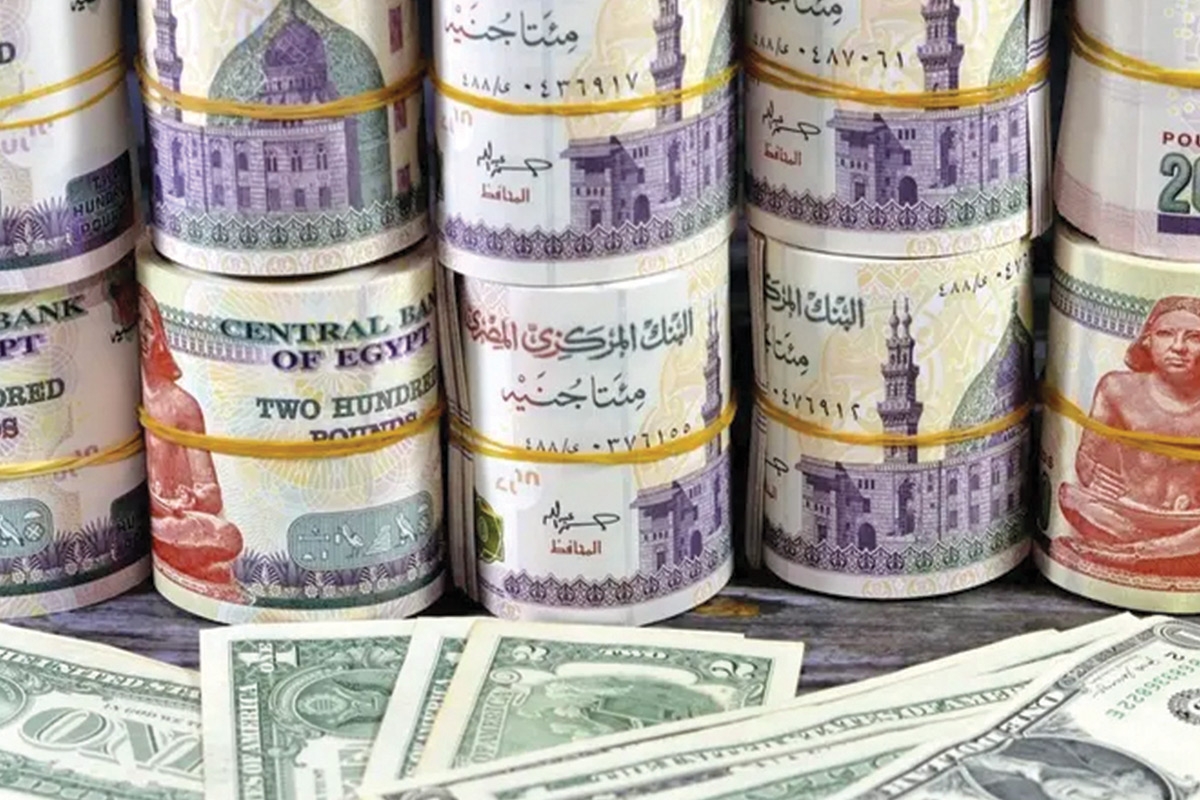
The dollar stabilized above 56 pounds in Egyptian bank transactions, while remittances from expatriates and foreign currency reserves reached record levels amid bank competition for deposits.
Translated by Alqyas from Al-Jarida — Original source
The US dollar exchange rate in Egypt experienced minor fluctuations during today’s trading sessions, with the American currency rising in some banks while declining in others, yet remaining above the 56 Egyptian pound level, which marks the lowest point in the pound’s history.
According to a survey conducted by “Arabia Business,” the highest US dollar exchange rate was recorded at Abu Dhabi Islamic Bank, Canal Bank, HSBC, National Bank of Qatar, and Kuwait Finance House, at 56.25 pounds for buying and 56.35 pounds for selling.
The lowest US dollar exchange rate was observed at Arab African International Bank, at 56.15 pounds for buying and 56.25 pounds for selling.
In Alexandria Bank, Industrial Development Bank, Al-Arabi African Bank, Crédit Agricole, Bank of Alexandria, Kuwait Finance House, and Abu Dhabi First Bank, the dollar traded at 56.20 pounds for buying and 56.30 pounds for selling. At the National Bank of Egypt, the dollar was priced at 56.18 pounds for buying and 56.28 pounds for selling.
Data from the Egyptian Exchange showed that Arab and foreign investors recorded a net sale of $663 million in the secondary market for Egyptian government debt during Monday’s trading.
Hot money continued to exit Egyptian debt instruments, with Arab and foreign investors recording a net sale of $1.9 billion last week.
This outflow of hot money from Egypt followed positive inflows over the previous two weeks. Arab and foreign investors recorded a net purchase worth $328.5 million in the secondary government debt market two weeks ago, and a net purchase of $1.2 billion the week prior.
In September last year, Arab and foreign investors recorded a net purchase worth $702 million. Arabs recorded a net purchase of $1.528 billion, while foreigners recorded a net sale of $826.5 million.
Egypt’s foreign exchange reserves continued to rise, reaching a new record high of $57.35 billion in September last year, an increase of $134 million compared to August, according to the Central Bank of Egypt.
Net foreign reserves in August last year had risen to approximately $57.22 billion, compared to around $56.3 billion in July.
Egypt’s foreign exchange revenue sources showed significant improvement, driven by rising exports, growth in tourism income, remittances from Egyptians abroad, and increased Suez Canal revenues.
Remittances from Egyptians working abroad rose by 27.2 percent during the first eight months of 2026, reaching record inflows of approximately $33.9 billion, compared to around $26.6 billion during the same period last year.
The Central Bank of Egypt stated that remittances grew by 21.7 percent in August 2026, reaching approximately $4.2 billion, compared to around $3.5 billion in August 2025.
Remittances from Egyptians abroad also reached $47.3 billion in the last fiscal year (2025–2026), compared to $36.5 billion in the 2024–2025 fiscal year, representing a 29.6 percent growth.
Egyptian expatriate remittances recorded record-breaking inflows in 2025, the highest ever, rising by 40.5 percent to reach approximately $41.5 billion, compared to around $29.6 billion in 2024.
Egyptian banks recently repriced the yields on their savings products by raising interest rates on existing savings certificates and savings accounts, alongside launching new products with competitive yields reaching 19.5 percent, to enhance their ability to attract and retain deposits and customers.
These moves come amid widespread expectations that the Central Bank of Egypt will keep interest rates unchanged at its next meeting for the sixth consecutive time, as competition among banks intensifies to attract deposits, raising questions about the impact of higher yields on the cost of funds and profit margins, and whether banks will continue to raise interest rates on their savings products in the coming period.
Banking sources told "Al Arabiya Business" that competition for deposits is pushing banks to reprice their products to retain their customer base and attract new segments of savers, while also meeting their financing needs and enhancing their competitiveness.
The sources predicted that some banks would continue to raise yields in the near future if inflationary pressures mount or if exchange rate volatility between the US dollar and the Egyptian pound increases, potentially prompting savers to seek higher returns to preserve the real value of their savings.
Banking expert Ezzeldin Hassanein stated that the trend of Egyptian banks raising yields on certain savings certificates and savings accounts, despite the Central Bank’s decision to keep interest rates steady, is due to intensified competition for liquidity and banks’ efforts to retain customer funds and prevent them from moving to banks offering higher yields.
Hassanein added in an interview with "Al Arabiya Business" that the moves by state-owned banks to increase yields on certain savings instruments are prompting other banks to take similar steps to maintain their share of deposits, which raises their cost of funds but does not necessarily imply a significant decline in profitability.
According to Hassanein, banks generate returns from investing liquidity in treasury bills and bonds, alongside fee income and banking services, which help offset part of the impact of rising deposit costs on yield margins.
He anticipated that competition among banks to attract deposits would continue in the coming period, but noted that yield increases would not be unlimited, as they depend on banks’ ability to invest liquidity at appropriate yields, their financing needs, the cost of funds, and market competition conditions.
Hassanein emphasized that banks’ asset and liability management departments are reassessing interest rates on savings products to achieve a balance between the cost of funds, attracting deposits, and maintaining profit margins.
