Gold Under Fire... and Its Ashes
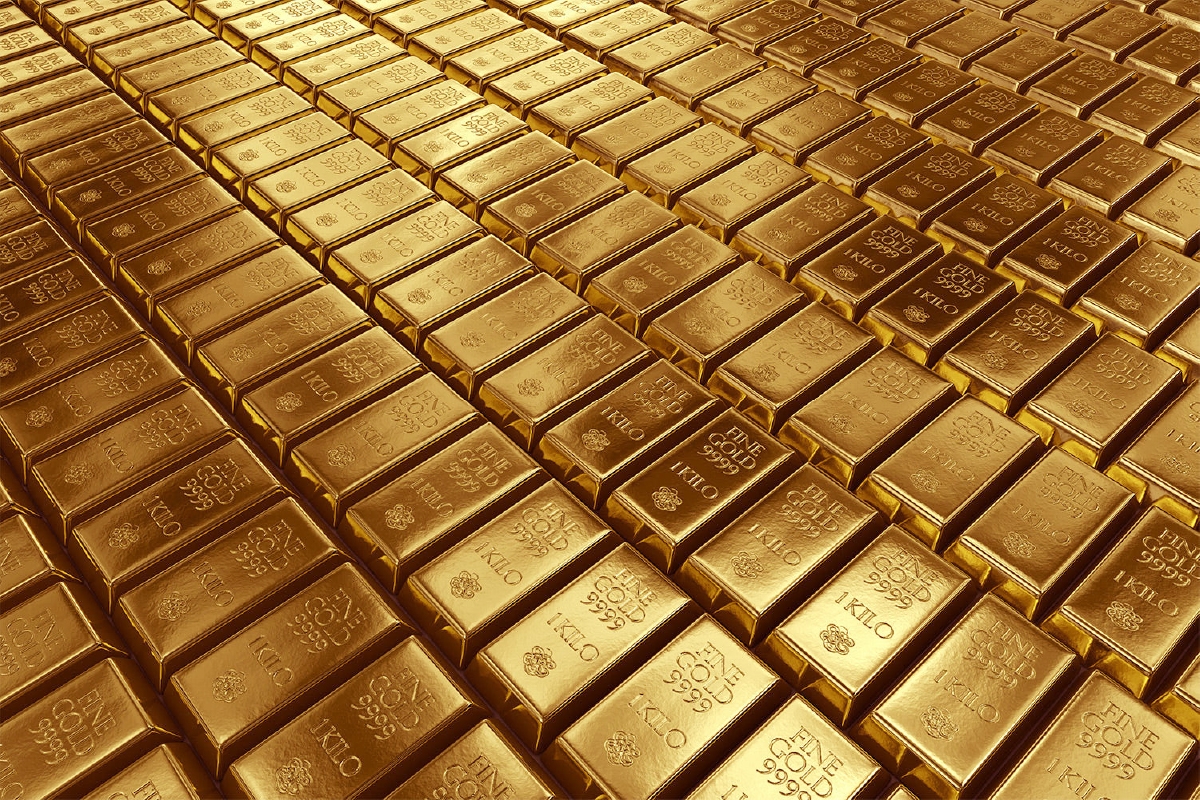
Analysis of gold fluctuations and the impact of the US-Iran war on demand and reserves
Translated by Qiyas from الجريدة — Original source
More than 1.7 billion digital searches for gold prices, in Arabic and English and in various formats, were conducted worldwide from the beginning of the year until the closures of last September. This figure serves as an estimate of the global interest in gold’s performance as a safe-haven asset amid the ongoing geopolitical tensions in the region.
Admittedly, the cited figure is an estimate based on Google Trends search volumes rather than an official statistic. However, search volume data linked to Google services indicate that keywords related solely to gold prices generate approximately 190 million monthly searches in English and Arabic. This reflects a massive volume of searches and suggests that tracking gold prices has become one of the most prominent financial topics with significant global digital presence, given the circumstances the region and the world are experiencing due to the war between the United States and Iran.
Under these conditions, it is natural for interest in safe-haven assets to reach what can be described as a “global obsession.” However, search data linked to the analytical tool revealed even more. In addition to the exceptional surge in global user interest in gold prices at the start of 2026—the “Gold Price” search index approached its highest levels in January before peaking at 100 points in February, coinciding with historic rises in the precious metal’s prices—in April, a large portion of traders’ attention shifted from monitoring current prices to searching for gold forecasts and its future outlook. This coincided with user dispersion levels reaching their peak, as gold prices traded above $4,700 amid news of de-escalation and temporary truces, while a wide expectation was that prices would decline.
This was not the only instance of dispersion in which investors and traders in the metal were caught during the period. Rather, it was part of a sequence of three consistent turning points or milestones, aligned with market fundamentals and technicals, that gold experienced since the beginning of the year. These may have been difficult for a significant segment of traders to appreciate, as they treated gold as a speculative instrument for quick profits rather than as a strategic asset, store of value, and safe haven. Consequently, its characteristics changed and its behavior distorted, turning the tables on them and penalizing them.
Technically, these fluctuations did not reflect the performance of a strategic safe-haven asset like gold at all, especially since they occurred over a relatively short time horizon. Fundamentally, this was not the expected performance of gold under highly sensitive geopolitical conditions, such as the war whose flames remain smoldering to this day.
In between, the direct and typical reasons for gold’s decline following the outbreak of the US-Iranian war on February 28 can be summarized in several interrelated factors:
First: The strength of the US dollar and growing expectations of continued tight monetary policy, which enhance the attractiveness of bonds and yield-bearing assets and limit demand for safe havens.
Third: The rise of technology and artificial intelligence stocks, which drew liquidity away from gold, coinciding with reduced geopolitical fears following a ceasefire agreement between the United States and Israel on one side, and Iran on the other.
Fourth: Liquidity pressures in global markets, including tensions related to the Strait of Hormuz and the broader repercussions of the war, particularly the prolonged closure of the strait, making gold more vulnerable to rapid sell-offs.
Fifth: What can be termed a mechanical or engineering-driven decline, detached from market fundamentals, which occurred in several stages that redirected liquidity from gold to other assets:
1 - The US dollar rose significantly after regaining confidence during the war period and amid trends of increased defense budgets and arms purchases.
2 - Markets typically do not operate on a single basis, but rather on interconnected data and chains. In this case, the chain began with oil, which rose due to the war and supply shortages resulting from the closure of the Strait of Hormuz. This fueled inflation concerns, leading to expectations that interest rates would remain high and potentially be raised two or three times before the end of the current year. Consequently, the attractiveness of US bonds increased, competing with gold’s status, while gold continued to decline amid rising risks.
3 - The manufactured panic created by certain media outlets and content creators for these buyers was sufficient to sustain the downward trend.
Following the same pattern, according to typical data or traders’ estimates, gold was expected to record declines or correction movements with every announcement of conflict de-escalation or even a temporary ceasefire, as markets would anticipate relief and reduce demand for safe-haven assets, shifting toward diversified investment channels. However, what actually occurred was that gold began to regain momentum and rise again, driven by several factors:
Typically, gold rises when wars cease, as market focus shifts from “geopolitical risk premiums” to “economic stability.” With temporary inflation easing, oil prices fall, reducing inflationary pressures and prompting central banks to ease monetary policy and lower interest rates, or at least keep them stable.
Furthermore, the rise in US Treasury yields to exceed 5.3 percent, marking their highest level since 2002, was bound to increase the opportunity cost of holding gold, making the yellow metal less attractive to investors compared to fixed-income assets. Historically and structurally, gold and US bond yields share an inverse relationship; gold prices usually fall when bond yields rise, and vice versa. However, gold remained resilient above the $4,000 level despite the sharp rise in bond yields, indicating that the demand premium the precious metal acquired after 2022 has become more entrenched than expected. This can be explained by the fact that the relationship between interest rates and dollar movements has changed after Western sanctions froze roughly half of Russia’s official reserves. This prompted central banks, particularly in emerging markets, to accelerate efforts to diversify reserves away from dollar-denominated assets, thereby supporting gold even during periods when high yields typically pressure its prices.
Despite the volatility in gold prices over recent months, institutional levels clearly show that the precious metal still maintains its position as one of the world’s most important hedge assets, supported by strong demand led by central banks. These institutions resumed increasing their holdings of the yellow metal during the second quarter, taking advantage of price declines from the record levels reached earlier in the year.
According to data from the World Gold Council report, banks and other official institutions added 289 tons to their gold reserves in the second quarter of 2026, a 62 percent increase compared to the same period last year. This figure represents the highest quarterly level since the fourth quarter of 2024.
Data from the Council indicate that gold has not lost its appeal; rather, the map of buyers has changed. While demand was previously driven largely by individuals and investment funds, central banks and institutional investors are now leading the market, signaling a continued view of gold as a safe haven and strategic asset amid the uncertainty dominating the global economy.
For investors, the key message lies not in short-term price movements, but in the ongoing efforts by official institutions worldwide to bolster their gold reserves, reflecting long-term confidence in the precious metal’s role in safeguarding wealth and reserves.
On September 16, the Federal Reserve raised its interest rate range by 25 basis points, from 3.50%–3.75% to 3.75%–4.00%. Although this decision appeared negative for gold at least superficially, gold is a non-yielding asset; therefore, higher interest rates and fixed-income yields increase the opportunity cost of holding the precious metal, as investors can obtain higher returns from instruments such as bonds and money market tools without bearing gold’s volatility risks.
However, what actually happened was more complex. Gold initially declined following the rate hike due to a stronger dollar and higher yields, before rebounding by an average of approximately 6%, supported by what is known as the real interest rate, calculated as the difference between the stated interest rate and inflation rates. Since the most critical factor is the real yield—the return an investor receives after accounting for inflation—gold benefited from the repricing of future interest rate and yield expectations.
In addition, a range of factors contributed to gold’s rise, including the central bank purchases mentioned earlier, which have become a key market support factor. This implies that the traditional relationship between gold and interest rates has become less correlated than in previous cycles.
Furthermore, it should not be overlooked that gold did not enter the Federal Reserve’s September meeting from weak levels. The metal had experienced strong moves throughout the year and remained near historic highs, despite sharp corrections at certain times. Moreover, markets had already priced in the possibility of a rate hike prior to the meeting, meaning part of the decision was already anticipated.
Thus, if the rate hike was expected, its negative impact on gold may have been limited, especially if the central bank’s statements carried less hawkish signals than investors anticipated.
Historically, U.S. interest rate hikes do not necessarily mean gold has entered a sustained downtrend. Over the past ten cycles, the metal has faced pressure in the weeks immediately following the decision before regaining momentum, with a historical average increase of about 6% over the approximately 12 months following the rate hike.
Overall, gold has endured significant pressures over the past nine months, eroding roughly 21% of its peak value recorded in January, during a turbulent decline that began with the launch of the first march in the ongoing regional conflict. Looking ahead, and beyond the various expectations issued by experts and global institutions—most of which have previously contradicted actual outcomes—it is unlikely that gold will quickly return to its historic highs. Its movement during the remainder of 2026 is more likely to resemble a gradual ascent interspersed with consolidation and corrections.
The decisive factor that will determine gold’s trajectory in the coming period is US Treasury yields, US inflation indicators, the path of monetary policy, and Federal Reserve decisions, which will rely heavily on labor market conditions and jobs reports. Will the Fed continue tightening, or will markets begin to price in the end of the rate-hiking cycle? In general, gold’s performance in the near term will remain contingent on a series of fundamental and technical market data points, with historical trends driven primarily by gold’s characteristics as a strategic asset and safe haven—a role it has played, continues to play, and will continue to play.
