Al-Mousa: "Al-Ma'adin" Processes 40 Tons of Medical and Hazardous Waste
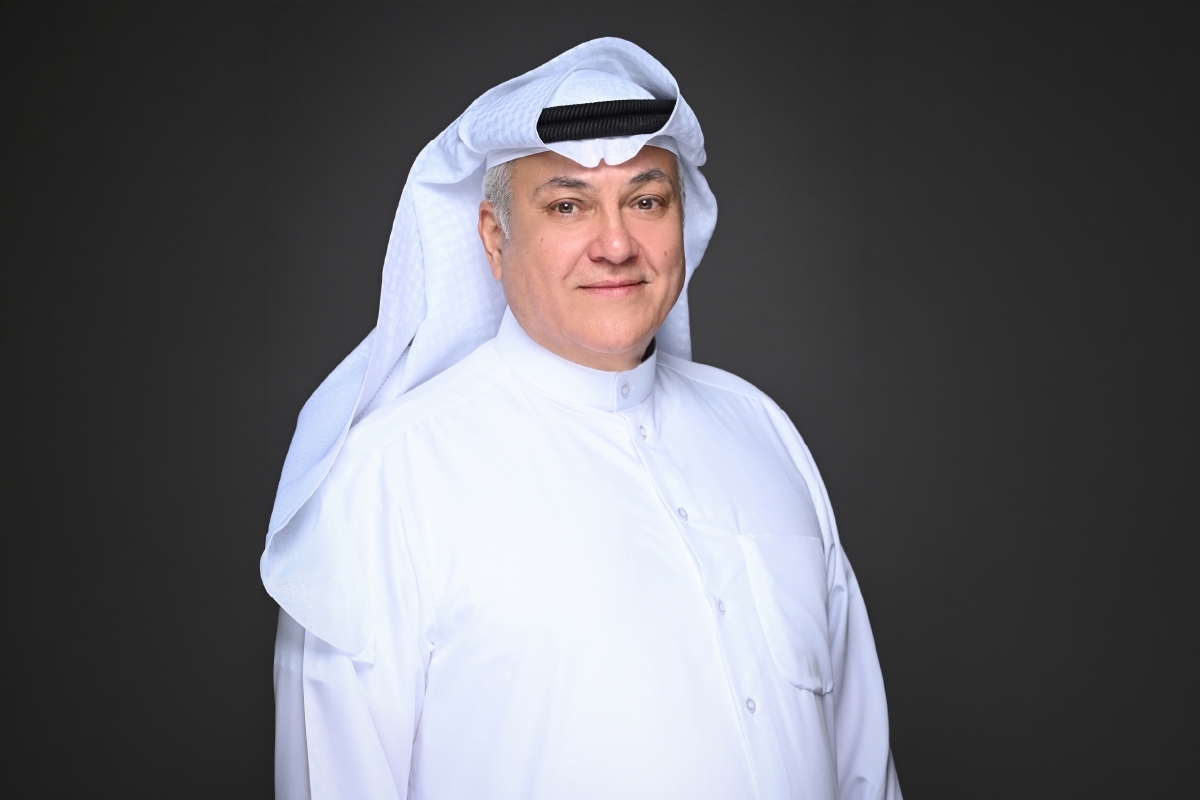
Al-Ma'adin company focuses on recycling plastic and iron, and processing medical and hazardous waste in Kuwait
Translated by Qiyas from الجريدة — Original source
- “Al-Ma’adin” is a company specializing in recycling and waste management, with our operations focused on three main pillars. The first is recycling: we own a plant for recycling various types of plastic and another for recycling iron and metals. The second is the treatment of medical and hazardous waste; we operate incinerators that serve the Ministry of Health and the medical sector in Kuwait. The third pillar involves customized solutions for the industrial, oil and gas, and healthcare sectors, including the collection, management, and treatment of e-waste, oil waste, sludge, and biological waste. We continuously strive to enhance our capabilities in hazardous waste management.
• Tell us about the recycling sector in Kuwait and where it stands today.
- The recycling sector has made significant progress in recent years, yet our ambitions remain higher, and there is ample room for substantial performance improvement. Conversely, awareness levels in Kuwait have risen, not only among companies and factories subject to strict regulations by the Public Authority for Industry and the Public Authority for Environmental Affairs regarding the proper disposal of solid and liquid industrial waste in designated facilities, but also within the civil sector.
- We are now seeing positive signs, as the Capital Markets Authority encourages companies to demonstrate responsible corporate social responsibility by proactively organizing beach clean-up campaigns, recycling initiatives, or blood donation drives.
- This sense of social responsibility positively impacts individuals; Kuwaiti families are increasingly practicing recycling at home. Additionally, specialized companies collect these materials from homes and institutions for recycling.
• What are the main challenges facing this sector despite this progress?
- Despite the progress made, several factors are still lacking to reach the desired level, especially since environmental issues affect everyone’s health, and we observe growing societal sensitivity toward environmental matters in Kuwait. We are capable of delivering the best and hope to serve as a model for other countries.
- The first challenge is the need for collection centers. If cooperative societies were to establish collection centers, it would be easier for citizens and residents to bring used plastic, paper, glass, iron, and electronics from their homes, after which specialized companies would transport and treat them properly.
- The second challenge is the limited local industrial market, as the number of major factories using recycled materials is small. In this regard, “Al-Ma’adin” plays the role of a link between consumers and manufacturers, collecting and recycling materials to provide the industry with ready-to-use raw materials.
- The third challenge relates to the government sector. The key element remains the provision of equipped industrial land and the simplification of documentation and paperwork procedures. Delays in decision-making or issuing licenses and approvals negatively impact investment opportunities. Since time entails financial costs, our delays give neighboring countries the advantage of seizing these opportunities.
- Nevertheless, the opportunity remains significant. Current geopolitical changes have greatly affected transportation and shipping movements, prompting the Kuwaiti market to focus on the domestic sector and reduce reliance on imports, thereby creating a real opportunity for local investment and manufacturing instead of importing. We expect to see broader investments in this field over the next three years.
- This is a highly necessary step, as it contributes to completing the market’s economic cycle, especially since recycling companies supply raw materials to factories, thereby enhancing reliance on local production and reducing imports. This sector should be encouraged, as Kuwait’s waste is highly rich in recyclable materials. Instead of burying it in landfills, we can exploit it and convert it into valuable products.
- The Metals Company has several important projects being implemented in accordance with global best practices, ensuring that processed materials are safely reused in other industries, with a focus on the iron and plastic sectors.
In the iron sector, our sources are diverse, encompassing all types of used iron, such as household appliances including refrigerators and washing machines, scrap vehicles, building and project debris, and maintenance and decommissioning projects in the oil sector. Scrap is not limited to cars; it includes all types of metals that serve as raw materials for our factories.
We are preparing this iron for entry into smelting plants through crushing processes. When a scrapped vehicle is fed into our specialized crushing machine, it is cut and sifted to yield two outputs: first, clean solid iron, as shaking and cutting processes remove dust and impurities, leaving it ready for factories at a high value without the need for subsequent cutting or cleaning. Second, other metals such as bronze, aluminum, and copper, which are present in modern vehicles. Through this, we aim to increase our iron production to approximately 6,000 tons per month.
In the plastic sector, we currently process between 20 and 25 tons daily, reaching a monthly production capacity of over 500 tons. The process begins by sorting plastic into its various types, such as polypropylene, polyethylene, PET, and PVC, as well as compounded plastic used in car supports (ABS). Each type is sorted separately because the machine cannot handle two different types simultaneously. Crushing and washing operations are then performed before the material is fed into the production machine.
The difficulty in recycling plastic, compared to iron, lies in the varying thermal melting points of each type. The raw material derived from waste is a diverse mixture of cans, toys, and plastic containers. If not sorted and cleaned with high precision to keep each type separate, some pieces will melt while others burn inside the machines due to temperature inhomogeneity. Therefore, we purify, crush, and wash the material, then melt it to produce new plastic pellets.
This final product is sold to factories that blend it with virgin plastic to reduce costs. Additionally, some products are made from 100% recycled plastic, such as black planting trays, which are manufactured entirely in Kuwait from locally recycled waste, thereby achieving genuine sustainability in the country.
- We played a pivotal role in bidding with the Kuwait National Petroleum Company (KNPC) to withdraw spent catalysts from Kuwaiti oil refineries. We plan to build a refinery-affiliated plant to extract precious metals from them, and we expect the construction of this massive project to take between two and a half to three years.
We anticipate that this strategic project will be the first of its kind in the Middle East. Its significance lies in addressing multiple challenges simultaneously: it handles hazardous spent catalysts and converts them into non-hazardous materials from which precious metals are extracted, positively impacting both the environment and the national economy.
Regarding plastic, we have a plan to increase production capacity from 450–500 tons per month to 1,000–1,200 tons, representing an increase of two to three times, through investment in equipment and expanding the range of processed materials, such as PET, PVC, and composite plastics.
We are also preparing to begin manufacturing finished products directly from our recycled plastic, such as planting troughs, a plan we are currently implementing.
Yes, we have been working on this project for some time. Processing coffee capsules yields two main components: aluminum, which is compressed and sent to aluminum factories for remanufacturing, and coffee residue. Metals, such as aluminum and iron, retain their properties when recycled at 100%, unlike paper, whose quality degrades and fiber integrity weakens with repeated recycling.
This means that aluminum extracted from Nespresso capsules can be fully reused, similar to practices in countries like the United States and Europe with soft drink cans. A can can return to stores as a new can within just five months of consumption and recycling. We aim to achieve the same cycle for coffee capsules in Kuwait.
As for coffee residue, we extract coffee from it and collaborate with Nespresso research to use it as agricultural fertilizer. Our engineers are also conducting innovative internal research to find new ways to utilize it. In one experiment, they successfully extracted a dark pigment from used coffee and used it to paint a wall.
• Regarding your entry into the medical sector... are there ongoing projects in cooperation with the Ministry of Health?
Yes, we cooperate with the Ministry of Health in treating medical waste. The Ministry, in coordination with the Public Authority for Environmental Affairs, has designated incineration as an approved method for its treatment in the country. Previously, we suffered from a medical waste problem. I recall, from my childhood, seeing needles and medical waste discarded on beaches, waste laden with viruses and bacteria.
Currently, “Al-Ma’aden” operates four incinerators that treat more than 40 tons of medical waste and other hazardous waste, upon request by the competent authorities. Among these incinerators is one that deals directly with government sector hospitals, and another that serves the private medical sector. Private clinics, hospitals, and pharmacies supply their waste to us for treatment.
The treatment mechanism relies on two incineration stages. The temperature in the first incinerator ranges between 600 and 800–900 degrees Celsius, burning all forms of medical waste, including iron, glass, blood transfusion sets, needles, sharp instruments, and others.
The second incinerator receives the fumes and gases produced in the first stage, reaching temperatures between 1,100 and 1,300 degrees Celsius, to completely burn the gases and prevent the emission of any toxins.
According to the country’s environmental laws, the chimneys are equipped with sensors directly linked to the Public Authority for Environmental Affairs. If any gas leaks at a rate exceeding the permitted limit in the license, an automatic alarm is immediately triggered. We affirm our full commitment to these requirements.
• It is generally difficult to determine the exact volume, as iron scrap sources vary. The oil sector is one of the largest, and its tenders or auctions depend on maintenance and refinery shutdown operations, which may occur every three to five years.
Additionally, drilling operations at Kuwait Oil Company (KOC) provide quantities of scrap that are offered every two or three years.
According to our calculations and estimates, the volume of iron in the Kuwaiti market ranges from 250,000 to 300,000 tons annually. These figures have recently declined due to reduced overall consumption over the past nine months.
Our share of this market ranges between 60,000 and 70,000 tons annually, representing approximately 25%.
The processing capacity of Metals’ equipment far exceeds current production levels; the machinery can produce between 60 and 70 tons per hour when using the appropriate type of iron. However, the most significant challenge in the recycling market lies in the heterogeneity and lack of standardization of raw materials. Imported iron varies from dense demolition scrap with different thicknesses (8, 10, and 12 mm) to household appliances such as cars and refrigerators, which are easier for machines to process due to their thinner gauge (2 mm). This diversity requires us to carefully mix incoming materials to ensure equipment safety and uninterrupted operation without breakdowns.
• Do you encourage the entry of small projects into the industrial sector, particularly in this field?
Absolutely. We encourage small enterprises to enter this sector, as it offers them promising opportunities in supporting industries. The main obstacle remains the high cost of machinery and the capital required to achieve viable returns, but the opportunities in supporting industries are substantial. We produce recycled plastic as a Kuwaiti product, which small projects can use to manufacture planting tanks, irrigation pipes, containers, and plastic utensils. Previously, it was difficult to compete with imported products from India and China due to their low production costs. Today, with shipping costs rising three to four times, the time is right to focus on local manufacturing and support the national product.
We can conclude that there are promising opportunities for small projects in supporting industries?
The opportunities that supporting industries offer to small projects are indeed promising. These projects are a fundamental pillar for diversifying the national economy, as they enhance industrial infrastructure and strengthen the economy’s capacity to meet its needs for food, pharmaceuticals, and industry from local resources, more so than before.
Indeed, we have begun implementing this project based on an initiative we submitted to the state to establish an integrated industrial zone. We developed the infrastructure, including roads, lighting, and sewage networks, and actual operations have commenced.
The project, which is the first of its kind in Kuwait, aims to develop a 550,000-square-meter area and transform it into an integrated industrial zone. It will include production and manufacturing facilities that meet the needs of the oil, gas, infrastructure, and construction sectors, through metal processing, plastic conversion, and industrial production.
The zone provides comprehensive services, such as wastewater and industrial waste treatment, as well as laboratories and training centers. This allows manufacturers to focus on the production process rather than being occupied with transportation, shipping, and testing procedures. Additionally, the company handles all industrial waste and treats it on-site through a central waste management facility.
We are currently adding new industrial activities to encourage manufacturing in various fields, in addition to plastic and iron, and we expect to see the project’s actual returns within the next two years.
• What advice do you offer regarding recycling?
In conclusion, I urge everyone to start recycling at home by separating plastic and metal containers instead of disposing of them with general waste. These are wasted resources that can be transformed into sources of raw materials. The current reality in Kuwait relies on landfilling waste, a method that, over time, causes hazardous liquid leakage into groundwater, in addition to methane emissions resulting from food decomposition.
