How Do US Congressional Elections Affect the Course of the War with Iran?
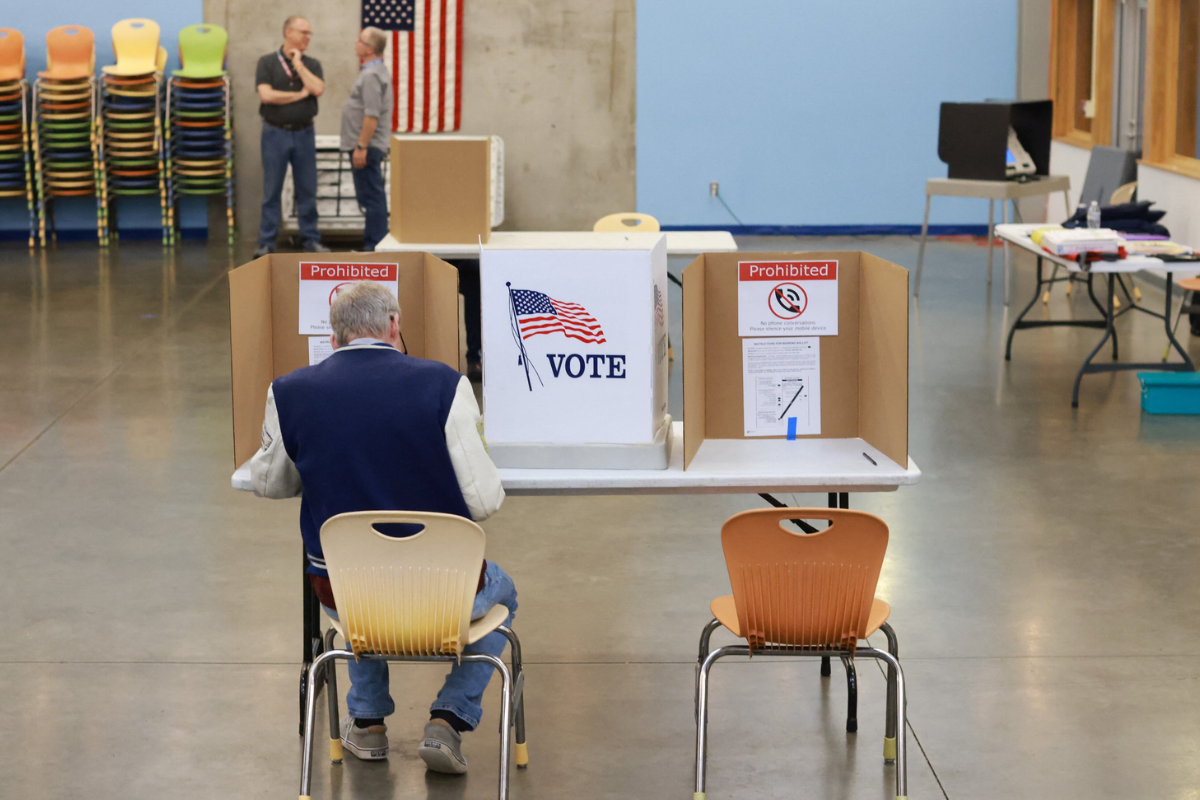
The upcoming US midterm elections on November 3 are no longer just an internal matter between Republicans and Democrats. With the ongoing confrontation between the US and Iran, the election results are gaining significance that extends beyond domestic politics.
Translated by Qiyas from الجريدة — Original source
The upcoming U.S. midterm elections, scheduled for November 3, are no longer a domestic matter confined to competition between Republicans and Democrats. With the ongoing confrontation between the United States and Iran, the election results are acquiring significance that extends beyond Washington, influencing Tehran’s calculations and the future of the war in the region.
For U.S. President Donald Trump, the elections may determine the level of political support he enjoys within Congress during the remaining two years of his term. For Iran, a shift in the balance of power in Washington could affect the U.S. administration’s ability to continue military operations and its chances of reaching a settlement that ends the confrontation.
However, the relationship between elections and war is not direct. A Republican victory does not necessarily mean continued escalation, nor does a Democratic victory guarantee an end to military operations. Between these two scenarios, electoral considerations intertwine with the military and diplomatic calculations of both Washington and Tehran.
Americans will head to the polls on November 3 to elect all 435 members of the House of Representatives and 35 seats in the Senate, determining the balance of power in the new Congress that begins its work in January 2027.
The importance of the elections lies in the fact that Congress possesses legislative, oversight, and financial powers that influence foreign policy and military decisions, including approving government and military spending and holding officials accountable for the objectives and costs of military operations.
While the President commands the U.S. armed forces, Congress holds constitutional and legal tools to influence the continuation and funding of military operations, although lawmakers’ ability to impose immediate constraints on the President is subject to complex political and legal balances.
Consequently, election results alone will not determine whether the United States will continue the war with Iran, but they may affect the political cost Trump bears when making his future decisions.
If the Republican Party retains its majority in both the House and the Senate, Trump may enjoy a wider political margin to continue his policy toward Iran, with reduced chances of facing strong institutional opposition from congressional leadership.
Continued Republican majority control could facilitate the passage of certain administration priorities in spending and defense, and limit Democrats’ ability to launch investigations or impose accountability hearings through their control of congressional committees.
However, continued Republican dominance does not mean the absence of disagreements within the party regarding the war or its costs, nor does it grant the administration an open-ended mandate to use military force.
Furthermore, retaining a majority does not resolve the choice Trump will face between continuing military pressure and negotiating with Tehran; he may view his domestic political superiority as an opportunity to impose tougher conditions or to move toward an agreement he can present as an achievement of his administration.
A shift in control of the House or the Senate to the Democrats could increase political and oversight pressure on the U.S. administration, particularly regarding the objectives, costs, and duration of the war with Iran.
If Democrats control either chamber, they could use congressional oversight tools to demand more detailed explanations regarding military operations, summon administration officials, and attempt to influence war-related appropriations.
However, this does not mean they would have the automatic ability to halt military operations.
The president’s authority to command the armed forces, alongside procedural and legislative constraints within Congress, makes it difficult to reduce the future of the war to a single electoral outcome.
Another equally important factor is that the Congress elected in November will not assume its powers until next January, leaving an interim period during which the administration can make military or diplomatic decisions before the balance of power shifts within the legislative branch.
According to one possible interpretation, the president might use the changing dynamics within Congress to justify an agreement that does not fully achieve all the objectives Washington has announced, presenting it as a realistic option under new political constraints rather than a retreat before Tehran.
Conversely, the loss of a majority could drive him to attempt to secure military or political gains before the new Congress begins its work, thereby strengthening his negotiating position and enabling him to present tangible results to his supporters.
There is insufficient data to definitively conclude that Trump will adopt either of these two approaches. However, both scenarios illustrate how election results can influence the domestic framing of war-related decisions, even if they do not fundamentally alter U.S. strategic objectives.
Meanwhile, Iran views the U.S. elections as a factor that could affect the political calculations of the Trump administration, particularly if the cost of war becomes a contentious issue within the United States.
In this context, an Iranian source from the Quds Force told Al-Jarida that Tehran is considering an escalation during the interval between the Israeli elections and the U.S. Congressional elections, provided it does not face a U.S. or Israeli attack before the Israeli voting date.
According to the source, one objective of this potential escalation is to increase political pressure on Trump and the Republicans ahead of the November 3 elections.
This narrative, which could not be independently verified, reflects an Iranian assessment that sustained regional tensions could raise the political cost of confrontation for the U.S. administration.
However, this gamble carries a clear risk: an escalation intended by Tehran to pressure Washington could, conversely, provide Trump with justification to expand military operations.
According to information obtained by Al-Jarida, Iranian calculations are not limited to the U.S. elections but also include the timing of the Israeli elections and the impact any new confrontation might have on their outcomes.
According to this account, these directives call for avoiding engagement in a new confrontation if one erupts before the Israeli elections, fearing that regional escalation might benefit Israeli Prime Minister Benjamin Netanyahu electorally.
If accurate, this information suggests that Tehran does not separate military field calculations from political timing in both Israel and the United States.
Beyond election results, the most important question remains concerning the objectives the U.S. administration seeks to achieve through the confrontation.
The two approaches may overlap rather than being mutually exclusive options. Military pressure can be used to strengthen the negotiating position, while the continuation of the confrontation could raise its political, economic, and security costs for the United States and its allies.
In this scenario, elections become an additional factor in determining the timing of any U.S. decision, without being the sole decisive factor.
Meanwhile, Iranian calculations revolve around avoiding an existential threat to the regime, preventing the resumption of attacks, and preserving as much military, political, and negotiating leverage as possible.
The nuclear program tops the list of issues that could shape any potential agreement, alongside US sanctions, Iran’s regional role, and Gulf security arrangements.
The Strait of Hormuz also represents a sensitive element in the calculus of confrontation, given its importance to global energy and trade flows, and the economic repercussions that any disruption of navigation there could trigger, extending beyond the region.
Tehran faces a difficult equation: conceding some of its leverage could open the door to a settlement, but it might be interpreted domestically as a weakening of its position. Conversely, insisting on all its demands could prolong the confrontation and increase the likelihood of new military and economic pressures.
The third scenario involves a new escalation during the interval between the election and the convening of the new Congress, as one side attempts to improve its position before any subsequent negotiations.
No single trajectory can be predicted based on election results alone; military developments, the positions of Israel and Iran’s allies, regional mediation efforts, and the conditions of any potential agreement will remain influential factors in upcoming decisions.
For Gulf states, the issue is not the US election results per se, but the potential changes in the pace of confrontation, the security of navigation and energy supplies, and regional stability that may follow.
In sum, the November 3 election may alter the political environment in which Trump makes decisions on Iran, but it will not automatically end or expand the conflict.
