$13 Chicken Sandwich Becomes Symbol of Social Gap in Lebanon
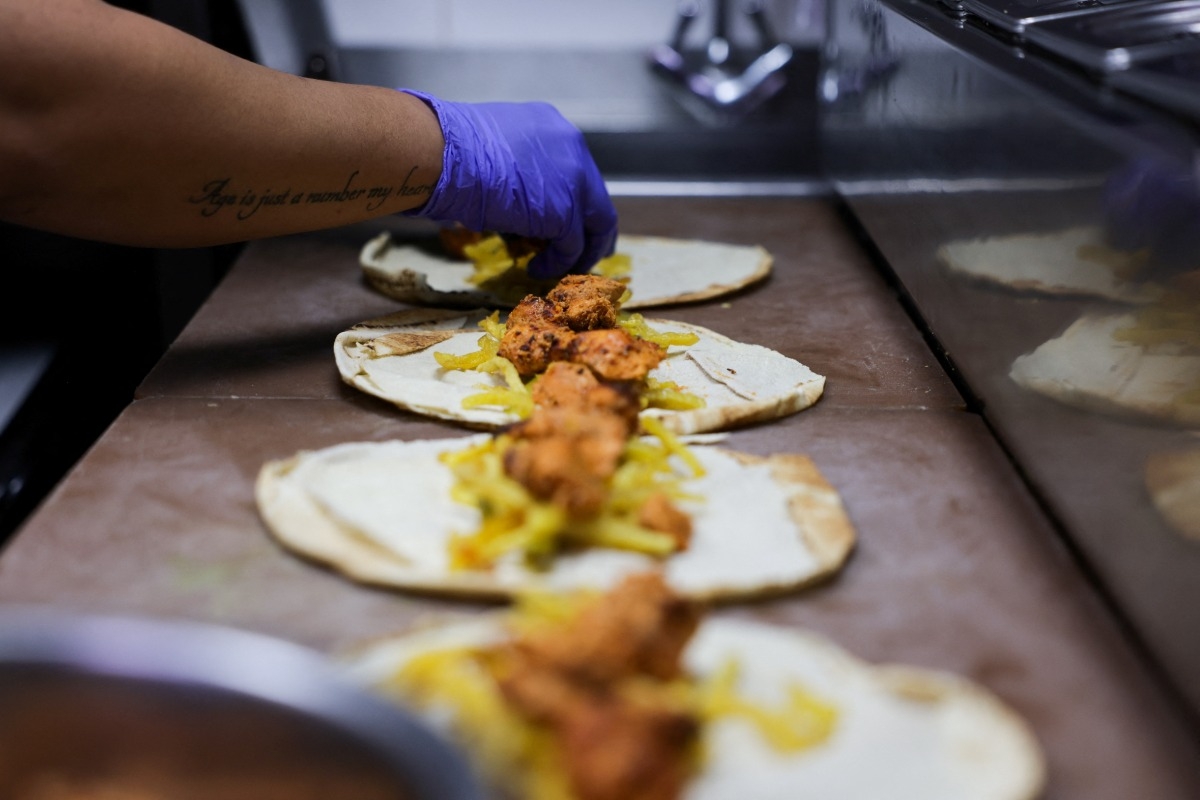
Controversy over the price of a chicken sandwich reveals the widening gap between rich and poor in Lebanon amid economic collapse.
Translated by Alqyas from Al-Jarida — Original source
Seven years after the devastating financial collapse that struck Lebanon’s economy, a controversy over a chicken sandwich has highlighted the widening gap between those who can still spend freely and those struggling to make ends meet.
The Glue Paradise, a restaurant specializing in healthy food, sought to offer its calorie-conscious customers a healthier version of the popular Shawarma chicken sandwich in the Levant. It launched the “Sheek Tawook” sandwich at a price of nearly $13, roughly double the cost of a regular chicken sandwich in Beirut.
Angry critics took issue with the wordplay associated with the high price embedded in the sandwich’s name, accusing the restaurant of price gouging in a country where many families struggle to afford basic necessities.
Yet, as the debate raged on social media, customers continued to buy. Harag Jigalian, managing partner at The Glue Paradise, said the restaurant sold more than 20,000 “Sheek Tawook” sandwiches in just 11 days, describing the online discussions as contributing to “marketing.”
The divergent reactions touched a sensitive nerve in Lebanon, where years of financial turmoil, political paralysis, and conflicts have reshaped the country’s social landscape, eroding much of the middle class while a smaller segment of consumers has managed to maintain a comfortable lifestyle.
Sami Nader, an economics expert at Saint Joseph University in Beirut, said the heavy foot traffic at The Glue Paradise masks another reality.
“You see people in the restaurant, but what you don’t see is that 22 restaurants closed their doors last month,” he told Reuters.
Lebanese Instagram users were divided, with some accusing the restaurant of theft and others arguing that the sandwich was targeted at those who could afford it.
Some wondered whether the controversy itself reflected misplaced priorities in a country facing urgent crises, including Israeli occupation of parts of the south and prolonged electricity and water shortages.
Lebanon’s financial collapse in 2019 resulted from decades of corruption and excessive spending by the ruling elite, while successive rounds of conflict since then have exacerbated the country’s bleak economic outlook.
World Bank data indicate that Lebanon’s gross domestic product has contracted by about 40 percent since 2019, and inflation is expected to rise to 17.5 percent due to global increases in energy and shipping prices, undermining the purchasing power of the population.
This rate is more than four times the main global inflation rate cited by the International Monetary Fund in July.
In September, the United Nations Children’s Fund (UNICEF) stated that four out of every five families in Lebanon struggle to secure basic needs.
Nader said the country’s middle class has “disappeared,” wiped out by a series of crises including the financial system’s collapse in 2019, the 2020 Beirut port explosion, and two wars within less than two years.
According to kilowatt-hour prices set by Lebanon’s Ministry of Energy, monthly bills for private generator operators, who supply electricity to many homes and businesses during outages from the struggling national grid, rose by about 20 percent in August 2026 alone, making prices nearly 60 percent higher than levels in February of the current year.
For many, this means the cost of obtaining round-the-clock electricity now amounts to several hundred dollars per month in a country where the minimum wage is $400.
Fouad Fakhreddine, 53, a worker at a restaurant in the nearby Hamra area, said, “Everything has become expensive, and ordinary people can no longer keep up. We are now living from hand to mouth, borrowing to make ends meet, and we don’t know how we’ll ever repay our debts. Our future looks bleak; it seems we are the class that lives exactly as our circumstances dictate. We are all trapped in debt, because without borrowing you can’t repay, and without repaying you can’t borrow. You can’t keep up. You need to work multiple jobs, yet there are no jobs available. Moreover, even to simply survive, there are no jobs under these conditions and circumstances.”
He added that years of economic turmoil have produced “a class that is alive and a class that is not dead but waiting to die from the unbearable situation they are in, waiting to die because the situation is simply no longer bearable.”
